Radical Doula Profiles: Cindy Collins

May 15, 2013

This is a series highlighting folks who identify as Radical Doulas. Are you interested in being part of the series? Go here to provide your responses to the profile questions and I’ll include you!

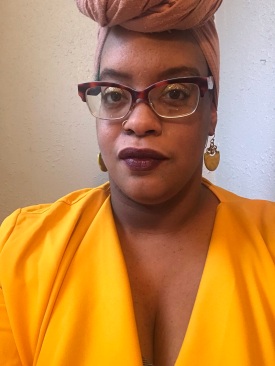
Cindy with tongue sticking out, wearing big earringsAbout Cindy: My name is Cindy Collins and I am a native Californian of the San Francisco bay area. I came to Delaware in 1999 by the Air Force. I married my husband, Rodney, in 2001. After I separated from the Air Force I attended culinary college in Baltimore and received my degree in professional baking and pastry. I worked for a several years in the restaurant business, also teaching baking courses at Polytech on occasion. For over 10 years I planned to open a coffeehouse and bakery however, God had another plan for me.

In fall 2005 I gave birth to my first son, Reed. During my pregnancy I became quite interested in natural childbirth. I became a Certified Breastfeeding Peer Counselor with WIC when my son was 7 months old and worked for 2.5yrs for Bayhealth. During my second pregnancy, my passion for birth and midwifery grew immensely. It was then I realized God was calling me to become a “birth worker”. In spring 2008 I gave birth to my second son, Jonas. In spring 2011, I gave birth to my third son, Silas. My own birth experiences have varied from a planned birth center birth turned hospital induction, a speedy birth center birth and a waterbirth at home with midwives. I am grateful for my own diverse birth experiences.

I believe birth can be an enjoyable, transcending, life-changing, painless, and empowering experience. I believe birth is a safe physiological event, not a medical emergency. Birth is inherently safe, interference is risky. I strongly advocate for the use of midwives and out-of-hospital births. I eagerly look forward to serving women during pregnancy, birth and postpartum period!

Contact Cindy at Euphoricbirth.com or Cali4niachef@msn.com.

What inspired you to become a doula?

My own birth, feeling duped and mislead by birth center midwives was a catalyst. Seeing the results the hospital produced while working own the postpartum floor confirmed I needed to become part of the solution.

Why do you identify with the term radical doula?

Going against the grain. I’m richly trained and educated, certified in nothing. I attended my friends planned UC surprise breech birth. I’m bold and always speak my mind, even if it means contradicting a provider.

What is your favorite thing about being a doula?

Being apart of moment in history! It’s sacred and special!

If you could change one thing about birth, what would it be?

Birth options, rights and choices for women!

About these ads

A different kind of Mother’s Day celebration

May 10, 2013
An image of a person holding a baby, with text that says "Radical Doulas: Your love and care for pregnant and parenting people makes every day a Mama's Day!

Make your own card at mamasday.org

The vast majority of my living comes from the work I do with non-profit organizations, the majority of whom are in the reproductive justice arena, helping them with their online and digital communications work. It’s a skillset I’ve developed over the years of running this blog, as well as my time working at Feministing, and the work with these groups. It’s often very invisible work because I’m behind the scenes, providing support to staff, helping to plan campaigns, crafting strategies for how to use social media and other platforms.

But right now is the culmination of one of my main projects so far this year, for a group I’ve worked with going on three years now. They are called Forward Together, and they:

Forward Together is a multi-racial organization that works with community leaders and organizations to transform culture and policy to catalyze social change. Our mission is to ensure that women, youth and families have the power and resources they need to reach their full potential.  By developing strong leaders, building networks across communities, and implementing innovative campaigns, we are making our mission a reality.

This is the third year I’ve worked with them on their annual Mama’s Day campaign. It’s a campaign that seeks to shift the narrative on motherhood, and specifically bring love and light to the mamas who are more often demonized by our political climate and our media than celebrated. These means mamas of color, immigrant mamas, queer mamas, young mamas, incarcerated mamas and more.

This is the second year we’ve tried to do this by creating an ecard tool, with fabulous art by activist artists, that people can use to send cards to the caregivers in their lives, but also to create strong messages to share anywhere online.

The cards are absolutely beautiful, and there is also a powerful blog series from all sorts of folks reflecting on motherhood and parenting. There are a few cards that look like doula cards, and that I’ve seen folks using to send love between doulas and parents. The above one is my shout out to all of you and the incredible work you do.

Go here to make your own card.


ACOG says labor should begin naturally—When will medical practice change?

May 9, 2013

In my latest column at RH Reality Check I talk about new guidelines issued by ACOG regarding scheduled c-sections. They were addressing the practice of scheduled c-sections that have been producing pre-term deliveries, with a particular push-back on the  reasoning of a baby being too large to be born vaginally.

For those of us who’ve been tuned into the maternity care debate, these kinds of change of practice or philosophy from a group like ACOG seem like a huge turn around. So huge, that at first I thought the whole thing was a hoax.

But, thankfully, it’s not. ACOG is actually urging providers to “let nature take it’s course.” Similarly, they just released new findings regarding the impact (potentially negative) of pitocin use on newborns.

For those of use who’ve been pushing back against rising c-section rates and pitocin use for a long time, this is a victory. But the challenge remains that history tells us it will likely take a long time for these recommendations to actually influence medical practice. In my column I use the example of episiotomy to illustrate this lag:

Unfortunately, it could take years for these changes to go into effect. Just look at the history of episiotomies. In the 1950s and ’60s, episiotomies, a cut in the perineum (the region between the anus and vagina), were recommended as routine practice during labor. At the time it was believed that an episiotomy was preferable to the natural tearing that is very common during vaginal delivery, and that the straight incision of an episiotomy was easier to repair. A 2012 Huffington Post article outlines this history, and how the practice came to dominate by the 1980s, occurring in more than 60 percent of deliveries.

It was only then that clinical trials were conducted to examine the impacts of episiotomy in comparison to natural tearing, and the results were staggering:

Clinical trials conducted in the ’80s and ’90s found that episiotomy cuts can, in fact, turn into even deeper lacerations during delivery, damaging the area around the rectum. Then, in 2005, a sweeping review published in the Journal of the American Medical Association found no benefits to routine episiotomy. A year later, the American Congress of Obstetricians and Gynecologists issued new guidelines, saying that episiotomy during labor should be restricted because doctors had previously underestimated the risk of bad outcomes later on, such as painful sex and possible incontinence.

Decades after those clinical trials, and seven years after the new ACOG recommendations, it’s unclear exactly how the new recommendations regarding episiotomy are being implemented. In 2005, the year before the ACOG recommendations, a study in the Journal of the American Medical Association (referenced in the Huffington Post article) estimated that 25 to 30 percent of vaginal deliveries still involved episiotomy. The 2010 National Hospital Discharge Survey reported that roughly 320,000 episiotomies were performed in the United States that year.

So this is both good news, and a call to action for all of us. As consumers, advocates and doulas our efforts have contributed to these recommendations, and we must remain vigilant to ensure that they get implemented. We can share these recommendations, coming from the Association tasked with governing Obstetricians, with providers who may be reluctant. And we can keep the pressure on. It’s a long battle, but I’m heartened by these incremental signs of progress.

Read the full column here.


A few dollars can help folks in MA get the services they need

April 25, 2013

Eastern Massachusetts Abortion Fund Triathlon logo, slogan

Tonight is one event in a season of incredible grassroots fundraising around the country on behalf of abortion funds who raise money to help folks pay for the procedures they need when their health care won’t cover it. Just like doula care is about unconditional and nonjudgemental support for pregnant and parenting people, the work of abortion funds is also that.

Supporting abortion funds is a really easy way to directly impact one persons ability to make decisions about their life and their pregnancy. Most of these funds are volunteer run, which means the majority of every $1 donated goes directly into the hands of someone in need of a procedure. It’s a direct response to the class inequality inherent in our medical system. No one should have to carry a pregnancy to term simply because they cannot afford an abortion.

While there are many great groups fundraising, and I suggest checking out your local one, I’m making a pitch on behalf of the group in Eastern Massachusetts. Tonight is their annual fundraiser which brings in a huge amount of the money they use each year to help folks in the area get the medical care they need and cannot afford. But understandably because of what has transpired this past week in Boston, when they would have been doing a major push in their fundraising, they are still $14,000 away from reaching their fundraising goal.

Do you have a few dollars to support this amazing group of volunteers?

I’m actually headed to Boston right now to be at the event as an honored guest, so it’s important to me to share the love with them. I’ll be presenting brief remarks, and honored to be able to bring doula work into that space.

If you’re in the area, come out! It should be a good time.

If you’re not able to attend, consider donating even a few dollars to support their work and help them meet their goal. Thanks!


Is finding a job as a doula difficult?

April 22, 2013

Continuing my tradition of posting answers I get via email here, I recently got a question from an inspiring doula wanting to know about what education background she might need, and if it would be difficult to find a job as a doula.

My answer:

Thanks for your email. Doula work can be really rewarding!

In terms of your questions, it’s not a traditional profession like others you might know about. While there are many doulas who do that work professionally, there is no formal education requirement (meaning a college or master’s degree or some sort). Instead, people of all education backgrounds participate in doula trainings (usually a long weekend) and then decide if they want to pursue certification as doulas (not required).

The jobs, then, are also less formalized. With few exceptions, most doulas work independently and find clients directly. Kind of like a massage therapist might. Those doulas build their own client base through marketing and word of mouth, and work on a fee for service basis (aka you charge people directly for your services, anywhere from $300-$3000 per birth, depending on experience, location, etc).

So the job search is a very different process.

I hope that helps! If you’re interested in doula work, I’d recommend signing up for a training and there you will learn a lot more about how it works.

The whole idea of being a self-employed doula, I’ve noticed, is really new for a lot of people. If you’re going to live off your doula work it really will require a lot of self-motivation and some business savvy. You also have to figure out how to get your own health insurance, and paying taxes is more complicated when you are self-employed. It’s a lot to learn! I’m only just now starting to hear about more formal full-time jobs as doulas, in hospitals or with agencies.

If you want to read more about my musings on the future of the doula movement and institutionalization, read this column.


Are you a doula trainer? Get a free review copy of The Radical Doula Guide

April 19, 2013

I heart doulas sign

It’s been eight months since I published The Radical Doula Guide, and it’s been an incredible whirlwind. I’ve been totally blown away by the support and enthusiasm for the book. I’ve sold close to 900 copies in those eight months. Way more than I ever would have dreamed! So thank you.

I still have more copies available (get yours here), so I’m starting to reach out to doula trainers. My hope is that the book will become recommended (or required!) reading for doula trainings, as a way to get these issues further integrated into the training of new doulas. Are you a doula trainer? If so, and you think you might be interested in listing The Radical Doula Guide as recommended reading for your trainings, email me and I’ll send you a free review copy. I have a limited number available for this purpose, so email me soon. Send me your mailing address and a little bit about your work as a doula trainer, as well as links to any websites about your trainings. RadicaldoulaATgmailDOTcom.

Thanks!


Radical Doula Profiles: Elyana

April 17, 2013

This is a series highlighting folks who identify as Radical Doulas. Are you interested in being part of the series? Go here to provide your responses to the profile questions and I’ll include you!

elyana

Elyana can be described using the words activist, feminist, radical, compassionate, creative and connected. She brings her diverse background and skills in herbal medicine, communication, sex education, earth-based ritual, counseling and more to her doula practice. She has worked in many different contexts as an ally for folks all along the spectrum. Email her at bayarearadicaldoula@gmail.com or visit her website.

What inspired you to become a doula?

Sexuality has been a main thread in my life for as long as I can remember. I consider sexuality to be at the foundation of what makes a culture thrive and struggle. I am committed to the movement towards freedom to express our sexuality and reproductive rights in diverse and varied ways. A big focus in my life is to weave an understand of systems oppression and participate in the stories of liberating ourselves from these systems.

My work as a doula began long before I attended any training or births. Being a caregiver is part of my identity, a role that I play with my friends, family and community.

Why do you identify with the term radical doula?

I identify as a radical doula because of my commitment to an anti-oppressive practice including people of all colors, gender identity, sexual orientation, class and other marginalized groups. For me, bringing “radical” into the doula world entails bringing an analysis of current systems affecting reproductive health & justice and working to engage more authentic and empowering ways of birth, abortion and everything in between.

What is your doula philosophy and how does it fit into your broader political beliefs?

For thousands of years traditional cultures around the world have guided new mothers in their experience of childbirth — primarily in a context of home and community. Interventions were rarely used, and contrary to popular belief, most births which happened naturally this way, resulted in healthy mothers and healthy babies. In today’s world we are exposed to the medical industrial complex and all the images and messages about birth that come along with that. This becomes a problem, not because of the services that hospitals offer, but because of the all too common infringement on a persons right to choose how they birth their child. I am not here to promote any particular choice to be made. My foundational belief is that people have the right to choose: if, how, where and with whom they will birth their child. Much of the birthing experience cannot be controlled, (which can be a scary or exciting thing) so it is important that we a re empowered to make informed and consensual decisions. My views, as described above, are founded in a radical analysis of the modern capitalist industrial complex and all the ways it affects peoples lives. Birth is unfortunately just one of many examples of places that our patriarchal culture has invaded and robbed us of our rights. My guiding philosophy in working with folks is in discovering what a sense of safety looks like for them and reclaiming this connection to comfort and support that has been principle in the childbearing process for all of time.


Follow

Get every new post delivered to your Inbox.

Join 1,337 other followers

%d bloggers like this: