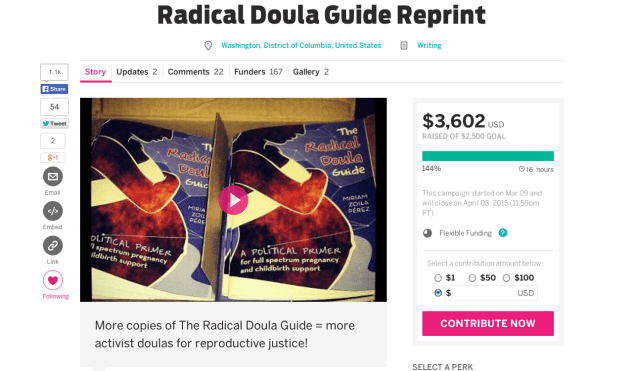
Last day to support my Radical Doula Guide reprint fundraiser & get your discounted copy!

I’m in the home stretch! It’s been a great campaign so far, and I’ve surpassed my original goal and am close to getting my stretch goal of $4K! That amount will allow me to print 2000 copies, meaning the book will stay in print for a good long while.

I’ve also already had 76 copies donated through the campaign, so I’m excited to be able to offer those to organizations and individuals in the future.

Screen shot 2015-04-08 at 10.56.54 AM


Campaign ends tonight around 2am ET, so now is your last chance to donate! A big THANK YOU to everyone who has donate so far.

Radical Doula Profiles: Tiffany Irvin

This is a series highlighting folks who identify as Radical Doulas. Are you interested in being part of the series? Go here to provide your responses to the profile questions and I’ll include you!

tiffanyirvinAbout: My name is Tiffany Irvin and I’m a proud doula, wife, Jacksonville native, and founder of Planted Seed Community Doula. I have 2 dogs and 4 cats, 20+ tattoos, purple hair (for the moment at least), a passion for music and art, reading, advocacy work, and a love for all things birth!

What inspired you to become a doula?
When my husband and I hired a local doula several years ago, we had no clue what we were doing. It ended up being the best decision for us because she ended up being extremely supportive and nurturing during our loss. Inspired, I immersed myself in the birth world, consuming books, movies, and anything I could get my hands on. I was already majoring in psychology, but I knew that my path was beginning to change. I still wanted to help others, but my method was morphing. After discussing with family and friends, I came to the realization that I belonged in the magical world of doulas.

Why do you identify with the term radical doula?
I’ve been politically and socially active in terms of reproductive rights, LGBTQIA advocacy, and other social justice venues. I see how being a radical doula ties into advocacy and enjoy assisting my community with issues I’m passionate about.

What is your doula philosophy and how does it fit into your broader political beliefs?
I believe that all people deserve access to doula services, regardless of ability to pay, race, gender identity or sexual orientation, etc. Doulas should not be a luxury afforded to only those with privilege. I believe in equal rights and respect for all people and I don’t see why that should differ in how I practice as a doula.

What is your favorite thing about being a doula?
I love the opportunity to experience life changing events with amazing people who are truly appreciative of your company, skills, and support. I also just really, really love babies.

If you could change one thing about the experience of pregnancy and birth, what would it be?

The stunning lack of access to reproductive health services in this country saddens me. I feel so many would lead much more fulfilling, healthy, and positive pregnancies if we made this a priority.
Radical Doula Profiles: Nzingha Byrd

This is a series highlighting folks who identify as Radical Doulas. Are you interested in being part of the series? Go here to provide your responses to the profile questions and I’ll include you!

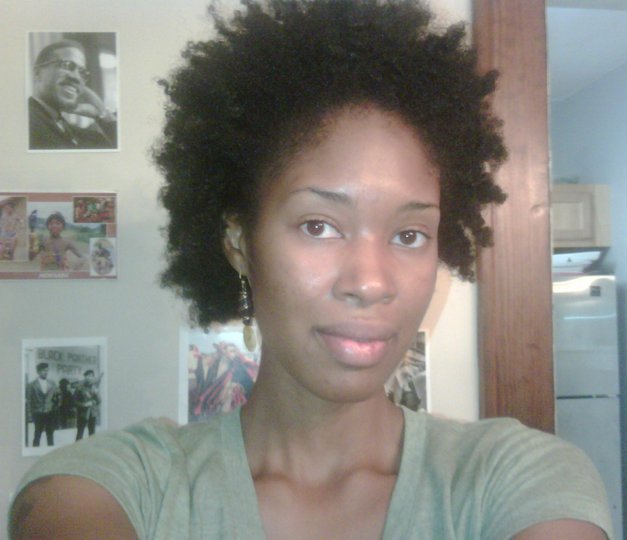
nzinghabyrdNzingha Byrd is a radical doula, childbirth educator, and lactation consultant located in the Cincinnati, OH area. Nzingha has been teaching the benefits of natural childbirth and breast feeding for over 8 years with a strong concentration in women of color and teen mother communities. Nzingha has partnered with many organizations to provide services and has attended countless births, in homes and hospitals. Feel free to contact Nzingha at sweetsistahsplash@yahoo.com, on Facebook, or by phone at 513.332.1575.

What inspired you to become a doula?
I began teaching pregnancy, childbirth, and parenting education and enrichment to teen parents at the same time I discovered I was pregnant with my first child. Spending over 40 hours a week talking to and educating first time moms was of great benefit to myself. The more I learned and shared, the more I embraced pregnancy and having the birthing experience of my dreams. It became my passion to support other women in having the birthing experience that they envisioned as well.

Why do you identify with the term radical doula?
I identify with the term Radical Doula because birthing babies outside of the modern day Western society norm is radical. In this day in age it is radical, rebellious, even revolutionary for women to question birthing practices, to assert their personal wants and desires, to birth with out medication or within ones home. These things are radical but even more importantly – these things are empowering. I am called to be that support to empower women through their pregnancy, labor and delivery process in any way that I can.

What is your doula philosophy and how does it fit into your broader political beliefs?
I believe that Birthing should be left out of politics. I do not see it as a political debate or medical condition (of course there are special circumstances) but I believe that the body knows everything it needs to bring forth life. It is a natural thing. I think that it is a doulas job to prepare the mind for the birthing experience.

What is your favorite thing about being a doula?
My favorite part of being a doula is the childbirth education and preparation. I believe in this case knowledge is power and the more a mother knows, the less fear she has and the more determination she has to advocate for her self and her baby.

If you could change one thing about the experience of pregnancy and birth, what would it be?
I would change the accessibility to Great Care for all women, that all women deserve and should be afforded regardless of race or income. That is not the case in particular communities and with particular populations. I believe all women should be treated with respect and supported in birthing the way of their choice. The support should not only come from doctors but the hospital and their policies, insurance companies, so forth and so on.

Remembering the work of Black Midwives of the South

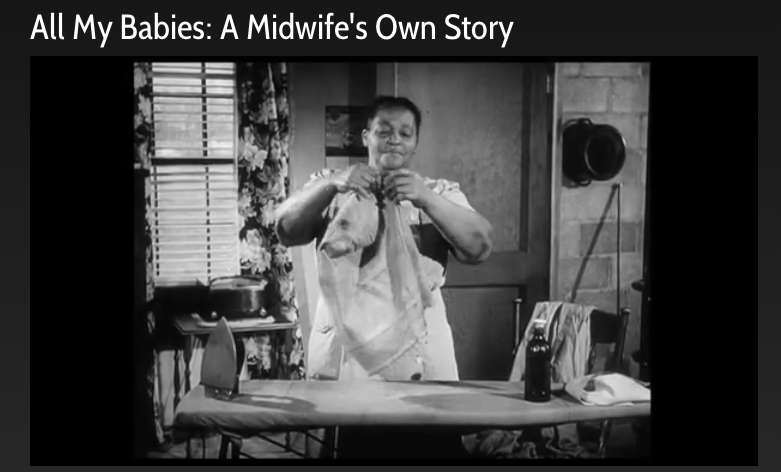
A screen shot of the film: All My Babies, with Mary Coley pictured


A screen shot from the film All My Babies

Over at Colorlines I wrote about the Black midwives of the South who birthed generations of babies until the medical establishment pushed them out of business by the 1970s:

By the 1970s, births in hospitals attended by doctors and nurses (and later, nurse midwives) became the norm and these community midwives were phased out. This was done both by passing new laws and policies regulating the practice of medicine and who could provide services like attending childbirth, and through messaging campaigns that implied midwives were uneducated, dirty or even practicing witchcraft. By 1975, only 0.3 percent of all births were attended by a midwife outside a hospital.

In Alicia Bonaparte’s dissertation, “The Persecution and Prosecution of Granny Midwives in South Carolina, 1900-1940” she describes how these campaigns also used sexist and racist undertones to discredit the practicing midwives. “Some physicians even labeled grannies as ‘a cross between a superstitious hag and a meddlesome old biddy,’” she writes. “[This] evaluation served as an attack against the very bodies and ages of black women who were well respected in their communities.”

“All My Babies” is a respectful approach to Coley’s work as a midwife, and she’s portrayed as an accomplished woman in her community. But it also reveals her deference to the white doctor and nurse at the county clinic, and it even shows her questioning her own hygiene practices after a lecture by the doctor.

You can watch a full-length film about Coley online, which is a fascinating peak into the era and the practices of midwives like her.

After I posted the article online, Claudia Booker, a Washington, DC based midwife and doula, responded with this:

“Interesting footnote. The Elder African American Midwives, who had been referred to as “Granny Midwives” had a meeting about 20 years ago which was attended by many of our own current Elder midwives and proclaimed that they no longer wanted to be called “Granny”. They requested that they be referred to as “Grand Midwives’. This discussion was also transmitted to the white midwifery organization at a MANA Conference attended by Makeda Kamara and other Elder Grand Midwives. However the white midwifery organizations still struggle with the title the Grand Midwives have proclaimed for themselves. Let’s honor their request and referred to our Elder Midwives as “Grand Midwives”. They are grand!!”

Important to understand the history, but also respect how these midwives prefer to be referred to.

Announcing the Radical Doula Guide Reprint Fundraiser


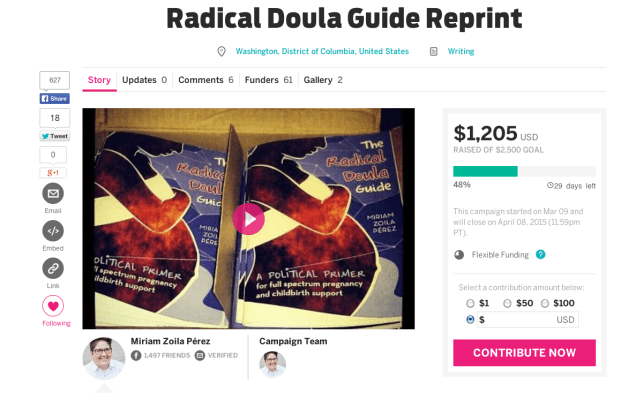
Screen shot 2015-03-11 at 12.44.26 PM

At the end of February, I quietly celebrated my 8th year of blogging here at Radical Doula. It’s amazing to think of all that has changed in that time–both for my life and but also this incredible movement of doulas. Almost nothing is the same as it was, and mostly in great ways.

There is a lot of things I’m proud of from my years of blogging, but the thing that stands out is publishing The Radical Doula Guide. I love being able to contribute a resource to this growing movement, and every day that I put another copy in the mail is a little bit of joy knowing that my thoughts may help someone on their journey to being a better and more informed doula.

The good news is that I’ve sold all of the copies I had printed since my fundraiser three years ago–all 1500! So I’m asking you all, my community, for support in getting another round of books printed.

There are two special things about this fundraiser:

1) You can get a copy of the book at a special discount–only $10 per copy (normally $12). So if you’ve been waiting to buy one, or want to give a copy as a gift, now is your time!

2) I’m working to create a stockpile of books that I can donate to organizations and individuals who can’t afford to purchase them. I dream of setting aside a few boxes of books I can give away to groups providing full-spectrum or volunteer doula services, to doulas of color, to queer doulas, to the people who will make this movement better by joining it. For just $10, you can donate a copy that I’ll give out a future date.

The great news is I’m already almost halfway to my goal, and it’s only been two days!!

I’m blown away by the support of this amazing community.

Head over to the fundraiser, donate if you can, and also spread the word via social media! Almost all of the donors so far have come from the Radical Doula facebook page. Here is some sample language for tweeting or posting to facebook:

More copies of The Radical Doula Guide = more activist doulas for #reprojustice! Support @radicaldoula‘s fundraiser: http://igg.me/at/RDGreprint

Help @radicaldoula make sure everyone who wants a copy of the Radical Doula Guide can get one: http://igg.me/at/RDGreprint #doulas #reprojustice

Make sure doulas understand the political context of pregnancy & birth! Support @radicaldoula‘s fundraiser: http://igg.me/at/RDGreprint

THANK YOU for your support over the years! I’m honored to be part of this community.

Radical Doula Profiles: Eliza Cooley

This is a series highlighting folks who identify as Radical Doulas. Are you interested in being part of the series? Go here to provide your responses to the profile questions and I’ll include you!

elizaEliza has provided doula services in the Dominican Republic, Colorado, and Nepal. Her experience as an international doula has inspired her to seek further training. In becoming a Certified Nurse Midwife, she hopes to train birth attendants in underdeveloped areas to provide safer pregnancy care and to reduce the astounding rates of maternal and infant mortality. Despite seeking further education, she plans to continue providing accessible doula care as part of her practice, as being with women during labor is her passion. Eliza is now based out of Massachusetts and travels frequently.

Website: elizathedoula.weebly.com
Email: eliza.the.doula@gmail.com

What inspired you to become a doula?
I became a doula by chance. I hadn’t heard the term “doula” when I was required to take a training before doing a medical internship in the Dominican Republic. After taking the workshop and attending my first birth, it was clear to me that birth work was my calling. I sought additional training and accepted a year-long position as a prenatal educator and doula for immigrant, refugee, and low-income populations in Denver, Colorado. Currently, I am providing support at births at a rural hospital in Nepal.

Why do you identify with the term radical doula?
I once asked someone about the high rates of maternal and fetal mortalities in underdeveloped countries and was given a simple answer: it’s just how it is. Sure, it’s how it is, but it is not how it has to be. Birth care and outcomes are far from equal in our world. As a radical doula, my work focuses on making high quality care more accessible and questioning the standards of birth care as they exist in communities across the globe. Acknowledging an unacceptable condition and committing to changing it – that’s radicalism.

What is your doula philosophy and how does it fit into your broader political beliefs?
A doula’s primary goal should be to provide continuous compassionate and nonjudgmental support and to reduce fear of labor and childbirth. Part of providing care should be empowering people to make their own decisions by providing accurate information. As a doula, I offer empathetic support and unbiased guidance but overall, I encourage women to use their knowledge, trust their bodies, and take control.

What is your favorite thing about being a doula?
When I first enter a room, figuring out how to manage the energy in the room by intuiting the laboring woman’s needs is exciting. It feels like an art form. I have also had women tell me that I reduced their perceived pain during labor – and that feels like a superpower!

If you could change one thing about the experience of pregnancy and birth, what would it be?
There needs to be a more sensitive application of Western medicine to pregnancy care. I have seen Western medicine save lives, but I have also seen it lead to major complications. I’d like to see a balance where providers hone skills in both natural techniques and the appropriate use of medical intervention. This balance, I believe, is the modern art of birth work.

A moment for White doulas to put allyship into practice and support doulas of color

Ever since I joined the doula movement there has been a strong anecdotal sense that the doula community is very white. While I haven’t seen any official data on this (I could imagine it’d be difficult to access a community that is pretty small, but also not congregated in any one organization), it’s the sense I’ve gotten from all of my time and work in this field.

In recent years there has been more attention to race and racism in the doula community, and way more doulas (and midwives, other birth activists) of color speaking up about race and representation.

I think there are many ways the doula community needs to engage with the reality of racism, how it impacts the maternal health of women of color, especially Black women, but increasing the number of doulas of color in our movement is one really important step.

I often get asked by white doulas–what can I do about racism and maternal health disparities? I talked a lot about this question in my speech from SQUATfest two years ago, but I didn’t explicitly answer it.

Well, now you have a major opportunity to step up. A group in the Bay Area is fundraising to bring more doulas of color (and low-income doulas, and formerly incarcerated doulas) into the work.

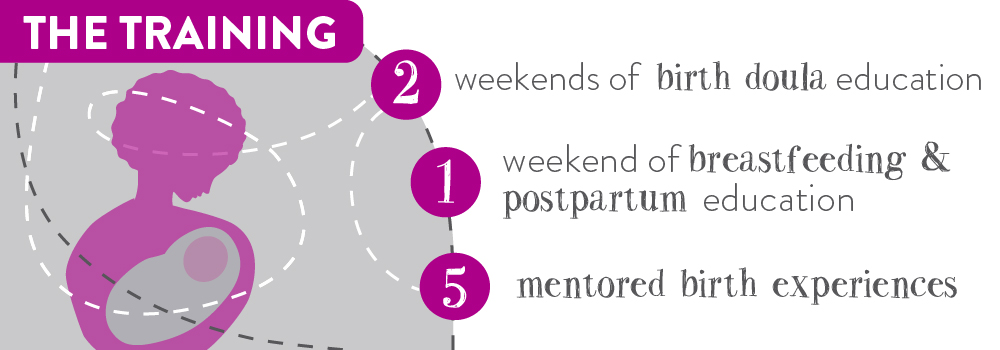
Infographic reads: "The training: 2 weekends of birth doula education, 1 weekend of breastfeeding and postpartum education, 5 mentored birth experiences."

Infographic that reads: "Your money goes to training 16 doulas of color, providing doulas to 80 families in the community that would not otherwise be able to receive doula support."
Infographic via East Bay Community Birth Support Project

Put your money where your mouth is. If we’re really going to change the culture of birth in the US, we’re going to need way more doulas who look like the women who are facing the most extreme challenges.

The fundraiser ends on Friday–now is your time.

Radical Doula Profiles: Erich Otten

This is a series highlighting folks who identify as Radical Doulas. Are you interested in being part of the series? Go here to provide your responses to the profile questions and I’ll include you!

erichotten

Erich Otten aka ‘The Doula Dude’ is a full-spectrum doula, anarchist birthkeeper and complementary therapist. He has supported women and reproductive people in various roles since 2008. Becoming a birth worker was naturally the next step, he services the St.Thomas – London, Ontario area. Offering scaled to income labour & breastfeeding support, birth counselling and pregnancy options counselling. As a doula he provides support and comprehensive care throughout the full spectrum of pregnancy outcomes. His practice name is Options Doula Care and he can be reach via his website or by e-mailing birthkeeper.erich@gmail.com.

What inspired you to become a doula?
I have been supporting women and reproductive people since 2008. My interest in supporting women throughout the childbearing year led me to originally pursue midwifery as a career and calling. I attended the 2013 Birth and Beyond Conference in London, Ontario on an attendee scholarship. There I met many amazing women and yes, doulas. At the ‘An Evening with Ina May’ event I was fortunate enough to be able to ask her one question. I asked. “What is your advice for aspiring midwives?” she replied. “Become a Doula.” So I followed her advice and fell in love with the care and role of a ‘doula’.

Why do you identify with the term radical doula?
Why do I identify as a ‘radical doula’? Well like the radical feminists before me reproductive rights have been at the forefront of advocacy. As a male embodied birth worker and intactivist, reproductive rights are at the forefront of my advocacy and beliefs.

What is your doula philosophy and how does it fit into your broader political beliefs?
As a full-spectrum doula, I’ll advocate for whatever birth outcome the reproductive person chooses. A cesarean section, elective termination, homebirth, or an hospital birth with an epidural. Whether they choose parenting or adoption. I’ll be there to support them. I have a particular calling to serve marginalized populations such as LGBTQ1+, young mothers, immigrant women, survivors of abuse, and incarcerated folk. I offer my services on a sliding scale. One of my core beliefs is to have access to a doula no matter what one’s financial status.

What is your favorite thing about being a doula?
My favourite thing about being a doula is bearing witness. Being permitted to share and hold that space. Birth, all out comes. Not just what we frame as birth that is the live birth of babes. Is elemental, I find it the basic stuff of life. And it is such an honour to be invited to walk into that space.

If you could change one thing about the experience of pregnancy and birth, what would it be?
I would change birth shaming and care-provider competition. I find no place for either in birthing and reproductive spaces.

To the 13 year old interested in becoming a doula

I get many, many questions via email from people interested in doula work, interested in writing about doulas, looking for a doula, etc, etc. I try really hard to respond to everyone, but it often takes me months (such is the state of volunteer labor-of-love work). But sometimes I’m inspired to share an email and response with you all, in case others might find it interesting. This exchange was just really sweet, because I love the idea of a 13 year old who already know about doulas, and has such insightful questions about what the career path would be like.

__________

Hi,
I’m 13 (name removed for privacy), and I’m thirteen years old. I have always found the prospect of helping people give birth amazing and I was wondering, what is it like assisting a person give birth? Is it stressful? Do you and your “patients” stay in touch after the birth? Do you have a job other than being a Doula? Do you have to already know the midwife, is it easier if you do? If you don’t know the midwife, do you become as close as you do with the patients (I don’t know what else to call them)? Thank you.
Sincerely, 13

Hi 13–

Thanks for your email! You sound like you’re already well on your way. It’s hard to describe what it’s like to be a doula. Yes, it can be stressful. Yes, it can be amazing. Sometimes you stay in touch, sometimes you’re just there for the birth and that is it.

I have always had jobs outside of being a doula–my doula work has been a volunteer thing. But there are people who live off of their work as doulas (although I will say it can be challenging financially–usually people supplement with other doula-related work).

Knowing the midwife definitely can make things easier, but no it’s not required. How close you become with the people you support (some people might call them clients) depends on you and them and how the relationship evolves–it’s not dependent on you knowing the provider.

Best of luck!

Radical Doula Profiles: Cara Del Favero

This is a series highlighting folks who identify as Radical Doulas. Are you interested in being part of the series? Go here to provide your responses to the profile questions and I’ll include you!

About Cara: Full spectrum (certified) birth doula, OSHA Certified placenta encapsulation specialist, childbirth educator, Certified Lactation Counselor and Certified Postpartum Doula. Serving the Albany, NY and Capital Region areas. Visit http://thealbanydoula.com or call (518)542-5475 for more information.

What inspired you to become a doula?
I identify as VERY pro-choice in my political views, however once I became pregnant, I realized that I also found the idea that pregnant people deserved the right to their own bodily autonomy during childbirth to be integral.

Why do you identify with the term radical doula?
I identify as queer when it comes to my personal life, which allows me to gain a wider understanding of the specific needs that people have in the birth community. I have done plenty of research and reading to educate myself on the notion of white privilege and being a “placeholder” for those from marginalized groups. I acknowledge my privilege and work hard to help support the community in making new connections and changing traditional belief systems that may be harmful to some families.

What is your favorite thing about being a doula?
My favorite thing about being a doula, which took me a long time to figure out, is knowing just how NOT about me childbirth is. I realized that birth is an intimate and very personal situation for all families and I learned just how important it is to meet people where they’re at and not where I would “want” them to be. My choices may not be yours and I completely love and respect that.

If you could change one thing about the experience of pregnancy and birth, what would it be?
If I could change one thing about the experience of pregnancy and birth, I would let all birthing people know that they have options. I would make sure that they have all the resources available to them to learn about the choices they have available to them without having to face social or economic barriers to this information.