New Los Angeles full spectrum doula project

I got word of a new full spectrum doula project starting up in Los Angeles. They are looking for members. Check out the info below!

1.  If a doula is interested in working as a birth doula or a full-spectrum doula (or both), please email us at info@ladoulaproject.org.
2.  Requirements: doulas must be able to take at least one pro-bono birth per month and be willing to meet the clinic volunteer guidelines (more information on that when we send them the application.)
3.  Doulas must be aware that we are an organization that works with the full-spectrum of pregnancy.  If they are only comfortable working with births at this time, that’s fine, but they must be aware of that association.

And you can download the flyer here.

Yay for new full spectrum projects!

In remembrance of Laura Hershey

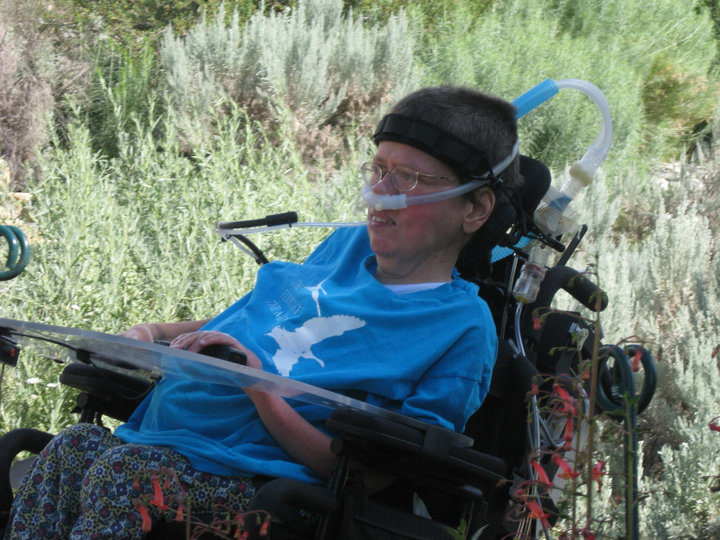
Photo of Laura outdoors
Photo of Laura via Memorial Site

Laura Hershey, a great poet and disability rights and justice activist passed away this weekend.

I got to know Laura this summer at the Lambda Literary Writer’s Retreat, where she and I were amongst thirty other awesome queer writers spending a week in community together.

I’m sad that Laura and I’s paths did not cross for longer–I wish I could have known her and her work better.

Laura was an accomplished poet, with an impressive list of credits and publications. She was a parent, a partner, an activist. Laura was the one who emailed me about this statement on reproductive rights and disability justice that I posted a few weeks ago. I believe she was also a co-author of the statement.

Laura’s work speaks for itself, and you can introduce yourself to it on her website if you don’t know it all ready. Feministing also did an interview with Laura back in 2007–view it here.

I’m posting a video below of Laura reading a short selection of her poetry at our retreat this summer. Apologies for the lack of transcript.

http://vimeo.com/14392699

With love and respect Laura, you will be missed.

Via Forward

Live in Illinois? The home birth act needs your help this AM

Via the Big Push:

ATTENTION ILLINOIS RESIDENTS & ANYONE WITH FAMILY/FRIENDS IN ILLINOIS.

It is VITAL that everyone re-call your state reps in Springfield ASAP and try to find at least a few friends/family members who will call between 9 and 11 a.m. on Wednesday, November 17. We need to FLOOD the capitol with calls during that time.

  • If your state rep already support the Home Birth Safety Act, please thank them for their past support and ask them to remain strong with us.
  • If your state rep is iffy or unknown, ask them how they will vote and send a text report to the phone number below.

People who live in Illinois can find their reps here.

Please call Springfield as soon as you see this PushAlert, and then call as many people in Illinois as you can to remind them to call right away between 9 and 11 a.m. PST on Wednesday, November 17!

The Home Birth Safety Act would allow the licensing and regulation of Certified Professional Midwives in Illinois. CPMs are not currently allowed to practice legally in IL. More background here.

MORE Magazine features young feminists

Photo of some of the young feminists featured in More Magazine article

More Magazine, whose tagline is “For Women of Style and Substance” had a spread about the “new feminists” in their November issue. The picture above accompanied the piece.

I was included in the group of 15 women featured (although not pictured above). Why was I included? Probably because I know (and am friends with) Courtney E. Martin, Editor at Feministing.com, also included in the feature and who helped the Editor at MORE recruit participants. The selection of women included in this spread wasn’t selected by any particularly rigorous process (that I know of), and it was probably more about who knows who than a real cross-section of young feminism.

There are many, many folks who are really key parts of the feminist movement who were left out of the feature. There are some serious representation gaps, too. Only four of the 15 folks featured are people of color. Most of them reside in NYC. There appears to be little to no representation of folks with disabilities. I might be the only queer person included. There were no trans folks in the group. Almost everyone is college educated. The list of people and groups missing could go on and on.

As flattered as I am to be featured in a national magazine for my work, I don’t think this group of folks (many of whom I love and respect) are truly representative of feminism’s future.

Two of the women included in the feature are conservative women. Their politics don’t fit within my definition of feminism (Jessica Valenti agrees).

A panel discussion last week that came out of the magazine feature replicated these problems live and on stage. Jessica has a round-up of responses written by others, but I was there and it was a tense evening, to say the least.

I’ve been speaking a lot lately about what I see as feminism’s identity crisis. This crisis has many faces, and almost all of them were represented during the panel last week, and by the MORE Magazine feature. It was honestly really difficult to watch.

Why is feminism in crisis?

Feminism is in crisis because we don’t know who our allies are. Can anyone be a feminist? The debate about whether conservative women, particularly far right-wing women who often oppose most of the policies of the feminist movement so far (abortion rights, equal pay legislation, etc), are feminists is raging. Are we willing to say folks with certain views can’t be feminists?

Feminism is in crisis because we don’t know what our agenda is. Some feminists (myself included) want to push for prioritizing an intersectional feminism that brings a gender analysis across issues and movements. That means environmental justice work can be feminist, immigration work, racial justice work, economic justice work. It can all be feminist, as long as we bring a gender lens and understand how gender impacts those issues. Others argue that only certain issues (usually those most narrowly impacting privileged white women) are feminist.

Feminism is in crisis because mainstream leaders and organizations consistently neglect the needs of people of color, queer folks, immigrants, disabled folks, low-income folks. The mainstream agenda remains too narrow and too focused on the needs of privileged white women. This despite the fact that feminists from all backgrounds have been pushing and pushing, creating their own feminism(s) to rectify this problem. A quick look at the demographics of feminist leadership might shed some light on why this is an ongoing problem.

Feminism is in crisis because we’re not sure what to do with the “women’s movement” in an era where gender categories, binaries and roles are being questioned. What’s the role of men in feminism? What about trans and gender non-conforming folks? Is a movement centered around the identity of woman the most useful and effective today? How do we move forward without perpetuating harmful ideas about gender difference, and include folks of all genders in the fight for gender justice?

I have strong feelings about the answers to most of these questions. But the reality remains that these fundamental identity questions, and our ability to resolve them, is going to shape where feminism goes from here.

Again, I’m flattered that my work (particularly since they highlighted Radical Doula and the full-spectrum doula movement) was featured in a mainstream magazine. I’m excited that a whole slate of older women readers (MORE’s primary audience) will see the names and soundbites of a number of younger women they’ve never heard of.

But the article does a better job representing the challenges of the feminist movement than representing a broad view of it’s leaders. Everyone included is a leader in their work, in their movements, in their world. But there are way more people out there who make feminism the diverse, vibrant and thriving movement that it is today. Let’s not forget that.
Speaking tonight at Swarthmore College

Just a quick note that I’m speaking tonight at Swarthmore College (my alma mater!) about feminism. Specifically I’m going to be talking about what I sometimes call feminism’s identity crisis–essentially the critical problems in feminism (particularly around issues of queerness and race) and what we should do to move forward.

If you happen to live in the Philadelphia area, I believe the event is open to the public.

Details:

Swarthmore College
Swarthmore, PA
Science Center 199
7:30pm

Details about my upcoming speaking events can be found here. And as always, if you’re interested in bringing me to speak at your campus or community, email me.

Barbara Seaman Award for Activism in Women’s Health

Torso of a woman with NWHN underneathI’m super pleased and flattered to share with you all that tonight, at the National Women’s Health Network Annual Fall Benefit, I’ll be getting an award.

It’s the Barbara Seaman Award for Activism in Women’s Health.

When Cindy Pearson, the ED of NWHN, called me up to tell me that I’d been selected, she specifically mentioned Radical Doula and my work here. She said something like, it’s so fascinating how you can bring together transgender issues and birth!

Lol.

It’s true, that my purpose here at Radical Doula has been just that–to make connections between issues that other folks find to be contradictory. Birth and abortion. LGBTQ issues and doulas. Midwives and immigration.

I’m really flattered to be honored by an organization whose mission, since their founding 35 years ago, has been to serve as a watchdog for women’s health.

We all know well, as birth activists, that the medical community does not always have our best interests in mind. They’ve got their bottom line in mind, the insurance companies in mind, profits in mind. NWHN works to make sure women have the information they need and know the truth about how medicines and medical technologies impact us.

Barbara Seaman spent her life as a writer and activist doing this work and I’m honored to be recognized in her name and continue her legacy.

Post-election reflections

Despite the fact this year’s election made me want to hide under the covers until it was all over, I was glued to twitter last night watching the election returns come in.

In short, it was a Democratic bloodbath. 60 plus seats went to Republicans, meaning control of the House of Representatives is gone. It’s hard to feel optimistic after an election like that, where being against things (health care reform, stimulus spending, jobs) was a better political strategy than being for anything.

A few bright-side moments from yesterday:

  • The fetal personhood amendment in Colorado was defeated, by a resounding 3 to 1 against, for the second time. I’m heartened to know that most people (even in Focus on the Family’s homeland) don’t think fetuses should have rights until they are actually born.
  • More openly LGBT candidates were elected yesterday than ever before in history, including –Victoria Kolakowski, a Superior Court judge in Alameda County.  Kolakowski becomes the first openly transgender judge in America.
  • Half of the so-called “Blue-Dog Democrats,” who pretty much sucked and were really more Republican than Democrat, lost last night. Does that prove that centrism is dead?
  • Now that the Republicans have control of one body of Congress, they’re going to actually have to do something. Something other than oppose things. And as Alvin put it:

Now that the Republicans have Congress, they can now reveal that incredibly, wonderful master plan to cut taxes, bring down the deficit, and increase the work force. Apparently the plan is so awesome that none of them wanted to reveal it to the media or each other.

Being in my mid-twenties, with this election cycle (starting in 2008) being the first one I’ve been an active political participant in, every step of the way has been eye-opening. From watching my friends basically go away to war fighting for Obama’s election, to the disappointment of the reality that “change” can’t really happen in broadstrokes, in two years, no matter what kind of majority you have in Congress, to the realization that there are many people in our country whose politics are founded on hate and fear.

I’ve always held on to the belief that no matter how slowly, no matter how many set-backs, things are definitely on a slow progression toward better. Better for women, better for people of color, better for queer folks. Better for the low-income. Even if it’s a pendulum, it’s one that swings back and forth, but slightly more left with each swing.

Is that even true? I’m not so sure, but I think I have to hold on to that belief just to keep my optimism, and to keep my desire to fight up.

It’s like, is Dan Savage right? Does it actually get better? I sure as hell hope so.

Update: Read Tim Wise, because he is really smart, and makes me believe things will get better.

Hello election day.

It feels like all I can think about, but that’s probably unique to my particular community of politically-minded folks. And the excessive number of facebook posts and tweets about voting.

Make sure you vote today (if you can). It’s exceedingly important.

I unfortunately am registered to vote in Washington DC, where the elections are decided during the primary (98% Democratic or something) and we don’t get real representation in Congress. Love you Rep. Eleanor Holmes Norton, but you don’t even get a vote. (Side note: Yes to DC statehood!)

This will be remedied shortly, as I’ve moved back to an actual state with legit representation in Congress.

But all this to say, you should vote today!

The recent debacle in NY State with home birth midwives and their ability to practice is evidence enough that politicians matter a lot when it comes to our issues, even birth ones. If it wasn’t for the NY State legislators voting to change the Written Practice Agreement rules, home birth midwives wouldn’t be practicing in NY State right now.

Also, remember when jerk-wad Governor Schwarzenegger vetoed the anti-shackling bill?

And thanks to everyone who already voted.

Radical Doula Profiles: Charlie Rae and Megan

This is a series highlighting folks who identify as Radical Doulas. Are you interested in being part of the series? Email me.
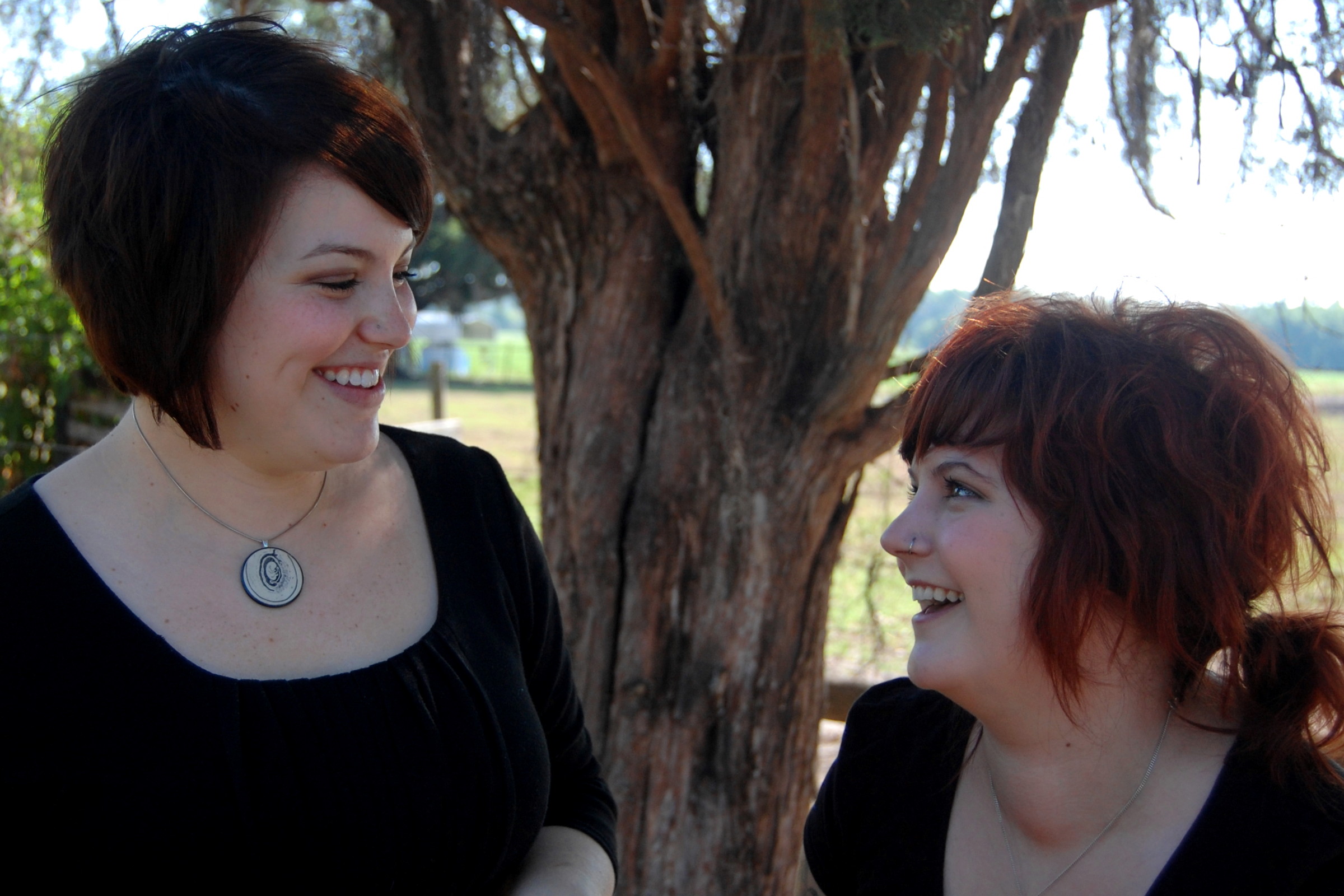
Charlie and Megan together, smiling in front of tree. This week’s Radical Doula Profile is a fun joint edition. Charlie Rae and Megan are part of the Barefoot Birth crew and are being profiled here together.

About Charlie Rae and Megan:

Charlie Rae Young is a mother, doula, natural birth advocate, and aspiring midwife. She began her work in the birth field with the Coalition for Improving Maternity Care Services (CIMS) as a grassroots ambassador for The Birth Survey.  Currently, Charlie works as both a Birth Assistant and Childbirth Educator for several home birth midwives near Tampa, FL.  Charlie believes that women still have an innate ability to give birth without intervention and strives to make a positive difference in the total birth experience for new mothers.

Above being a loving stay-at-home mother to her beautiful daughter Lydia, Megan D’Orazio currently teaches private childbirth education classes and works as a birth and postpartum doula.  Megan’s kind-hearted nature and gentle disposition make her an ideal partner and asset for birthing mothers. She intends to inspire confidence in women by helping them trust their bodies while assisting in the creation of the total birth experience they are looking for.

What inspired you to become a doula?

Megan: After an unsatisfactory hospital birth, I began to further my education on maternity care in the United States thus leading me into a whirlwind of negative emotions regarding my care. After my realization that I was still dealing with issues surrounding my birth, physical and mental, I needed a way to reach out to other women who were going through the same thing. With a background in education and working with women in other women’s rights arenas such as The National Abortion Rights Action League, and Ohio Citizen Action I found birth to be a common ground on which women connect and need support in different ways- regardless of their background or previous circumstances.

Charlie Rae: I went into the birth of my daughter feeling very educated and at peace with my decisions on my care provider and plan to have a natural birth in a hospital setting. Her birth was a rude awakening for me, and left me feeling betrayed- like I had been completely misled by members of the birth community that were supposed to help to educate and support me. I felt intense anger towards the system that I had just been another number in. The only way for me to channel that negative energy was to drown myself in education regarding birth and simple human rights in maternity care. Doula work found me, more than I found it.

Continue reading

How reproductive rights and disability rights go together

This statement was crafted and released by a group of activists this week, in response to recent events, about how reproductive rights and disability rights go together. Thanks to Laura Hershey for reaching out to me about it. I started a very 101 conversation about birthing rights and disability justice with this post, but this statement takes the connections to a much bigger and more political level.

It is a must read.

An excerpt:

As people committed to both disability rights and reproductive rights, we believe that respecting women and families in their reproductive decisions requires simultaneously challenging discriminatory attitudes toward people with disabilities. We refuse to accept the bifurcation of women’s rights from disability rights, or the belief that protecting reproductive rights requires accepting ableist assumptions about the supposed tragedy of disability. On the contrary, we assert that reproductive rights includes attention to disability rights, and that disability rights requires attention to human rights, including reproductive rights.

We offer the following statement in response to two recent events that promote eugenic reproductive decision-making, and that further stigmatize disabled people by presenting disability exclusively in terms of suffering and hardship. Although seemingly disparate events, they share the presumption that disability renders a life not worth living and that people with disabilities are a burden on society. Moreover, they seem to imply that the only appropriate response to disability is elimination, thereby limiting women’s reproductive choices; they suggest that all women must either abort fetuses with disabilities or use IVF to de-select for disability.

Read the full statement here and sign on.