Soy Poderosa!

Latina Week of Action logo

This year I once again have the pleasure of working with the National Latina Institute for Reproductive Health on their annual Latina Week of Action for Reproductive Justice.

They are an organization close to my heart–it’s the first place I worked when I graduated from college, and I’ve stuck around in one capacity or another ever since.

For this year’s Week of Action, the theme is Soy Poderosa (I am powerful). It’s about claiming power and space for the Latina community–about elevating the ways in which we are already working to shape our lives and our futures.

Why am I a Poderosa?

Because I believe in the power of my community. Because I know that even with few resources and little institutional power we are doing incredible things to secure our right to livelihood.

I’m powerful because I choose to have a voice, I choose to put my ideas and thoughts out into the world.

I’m powerful because I know that the arc of history bends toward justice, and that while my community has suffered greatly, we have also persevered, survived and even thrived.

Want to join the Week of Action? Check out these ways to get involved.
How doula skills translate

I just ran across this blog post from a doula-turned-lawyer, about how her skills as a birth doula have helped her be a better lawyer:

As a doula, I was required to listen more than I talked.  I learned to encourage women to ask questions and get information rather than doing it for her.  I learned that I couldn’t possibly understand all the circumstance of another woman’s life that drive her to make the decisions she does, but that I should do everything in my power to hear her and help her achieve those choices.  I learned to work behind the scenes, providing valuable skills and resources when needed, but never taking the spotlight away from those who really mattered: the woman, her family, and supporters.  Outside of the birthing room, I advocated for changes in a complex system of institutions, laws, and circumstances that make it difficult for women to have the birth they knew was best for them.

It’s great to see something that so reflects the way I think of my role as a doula, and to think more about how our skills as a doula can translate to other areas of life and work.

Because my doula work over the years has been infrequent (once a month at best), I often think about how what I’ve learned from being in this role influences everything else I do on a daily basis.

It definitely has, in big ways.

I like what she talks about in the post about not being the expert. So much of our society’s value is based on expertise–claiming it, selling it, being praised for it. As a writer, consultant and speaker so much of what I get paid to do is about the expertise I claim.

But I also think much of that expertise is actually really just intuition. Intuition about the world around me, about what makes sense in organizing, about observing and putting together bits and pieces into a coherent whole.

I think the biggest thing I’ve learned from my doula work has been to trust my intuition. That without much information, I can intuit what might be helpful to someone that I am supporting. That I’m not an expert in doula care, but that I’m following my gut and letting the person I’m working with show me what they need.

The Radical Doula Guide NYC Launch Party!

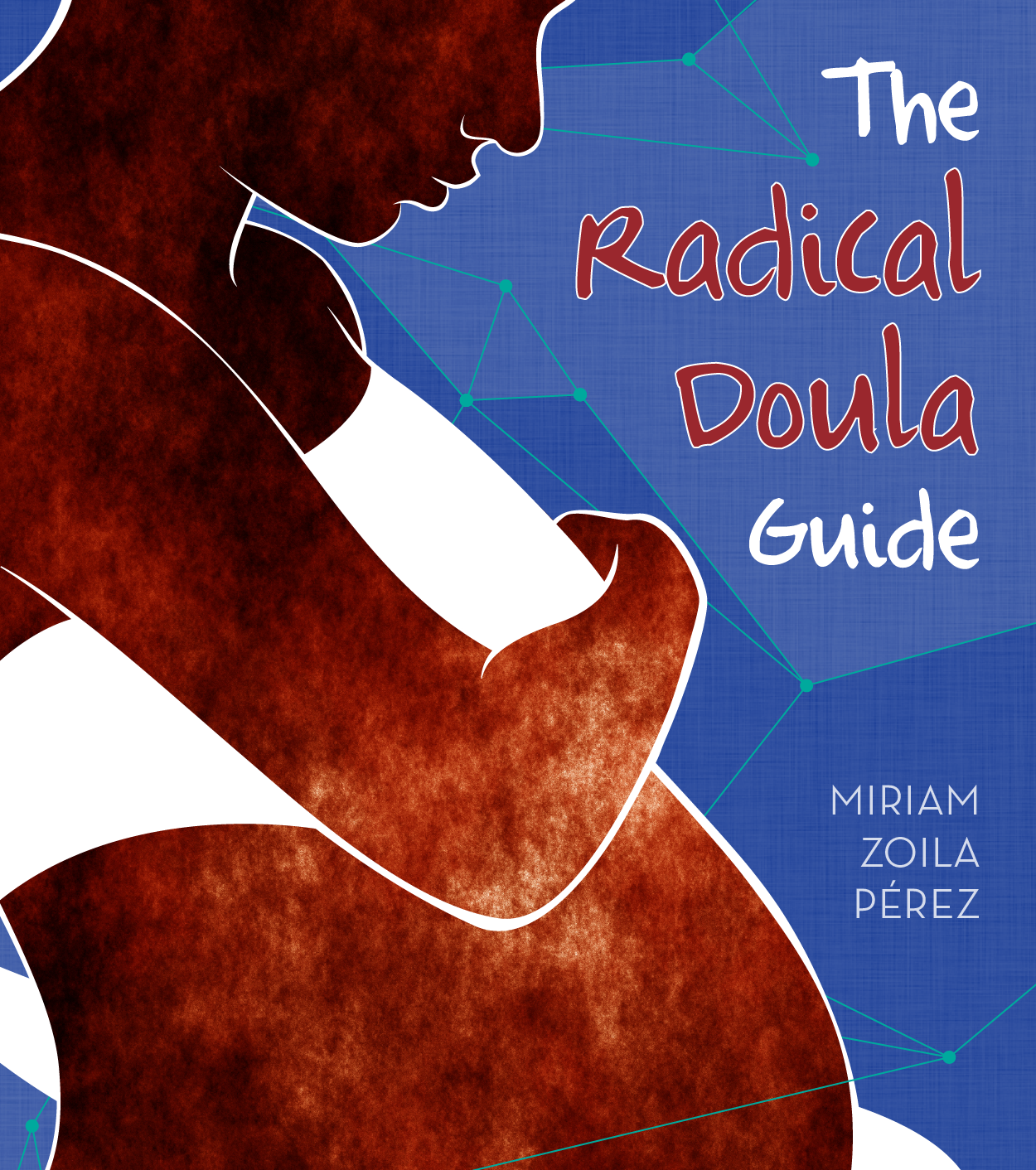
Cover image for The Radical Doula Guide, with pregnant person holding a sheet across the chest and constellations in the background

After many months of hard work, editing and wrangling, The Radical Doula Guide is finally in the last stages of production!

So we’re throwing a party.

The Radical Doula Guide NYC Launch Party

Wednesday August 8th, 6pm-9pm

duckduck bar
153 Montrose Ave
(2 blocks from Montrose Ave L train) 
Brooklyn, NY 11206

Benefiting The Doula Project

Raffle, photo booth, drink specials and more!

Please note updated venue!

Those of you who pre-ordered the guide through the indiegogo campaign will receive it in the mail by the end of August, but if you are in NYC this is your chance to come pick it up in person, hang out with other doulas and doula supporters, and get your copy early!

If you haven’t pre-ordered a guide, but happen to live in the NYC area, this is your first chance to purchase one for the post-fundraiser price of $12 (and no shipping!).

I’ve poured many, many hours and lots of sweat into this 48 page political primer for doulas, and I’m really excited to finally be able to get it out into the world. I really hope it will be a useful tool for all and have much gratitude to everyone who helped make this happen.

Facebook event here. I hope to see many of you there! At the event we’ll also be raising funds for The Doula Project, a group that I helped to found that provides free support across the spectrum of pregnancy to folks in NYC.

I also have tentative plans to do launch parties in other cities (DC, Bay Area, ?) so stay tuned.

Cover Design by Joy Liu, Swash Design Studio

Responding to the home birth debates

My latest column for RH Reality Check is up. With some serious hesitation I decided to respond to the conversation about the safety of home birth started by Michelle Goldberg recently at the Daily Beast. It’s been really challenging to see how polarized these conversations are, how vast the divide is between what feels like two camps: the home birthers (who are assumed to hate hospitals, obstetricians and people who use either) and the hospital birthers (who are assumed to hate midwives, home birth and people who use either). It feels like the potential for debate and rational dialogue is minimized because of this polarization. Maybe I shouldn’t be surprised by any of this. Anyway, my response is excerpted below.

A recent heated dialogue between journalists Michelle Goldberg and Jennifer Block about the safety of home birth has been the latest in a recent media flurry about the rise in home births reported by the CDC in January. A New York Times Magazine profile of Ina May Gaskin, arguably our nation’s most famous home birth midwife, was just one of the most mainstream of the recent articles, and seems to have stirred up much scrutiny of the practice.

I feel compelled to dip my toe into the conversation, if only to try and steer it in a different direction. The source of the back and forth between Goldberg and Block centers on this question: “Is home birth safe?” It’s not a new question; in fact it has been debated since the beginning of obstetrics and hospital birth at the turn of the 20th century.

Unfortunately, though, it’s exactly the wrong question to which to be devoting so much air time. A scant share of all women giving birth in the United States do so at home. Despite the reported 29 percent increase in home births nationally between 2004 and 2009, fewer than one percent of births happen out of hospital. While home birth gets much scrutiny, particularly when wealthy white women are seen as forging a new trend by choosing it, the place where the majority of women give birth in the United States — the hospital — goes largely un-scrutinized.

Hospital births do get a lot of attention in birth activist circles (where I spend significant time, as part of my work at Radical Doula). Midwives and doulas will quickly recite the problems with hospital birth, e.g., why high intervention rates (c-sections, inductions) are bad for mother and baby. But outside of that arena, where it’s arguably most needed, the conversation is stalled.

Here is the reason this matters: we are in the midst of a maternity care crisis. I’ve said it before, but I’ll say it again: our maternity care system is broken. Why? Because our maternal and fetal mortality rates are worse than 40 other countries worldwide, despite the fact that we spend more money than anyone else on maternity care. And where is  almost all that care being delivered? In hospitals.

Read the rest here.

Call for Submissions: Saving Our Lives: Black Women, Pregnancy and Childbirth

Black Women Birthing Justice, a group based in Oakland, is putting together a much needed anthology about Black women, pregnancy and childbirth.

Details:

Birthing Justice – Saving Our Lives will be an anthology of critical essays and personal testimonies that explore African American, African, Caribbean and diasporic women’s experiences of childbirth from a radical social justice perspective. We seek writings by midwives, doulas, natural childbirth advocates, reproductive rights activists, moms and moms-to-be, sociologists, feminist and Africana studies scholars, and historians that document state control and medical violence against black pregnant women, revitalize our birthing traditions, and honor and record empowering and sacred birth experiences. We are particularly interested in essays that document activism and resistance.

Read more here, and consider submitting! Such an important conversation.

Prison Birth Project in Western MA looking for new volunteer doulas

A fabulous organization in Western Massachusetts is looking for new volunteer birth doulas. They work with folks who are incarcerated at a local prison, work that I think is among the most important we can do as a doulas.

More information:

Our organization follows a reproductive justice model of care, which recognizes that multiple oppressions are at play in creating a lack of access to healthcare and rights and furthers reproductive oppression. We see reproductive healthcare, rights and justice as inherently connected to human rights and social justice and seek to provide care in align with those beliefs. The model we provide is holistic and centered on the whole experience, body and mind of the people we work with.

The nature of the work we do is sensitive. You will encounter situations both medical and personal experiences that you may not have encountered within your practice before, because of this we are selective about our doulas and seek to provide a high level of care (DON’T let this intimidate you!). You do not need to be a certified Doula, just have some solid birth or abortion doula experience. You must be open and committed to learning new ideas and concepts as well as medical information and researching on your own at times. Once we receive applications we will select candidates, we will set up a time to have a 15 min phone interview with you and invite you to an upcoming training for PBP doulas. You will be required to complete a application at the correctional facility and will have a criminal background check (you may have a previous criminal record, but can not have any open cases/warrants/parking tickets or violations), you will attend a 2 hour orientation at the jail and then be able to attend births, classes and groups with PBP.

We ask for a volunteer commitment of at least 1 yr. This does not mean you are oncall 24/7, you can either take individual clients or volunteer shifts to be oncall, but you must attend one on one appointments with clients at times throughout the year. The facility we work in is located in Chicopee, Ma and the hospital that most clients are transfered to is in Springfield, you are required to be at the facility or hospital within 1.5 hrs or being called. Some clients may be released before they deliver (which is the best case scenario) in these situations we still provide Doula care to clients and are able to refer them to other medical providers if they wish to change bc of medical conditions (we have homebirth midwives and other hospitals to refer clients with certain situations).

The full application is here.

“Model Minority” myths and maternal health

A belated post about my column last week for RH Reality Check, in response to the Pew Foundation report about the “rise of Asian Americans.”

Last week’s report from the Pew Research Center, The Rise of Asian Americans, has stirred up much controversy. Many advocates in the Asian American and Pacific Islander (API) community are arguing that the findings further a damaging idea about Asian Americans — the “model minority” myth. Advocates have said that these myths, which include the idea that Asian Americans are wealthier, more educated, and happier than other groups (all purported in the Pew report) are damaging because they hide the real challenges that exist for Asian Americans and Pacific Islanders, in particular for certain national and ethnic minorities that fall under the API umbrella.

One place this “model minority” concept can have negative implications is in discussions of health disparities. Whether due to population size or misconceptions about the health of Asian Americans, we do not often hear about the specific health disparities facing the API community. In the discussions about race and health, people of color are often grouped together, and disparities are talked about in terms of the gap between white people and people of color (Asian Americans included). These simplifications ignore the differences between racial groups, and even within nationalities and ethnicities within those racial subsets. Because of the Pew report, and as part of my focus on race-based health disparities and maternal child health, I decided to look further into the data on Asian Americans and Pacific Islanders.

What we do know is that API women suffer from higher rates of certain negative maternal and child health outcomes than their white counterparts.

Read the rest here.

My TEDx Talk: Transforming Empathy

I’m really excited to be able to share the video from my TEDx DePaul University talk from April.

It’s about three lessons I’ve learned from my work as a doula.

This was a such an amazing opportunity, and such an incredible challenge for me. I had to think about how to talk about my work, in this field that is so marginal in many ways, in a way that would reach people everywhere.

I spent a lot of time thinking about how to talk about this work without making assumptions about people’s knowledge, and what makes doula work universal. In the end, I talked about empathy and how it connects to our work for social justice.

I hope you’ll take the time to watch it. Thanks to the TEDx DePaul U crew who made this happen, an extremely dedicated group of student volunteers.

New column: Preparing for the trans baby boom

My latest column for RH Reality Check was published this week. An excerpt:

This shift in attention toward the issues facing trans and gender non-conforming pregnancy is indicative of a bigger shift overall — more and more trans and gender non-conforming people are giving birth. As Pati Garcia, a Los Angeles doula and midwife-in-training put it during our panel: “We’re on the cusp on a trans baby boom.”

Trans health as an overall field is still in its nascency. Our understanding of hormone therapies, gender reassignment surgeries, and much more is still being developed, so it’s no surprise that the field of pregnancy and parenting for trans people is also new and developing.

Within the needs of trans people in pregnancy and birth is the challenge of addressing what seems like an obvious connection: between pregnancy and femaleness. Trans people are often neglected in the arena of pregnancy and birth because of the strongly-held notion that only female-identified people experience pregnancy and birth. While not all trans people, whether they were assigned female at birth or not, can experience pregnancy (because of infertility or hysterectomy), some can and do, prompting the need for our pregnancy and birth providers to accommodate.

It’s not easy, as it’s a process that is intensely gendered. Everything from maternity clothes to the language of health care providers carries the assumption that the pregnant person identifies as female (and often that the other parent identifies as male). Language is an obvious barrier from the get-go: maternal health, pregnant women, all of the language associated with pregnancy and birth is gendered. From body parts to actors, all is coded in a way that would make a pregnant person who is not identified as a female feel uncomfortable.

Read the whole article here.

It was inspired by my panel at the Philadelphia Trans Health Conference, so big props to Pati Garcia (aka Chula Doula), Ryan Pryor, Abigail Fletcher and Lucia Leandro Gimeno, my co-panelists. It was an amazing conversation about trans and gender non-conforming centered midwifery and doula care. And the room was full! I love how many more people are focusing on these intersections, because there is much work to be done.

Reflections from the Strong Families Summit

Last week I had the pleasure of attending the Strong Families Summit, hosted by Forward Together, a group I’ve worked with as a consultant over the last year or so.

My role with their work has been strategy and media outreach for their mama’s day campaigns. I’ve written about those two efforts here and here, but this last one was a particularly fulfilling success, the e-card tool we created was used almost 5000 times.

The summit was my first chance to be in person with their coalition partners, a vast group of organizations who have signed on to be part of the Strong Families initiative.

What I like about their work is the attempt to build a big tent that can hold all of the issues that impact the health and well-being of families. While centered on a reproductive justice frame, the work goes even broader than that, encompassing many issues that I feel are central to my political vision. Everything from birth activism to LGBT families to environmental concerns to racial justice. Reproductive justice can hold all of this as well, but something about using language that seems even bigger is powerful to me. We need a big tent–we need a broad vision for how we’re going to achieve our goals.

The organization also relies on a practice called Forward Stance, which in very simple terms is a mind/body practice that grounds their work as organizers and advocates. The video below explains the practice in more detail.

In my work as a doula, and in our work as support people, I’ve been thinking a lot about the integration of mind and body. I know for me, as a writer, it can be a struggle to leave the realm of thinking and be more connected to the realm of feeling. But I also know that in my work as a doula, it’s not often that thinking really guides my work. It’s often something much less mental, and more intuitive. It’s also often more about presence and physically being there with someone than it is about intellect and thinking. I’m excited by the potential to bring the physical and spiritual into our work in social justice, to bring us closer to ourselves and each other. Last week was my first time trying the practice.

For more about Forward Together and the Strong Families Initiative, go here.