Radical Doula Profiles: Nicole Murray

Nicole is a labor doula and a mother of two young children. She currently resides in Newberg, Oregon, with plans in the near future to buy and live aboard a sailboat in Portland, along with cruising the world with her family (all while hopefully remaining a doula)! You can learn more about Nicole at her website.

RD: What inspired you to become a doula?

NM: When I was pregnant with my second child, I was planning an unassisted birth. I read and studied as much as I could, learning about all kinds of birth options. I did not have very many family or friends who fully supported me through that pregnancy, and I realized that I wanted to be there for women, no matter what their choices were. I think every woman deserves to have that.

RD: What is your Doula philosophy and how does it fit into your broader political beliefs?

NM: I am there to serve a woman and her family in whatever way is needed. Every birth is different, and as a doula, I know it is my role to support, respect and listen to each woman. I go in with no plans, or desires to mold the birth into what I deem right. In the same sense, I am very liberal in my own life choices, and believe that every person deserves the right to choose what kind of life they want to live.

RD: What is your favorite thing about being a Doula?

NM: I love the excitement of birth. Coming into a home where a mother is laboring, it almost feels electric. You are apart of this amazing experience that forever bonds you with these people. It totally fills me up with happiness unlike anything else.

RD: If you could change one thing about birth in the US, what would it be?

NM: That homebirth would be more accessible to every woman, no matter her means. I wish that all insurance companies would cover homebirths, and that those who choose to have one would be encouraged rather than being continually dissuaded.
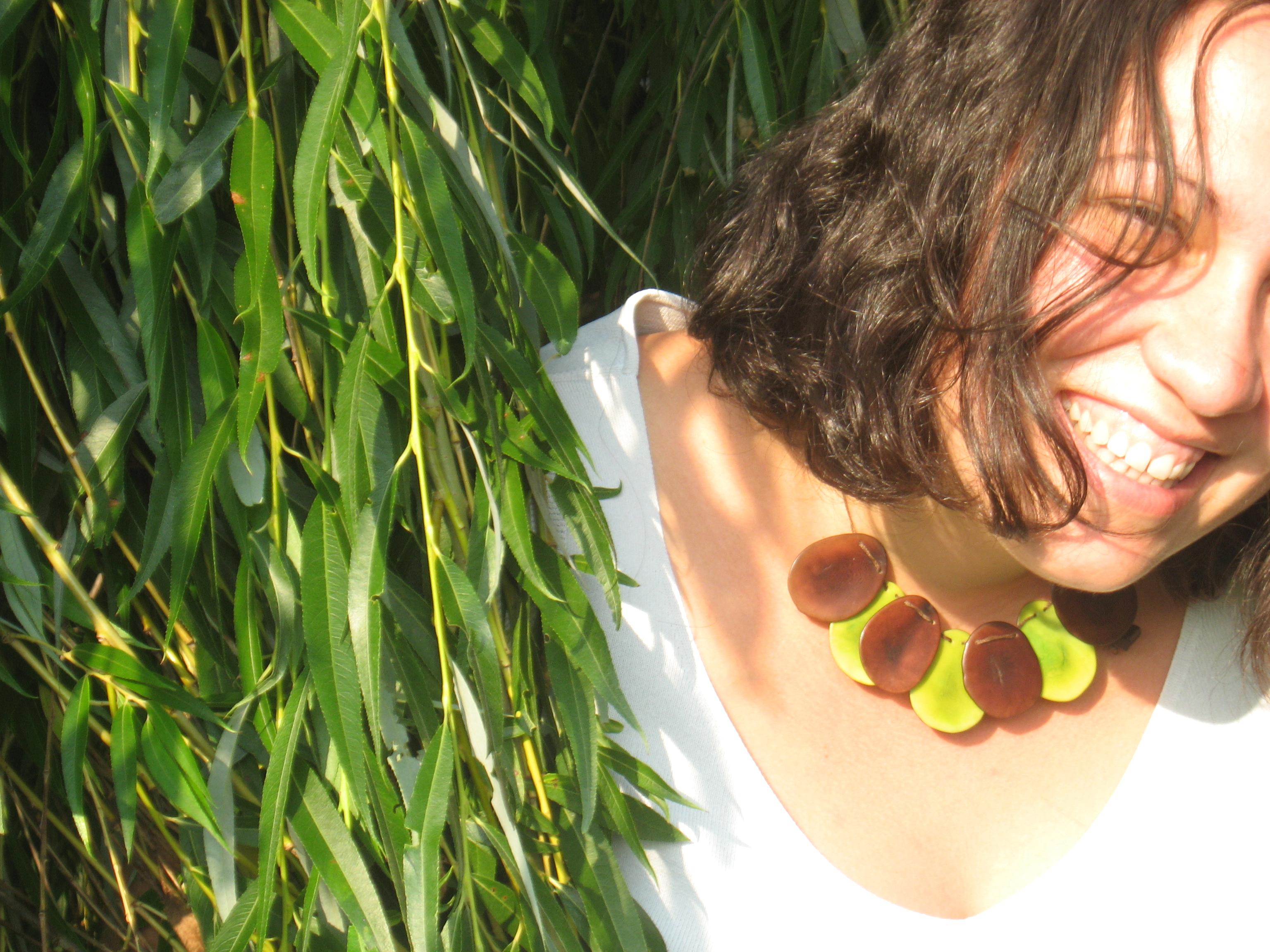
Radical Doula Profiles: Aya de Chellis

Photo of aya de chellis, smiling and wearing a large necklaceAya de Chellis is a radical queer Reproductive Justice freedom-fighter. As a doula she is available to listen and share ideas and comfort techniques that would be helpful to any person. The communities that Aya most often works with are young people, communities of color, Spanish-speaking Latina immigrant women and their families, refugee communities, and LGBTQ people. Primarily, she teaches Lamaze, attends births, and attends abortions, but also goes with people as a support person to get STI testing and treatment. She wants you to remember that you are your own expert and have many valuable tools within yourself. She lives, works, and loves in Pittsburgh, PA and is proud to be from the Rustbelt. She can be reached at aya.doula@gmail.com.

What inspired you to become a Doula?

I became a doula because I believe in girls and women, and I believe in Reproductive Justice. We have no choice if we don’t know what our choices are. For years I did work in abortion advocacy, and now most of my time is spent in pregnancy and birth care. For a number of women that I work with, I have attended both their births and their abortions. The same problems exist across the spectrum of medical care: girls and women are too often treated like they don’t know their own bodies, like they don’t know what’s best for them, and like they need medical intervention to “correct” a “problem.” I want all people to know that their experiences, their wishes, and their truth matters.

What is your favorite thing about being a Doula?

I love being able to create a space for a person to realize their own innate ability to take care of themselves. Moments when someone realizes that they naturally move a certain way or breathe a certain way for comfort and rhythm is amazingly powerful. Environment is everything, and if people are in spaces where they see negative images of themselves or people like them, if they are discouraged, or if they are distracted and stressed out, they can’t feel powerful and capable. Clearing a space and guarding it for someone is an awesome responsibility that I take very seriously and enjoy immensely.

If you could change one thing about birth in the US, what would it be?

I want to stop the inaccurate portrayal of birth and replace it with evidence-based information and true stories of physiological natural birth. One of the most dangerous things to birth is the constant representation in media of how scary and dangerous giving birth is. Starting in early childhood, we all swim in the notion that it is something to be feared and something that can go terribly wrong without a doctor’s supervision. Imagine how different our culture(s) would be if, instead, we heard stories and saw representations of natural homebirth, orgasmic birth, squatting birth, and fierce bellowing birthing mamas as the norm.

Radical Doula Profiles: Michelle Bell

The newest in the Radical Doula Profiles series is Michelle Bell!

If you’re interested in being part of the profile series here at Radical Doula, email me.

About Michelle:

I currently run a private practice where I am part of a collective (Ann Arbor Doulas). I also offer volunteer services as a postpartum and birth doula for the non-profit Doulas Care in addition to working as the Client Intake Coordinator. Doulas Care is committed to supporting, educating and empowering childbearing women and their families, and specifically exists to help women and adolescents with limited resources. If you’re receiving WIC assistance and are living in South Michigan or Metro-Toledo area and are currently pregnant, please contact us if you would like to explore the option of a doula. When I’m not attending births or working at the office, I escort at the local Planned Parenthood and write at the Gaytheists blog.

If you live in the Ann Arbor, Detroit Metro, Saginaw & Bay City area or Toledo area and are looking for doula services, please e-mail me! I can be reached at Michelle -at- annarbordoulas -dot- com and will return any inquiries within 24 hours.

Keep reading to learn more about Michelle!

Continue reading

Are you a radical doula?

If you identify as a radical doula, I want to hear about it! I also want to profile you for my radical doula profiles series.

Just send me a quick email with a few sentences about why you identify as a radical doula and I’ll get back to you with the process for being part of the series.

My hope is that this site can serve as a resource and community for all of us radical doula’s out there, and perhaps help potential parents find doulas whose politics match theirs.

Support the Doula Project!

An awesome organization of Radical Doulas in NYC (that I’m proud to say I played a small part in helping to found) is having a fundraiser in a few weeks. If you’re in NYC, participate! If you’re not in NYC, you can donate to support the group. They do amazing work with doulas across the spectrum of pregnancy–that means supporting moms giving birth, having abortions, even giving up their kids for adoption.

Radical Doula: Maria Dolorico

maria_radicaldoulaAnother awesome Radical Doula I want to highlight, Maria Dolorico, who is a doula in Boston. You can learn more about Maria at her website and her blog.

What made you become a doula?

I was an unlikely doula. I had no appreciation for birth as anything but a medical experience. My father is a retired anesthesiologist; growing up, if his chair was empty at the dinner table, it’s because he was giving an epidural. Anticipating the birth of my first child, I remember knowing I wanted an epidural, even saying, “There’s nothing natural about that kind of pain!”

Everything was going according to plan in my labor, and because of the epidural I felt the intense, but not quite painful pressure of the contractions. But then something amazing happened in second stage (pushing) – I felt myself giving birth. In my mind, I had never seen myself as anything but passive while laboring, yet with each contraction, I got behind each one and pushed my daughter further and further into the world. Between each contraction I was meditating, exquisitely focused on gathering my breath and my strength. Her birth was glorious, victorious, and I was heroic. I remember being a little sheepish as I told the birth story again and again, because it seemed to me that I was the only person on earth to have ever given birth before.

After her birth, I spent countless hours thinking up ways to get back into the delivery room. I thought about becoming a nurse, but had no interest in nursing outside of labor and delivery. Somewhere in this search, I heard the word “doula” for the first time, and I assumed that I could never be one because I didn’t see myself as an advocate for natural birth.

With my background and previous career as a mental health clinician, I began to work as a post-partum doula, finding clients who really benefited from not just my knowledge of infant care but from the intimate counseling and companionship I provided. The friend of a client asked me to be her birth doula because she “got such a good feeling” from me, and I vehemently declined. But she persisted, and serendipitously there was a birth doula workshop within a few weeks of her due date. I attended, bristling every time there was disparaging subtext about women who chose epidurals, yet I was excited finally to have a reason to be in the birth room. I knew in my heart that my doula practice would not be motivated by helping women have a natural birth, but by helping women find resources within themselves, at depths they never even imagined, in order to give birth in a way that was meaningful to them.
Continue reading

Radical Doula Profiles: Mary Mahoney

This week I’m happy to have a profile of Mary Mahoney, one of the fantastic doulas who established the NYC Abortion Doula Project. Read more about that project here.

RD: Why did you become a doula?
MM: I became a doula because I’m dedicated to creating positive reproductive health experiences for all women, whether they choose to carry their pregnancies to term or not. I believe that by providing non-judgmental emotional support, resources, and education women can be empowered to have not only a positive birth or abortion experience, but also become advocates for their own reproductive health for the rest of their lives.

I also became a doula because I wanted to understand more fully the complexities and barriers pregnant women who choose to keep their pregnancies face. As Assistant Director of the Pro-Choice Public Education Project, my focus has often been more on unintended pregnancy, sex education and abortion. Since it is often the same women who have children and get abortions, it was important for me to understand the full span of reproductive health experiences women have, so that I could become a better advocate.

RD: How does that work fit into your broader political beliefs?

MM: As a doula and social justice activist, I see public education and individual awareness as the cornerstones of making the best reproductive health choices you can for yourself and on your terms. Doulas reinforce in women that they have the ability to do this and we can help them get there. However, often information and awareness are not enough. Many women do not have the resources to make their birth plan or positive abortion experience a reality. Some doulas offer low cost or free services to women who are not able to afford doula care on their own. Recently in NYC, Lauren Mitchell and I started a program, the Abortion Doula Project, that supports women who are having abortions, free of charge. We use the doula model of care to offer non-judgmental, compassionate emotional support before, during and after the abortion. In the next year, we hope to expand our service to lower-income women who choose to carry their pregnancy to term.

RD: What is one thing I would change about birth in the US?
MM: There are a lot of things to tackle here. I think the number one thing I would want for a woman in any challenging reproductive health experience is that she feels like she has a support system, that she is not alone, and that she has someone looking out for her best interests. One thing we come across in the Abortion Doula Project is the question of, what if a medical professional does something we do not approve of or do not think is in the best interest of the woman? We understand that we are limited in what we can actually say to this medical professional to get them to change their behaviors, but the one thing we can do is guide the woman to a better place through the doula model of care. I spoke with a doula recently who said to me “all you can control all the time is the level of care you give the woman.” And it’s really true. And it’s also important that we as doulas remember that women come to us with their own coping resources, that they know how to take care of themselves. We are there to remind them to do it and support them as they do.

Radical Doula Profiles: Sasa Ynoa

In the second edition of the Radical Doula Profiles, we have the awesome Sasa Ynoa from the Dar a Luz Project. It’s really a beautiful website, so be sure to check it out! She’s also working on a film project, so stay tuned for more information about that.

Sasa Ynoa

Radical Doula: How does your Doula work and birth activism fit into your broader political beliefs? My birth activism revolves around the vision that birthing should be as healthy and beautiful as possible even if there are complications or moms have health conditions. I feel like this vision extends farther than the actual room and experience but to the policies, insurance companies, and institutions that implement very inconvenient protocols/policies that make birthing in hospitals undesirable.

There really is a birthing crisis – with serious cuts in access to prenatal care facilities and hospitals closing their L&D units yearly. It’s not profitable to hospitals. This also affects birth centers as they rely on nearby hospitals to transfer laboring mothers with complications. It is quite involved and I ultimately think it starts with education. Lack of facilities affect a child’s future and a mom’s health. There are simple things that screening and nutritional advice can prevent. Although I strongly advocate midwives, the reality is that there are some women who may not be a candidate for a birth center/homebirth or midwife care. Their pregnancy maybe complicated by a health condition. How are they going get to their Ob/Gyn? This can become especially difficult when the visits become more frequent in the third trimester aside from their work and/or family responsibilities. These are concrete obstacles that pose serious health risks. Just like we talk about environmental sustainability, foreign policy, and the economy we must elevate Childbirth and Prenatal Care to the forefront of political discussions where it becomes an umbrella in and of itself. Prenatal care is disparate among communities of people. We know that this is the case when it comes to education, food, and public services, and disparities in prenatal care fall along the same socio-economic lines. This is reflected in an infant mortality rate that is twice as high among Black women than for White woman in the United States. This in essence is a violent crime on our children, moms, and communities. Change can not occur until our voices are heard.

RD: What is your favorite thing about being a Doula? Knowing that I was present to a momentous experience in a woman and child’s life. I love seeing the excitement from family to see a new life on earth. I used to swell up with tears. As a labor and delivery nurse, I still get very excited.

RD: If you could change one thing about the way women birth in the US, what would it be? Many of the moms I see are young and their pregnancies are often times unplanned. I observe that some of these moms often approach their pregnancy in a very hands off manner. Many expect to relinquish complete control to the hands of health care practitioners. I would like to see more mothers and moms-to-be involved in attaining a healthy pregnancy and learning coping strategies throughout labor. I know that there are programs for young moms but I would like to see more as a standard of care. Childbirth education should be free and accessible community wide. I feel when women, especially those marginalized, become more educated and gain confidence in their power to birth, the result will be a beneficial shift in our birthing culture and in our communities.

Don’t forget to check out her website: www.daraluzproject.com

Continue reading

New series: Radical Doula Profiles

Anne

In an effort to promote all of the amazing doulas out there doing this great work, I’m going to start posting profiles of Radical Doulas. I hope you enjoy meeting these doulas! If you have suggestions for doulas you think I should profile, email me at radicaldoula@gmail.com.

To kick off our series, I’d like to introduce Anne of Dragon Fly Doulas and Willow Birth.

Radical Doula: What inspired you to become a Doula?

Anne: In order to tell you how I became a Doula, I first have to explain how I became a mother.

In 2002, I was working as a paralegal when I became pregnant. I had a fairly easy pregnancy except for some morning sickness that was startlingly regular. My mother flew in from Los Angeles on the first day of my maternity leave. I was a bit frustrated that she chose to come so early, thinking I was going to have to entertain her for weeks. That night we sat down for dinner and my water broke. Later on she told me she had a dream that she would miss the birth if she came on time, so she flew up early. What can I say? Mother intuition is a powerful thing.

True to what I had been taught in my childbirth education class, I called my OBGYN, who ordered me to the hospital. What followed was a classic medically managed birth. It started with Pitocin upon admission, followed by narcotics, followed by epidural, and ended in a cesarean section 24 hours later. Unfortunately for me, what had been a benign heart murmur for most of life nearly killed me during the surgery and led to an extended stay in the hospital. The worst part was when I was told I couldn’t breast feed because they couldn’t figure out what was wrong, so they had me on heavy blood thinning drugs. On the third day of my hospital stay I sat in a chair weeping when a woman I had never met opened the door. “Why are you crying?” she asked. I told her that nothing had gone as planned and now I couldn’t even breastfeed. I was such a failure at birth. She frowned and said, “I’ll be right back.” She returned 2 minutes later with a breast pump and spent the next hour talking to me about my birth, showing me how to “pump and dump” and generally telling me I wasn’t a bad person. I will never forget her kindness.

Four years later, I found myself in Eugene, Oregon hoping I could repay that kindness by serving others as a Doula.
Continue reading

Great piece about the Birth Attendants and prison doulas

From the Seattle Times:

The doulas, members of an Olympia-based doula group called The Birth Attendants, work with the entire prison population as well as the prison’s Residential Parenting Program, which helps pregnant inmates and new mothers maneuver their way through childbirth and beyond.

“We’re not there to pass judgment,” but to educate, said doula Zimryah Barnes, who is part of the prison-doula project. “We don’t deny anybody support who requests it.”

Barnes and other members of The Birth Attendants have become a familiar resource around the prison since they brought the concept to prison officials in 2002. Barnes said the program is based on a similar one in prisons in the United Kingdom.

The doulas offer one-on-one counseling sessions and courses on sex education and family planning. Some doulas even are present when inmates travel to a Tacoma hospital to deliver their babies. Many of those inmates are allowed to raise their children inside the prison as long as they follow strict behavior guidelines.

Read the rest of the piece here. Yay Birth Attendants! Luckily I have heard rumblings of a few other projects like this one cropping up, which is really important. I also learned recently that while the United States only accounts for 5% of the world’s population, we are responsible for 25% of the world’s prison population. Scary.

Thanks to Feministing reader Amanda for the link