Abortion doula diaries: Do all women feel sadness?

I worked at the hospital this morning as an abortion doula. There was only one patient today.

After my first post about being an abortion doula, I’ve been thinking a lot about the responses I received. Some where the to-be-expected anti-choice comments about how what I do, or what I call myself, is a contradiction. Some were simply well-meaning comments about how needed this work is, or how great I am for being with women during such a difficult time.

Abortion gets so much attention as a political issue in this society that it often totally obscures people’s actual experience.

Today was a reminder of how those assumptions are often totally incorrect.

As I mentioned in my first post, it’s not uncommon for the procedure to be emotional for women. But it’s not always for the reason that one might think. People assume that abortions are about sadness.

Not for everyone.

For example, the woman I supported today was most nervous about the pain she might feel during the procedure. We talked about it beforehand, I tried to reassure her. Once the procedure had started, she began to cry, and proceeded to cry through until the end.

She held my hand tightly, I caressed her shoulder and tried to say reassuring things (you’re doing great, don’t forget to breathe) throughout. For most people, the procedure only takes 10-15 minutes.

Continue reading

The film that turned me into a birth activist

I often get asked how I got into doula work. This is the answer:

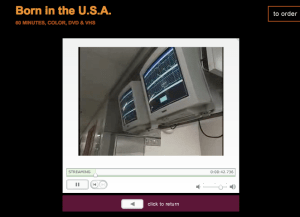
Screen shot of film, Born in the USA

It’s kind of cliche. I was always interested in women’s health. Had aspirations of being an ob/gyn. Then I went to college and took organic chemistry. It was a bad scene, and I promptly said goodbye to the idea of medical school.

Then I took a class called The Anthropology of Reproduction at a nearby women’s college. We watched this video, and I walked out of class knowing my life had just changed forever.

I was so fired up by the film, Born in the USA, and the screwed-up culture of birth it documented. It became my big issue. I was only a sophomore in college, but I talked to everyone I could about how wrong we were about birth, and how badly we were treating mothers and babies in hospitals. Within a year I had become a doula. I wrote my thesis on my time spent in as a volunteer doula in a public maternity ward in North Carolina.

I was obsessed. Seriously.

Ask my college roommate.

The rest is history, as they say.

I think Ricki Lake’s film The Business of Being Born serves a similar role to the film I saw and it’s much more widely available.

My first day as an abortion doula

I arrive at the hospital around 9am, head up to the right floor, showing my volunteer ID badge to the security guard as I head toward the elevators.

I round the corner and enter the floor, delicately labeled Women’s Choices where the procedures will take place. I walk into the makeshift office/empty procedure room where the Residents/Doctors who will be performing the procedures sit debriefing the morning’s cases. I’m greeted by the Doula Project coordinator/Counselor at the hospital, and she debriefs with me about the folks on tap for the morning. While everyone is in for a first trimester abortion, the stories are different. Some are elective procedures, some are wanted pregnancies with medical issues–ectopic, fetal demise, etc.

I walk into the waiting room where the women are already wearing hospital gowns and socks, sitting nervously, quietly, waiting their turn. They are asked to arrive really early–7am–with the hope that it means most will be there by 9. I offer blankets, sometimes speaking in English and Spanish, sometimes using hand motions to communicate with patients who speak another language.

Everyone has been fasting since the night before, adding to the discomfort, tinging the air with acridity from hungry breaths. I sit, introduce myself to the patients, make polite conversation. Everyone responds differently, some want to talk, some want to sit quietly. Mostly I listen, try to remain attuned to the signals they send about whether they want company or silence.

Continue reading

New Los Angeles full spectrum doula project

I got word of a new full spectrum doula project starting up in Los Angeles. They are looking for members. Check out the info below!

1.  If a doula is interested in working as a birth doula or a full-spectrum doula (or both), please email us at info@ladoulaproject.org.
2.  Requirements: doulas must be able to take at least one pro-bono birth per month and be willing to meet the clinic volunteer guidelines (more information on that when we send them the application.)
3.  Doulas must be aware that we are an organization that works with the full-spectrum of pregnancy.  If they are only comfortable working with births at this time, that’s fine, but they must be aware of that association.

And you can download the flyer here.

Yay for new full spectrum projects!

In remembrance of Laura Hershey

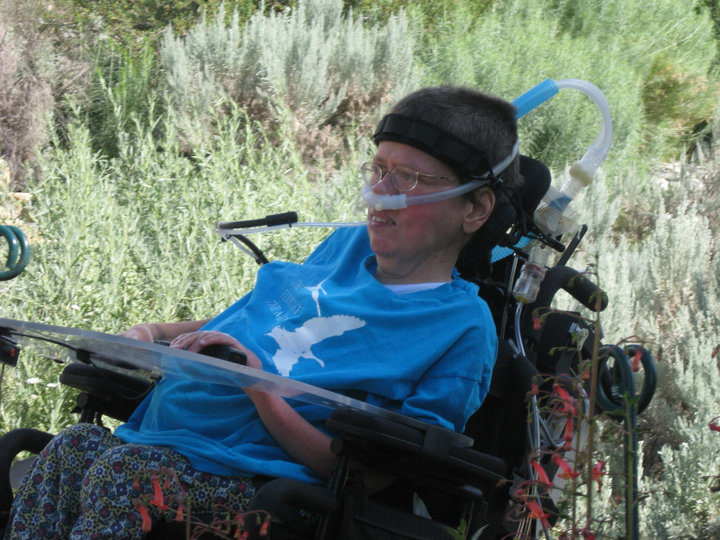
Photo of Laura outdoors
Photo of Laura via Memorial Site

Laura Hershey, a great poet and disability rights and justice activist passed away this weekend.

I got to know Laura this summer at the Lambda Literary Writer’s Retreat, where she and I were amongst thirty other awesome queer writers spending a week in community together.

I’m sad that Laura and I’s paths did not cross for longer–I wish I could have known her and her work better.

Laura was an accomplished poet, with an impressive list of credits and publications. She was a parent, a partner, an activist. Laura was the one who emailed me about this statement on reproductive rights and disability justice that I posted a few weeks ago. I believe she was also a co-author of the statement.

Laura’s work speaks for itself, and you can introduce yourself to it on her website if you don’t know it all ready. Feministing also did an interview with Laura back in 2007–view it here.

I’m posting a video below of Laura reading a short selection of her poetry at our retreat this summer. Apologies for the lack of transcript.

http://vimeo.com/14392699

With love and respect Laura, you will be missed.

Via Forward

Live in Illinois? The home birth act needs your help this AM

Via the Big Push:

ATTENTION ILLINOIS RESIDENTS & ANYONE WITH FAMILY/FRIENDS IN ILLINOIS.

It is VITAL that everyone re-call your state reps in Springfield ASAP and try to find at least a few friends/family members who will call between 9 and 11 a.m. on Wednesday, November 17. We need to FLOOD the capitol with calls during that time.

  • If your state rep already support the Home Birth Safety Act, please thank them for their past support and ask them to remain strong with us.
  • If your state rep is iffy or unknown, ask them how they will vote and send a text report to the phone number below.

People who live in Illinois can find their reps here.

Please call Springfield as soon as you see this PushAlert, and then call as many people in Illinois as you can to remind them to call right away between 9 and 11 a.m. PST on Wednesday, November 17!

The Home Birth Safety Act would allow the licensing and regulation of Certified Professional Midwives in Illinois. CPMs are not currently allowed to practice legally in IL. More background here.

MORE Magazine features young feminists

Photo of some of the young feminists featured in More Magazine article

More Magazine, whose tagline is “For Women of Style and Substance” had a spread about the “new feminists” in their November issue. The picture above accompanied the piece.

I was included in the group of 15 women featured (although not pictured above). Why was I included? Probably because I know (and am friends with) Courtney E. Martin, Editor at Feministing.com, also included in the feature and who helped the Editor at MORE recruit participants. The selection of women included in this spread wasn’t selected by any particularly rigorous process (that I know of), and it was probably more about who knows who than a real cross-section of young feminism.

There are many, many folks who are really key parts of the feminist movement who were left out of the feature. There are some serious representation gaps, too. Only four of the 15 folks featured are people of color. Most of them reside in NYC. There appears to be little to no representation of folks with disabilities. I might be the only queer person included. There were no trans folks in the group. Almost everyone is college educated. The list of people and groups missing could go on and on.

As flattered as I am to be featured in a national magazine for my work, I don’t think this group of folks (many of whom I love and respect) are truly representative of feminism’s future.

Two of the women included in the feature are conservative women. Their politics don’t fit within my definition of feminism (Jessica Valenti agrees).

A panel discussion last week that came out of the magazine feature replicated these problems live and on stage. Jessica has a round-up of responses written by others, but I was there and it was a tense evening, to say the least.

I’ve been speaking a lot lately about what I see as feminism’s identity crisis. This crisis has many faces, and almost all of them were represented during the panel last week, and by the MORE Magazine feature. It was honestly really difficult to watch.

Why is feminism in crisis?

Feminism is in crisis because we don’t know who our allies are. Can anyone be a feminist? The debate about whether conservative women, particularly far right-wing women who often oppose most of the policies of the feminist movement so far (abortion rights, equal pay legislation, etc), are feminists is raging. Are we willing to say folks with certain views can’t be feminists?

Feminism is in crisis because we don’t know what our agenda is. Some feminists (myself included) want to push for prioritizing an intersectional feminism that brings a gender analysis across issues and movements. That means environmental justice work can be feminist, immigration work, racial justice work, economic justice work. It can all be feminist, as long as we bring a gender lens and understand how gender impacts those issues. Others argue that only certain issues (usually those most narrowly impacting privileged white women) are feminist.

Feminism is in crisis because mainstream leaders and organizations consistently neglect the needs of people of color, queer folks, immigrants, disabled folks, low-income folks. The mainstream agenda remains too narrow and too focused on the needs of privileged white women. This despite the fact that feminists from all backgrounds have been pushing and pushing, creating their own feminism(s) to rectify this problem. A quick look at the demographics of feminist leadership might shed some light on why this is an ongoing problem.

Feminism is in crisis because we’re not sure what to do with the “women’s movement” in an era where gender categories, binaries and roles are being questioned. What’s the role of men in feminism? What about trans and gender non-conforming folks? Is a movement centered around the identity of woman the most useful and effective today? How do we move forward without perpetuating harmful ideas about gender difference, and include folks of all genders in the fight for gender justice?

I have strong feelings about the answers to most of these questions. But the reality remains that these fundamental identity questions, and our ability to resolve them, is going to shape where feminism goes from here.

Again, I’m flattered that my work (particularly since they highlighted Radical Doula and the full-spectrum doula movement) was featured in a mainstream magazine. I’m excited that a whole slate of older women readers (MORE’s primary audience) will see the names and soundbites of a number of younger women they’ve never heard of.

But the article does a better job representing the challenges of the feminist movement than representing a broad view of it’s leaders. Everyone included is a leader in their work, in their movements, in their world. But there are way more people out there who make feminism the diverse, vibrant and thriving movement that it is today. Let’s not forget that.
Barbara Seaman Award for Activism in Women’s Health

Torso of a woman with NWHN underneathI’m super pleased and flattered to share with you all that tonight, at the National Women’s Health Network Annual Fall Benefit, I’ll be getting an award.

It’s the Barbara Seaman Award for Activism in Women’s Health.

When Cindy Pearson, the ED of NWHN, called me up to tell me that I’d been selected, she specifically mentioned Radical Doula and my work here. She said something like, it’s so fascinating how you can bring together transgender issues and birth!

Lol.

It’s true, that my purpose here at Radical Doula has been just that–to make connections between issues that other folks find to be contradictory. Birth and abortion. LGBTQ issues and doulas. Midwives and immigration.

I’m really flattered to be honored by an organization whose mission, since their founding 35 years ago, has been to serve as a watchdog for women’s health.

We all know well, as birth activists, that the medical community does not always have our best interests in mind. They’ve got their bottom line in mind, the insurance companies in mind, profits in mind. NWHN works to make sure women have the information they need and know the truth about how medicines and medical technologies impact us.

Barbara Seaman spent her life as a writer and activist doing this work and I’m honored to be recognized in her name and continue her legacy.

Hello election day.

It feels like all I can think about, but that’s probably unique to my particular community of politically-minded folks. And the excessive number of facebook posts and tweets about voting.

Make sure you vote today (if you can). It’s exceedingly important.

I unfortunately am registered to vote in Washington DC, where the elections are decided during the primary (98% Democratic or something) and we don’t get real representation in Congress. Love you Rep. Eleanor Holmes Norton, but you don’t even get a vote. (Side note: Yes to DC statehood!)

This will be remedied shortly, as I’ve moved back to an actual state with legit representation in Congress.

But all this to say, you should vote today!

The recent debacle in NY State with home birth midwives and their ability to practice is evidence enough that politicians matter a lot when it comes to our issues, even birth ones. If it wasn’t for the NY State legislators voting to change the Written Practice Agreement rules, home birth midwives wouldn’t be practicing in NY State right now.

Also, remember when jerk-wad Governor Schwarzenegger vetoed the anti-shackling bill?

And thanks to everyone who already voted.

We’re a growing movement ya’ll

It’s been almost four years since I entered into the world of blogging, and almost six since I became a doula and a birth activist.

And you know what? We’re a seriously expanding movement.

It’s been absolutely amazing to watch. Since starting this blog to try and connect with other radically-minded, pro-choice, activist doulas, since collaborating with Mary and Lauren on the seeds of what have become a flourishing Doula Project in NYC, from writing this first article about some of the pioneers of the abortion doula movement.

So much has changed in such a short time.

Let’s break it down:

First of all, the birth activist movement is blowing up. We’ve got doulas coming out of our ears, amazing fired up midwives and birth activists pushing for better access to midwifery care, improved policies in hospitals, insurance coverage of midwives and home birth and doulas. We’ve got parents around the country waking up to the bad state of birth in the US, and trying to change it. We’ve got a movement of folks trying to eradicate the inhumane practice of shackling incarcerated women. We’ve got prison doula projects, volunteer doula projects, all sorts of birth activism.

Then we’ve got this amazing community of “full spectrum” doulas–folks like you and me who have a radical intersectional view of their doula work, who want to support folks in every phase of pregnancy: birth, abortion, adoption, miscarriage, even other basic reproductive health services like colposcopy.

Thanks to the amazing work of the Doula Project NYC, there are doula projects popping up around the country–in at least 4 other cities and counting.

A lot of the folks involved in this movement have been doulas for a long time, and are now expanding their services. But many of them, like me, are young, childless activists (many from the reproductive justice movement) who have been called to doula work because of this amazing intersectional stuff happening. How rad is that? I had someone tell me at an event recently–I thought all doulas were hippy earth mamas with long flowing skirts, until I met you. We’re queerer than ever before, more diverse than ever before.

We’re changing the face of birth activism every single day.

Laurel Ripple Carpenter from Cuntastic (and one of the first Radical Doula Profiles) just launched a social networking site for all of these amazing doulas, the Full Spectrum Doula Network. Check it out. Join, connect with other bad-ass doulas like yourself and let’s keep this movement growing.

I feel blessed to be a part of this amazing new wave of activism. From profiling all the amazing doulas on this blog, to helping to found the Doula Project in NYC, to coming back to the project (yay!) after years away and getting to be part of the work of a full spectrum doula again, it’s amazing to be here and to work with all of you.

So let’s keep this work going ya’ll. For serious.