Guest post: Tantric Birth

So I connected with Nekole after seeing a tweet about her workshop at this year’s Sex 2.0 conference where she presented about TantricBirth. Sounded pretty interesting to me! I invited Nekole to write this post about how she defines TantricBirth. Learn more at her website.

Nekole Shapiro synthesizes a lifetime of experience as a body worker and Tantric practitioner, her birthing experiences as a mother and doula and her profound love of science into TantricBirth, a holistic approach to the birthing experience. The TantricBirth system uses interviews, presentations, classes and direct family planning and birth support to enable families to have an empowered birth experience. Nekole is an LMP and holds a BA in Asian Studies and a Premedical certificate from Columbia University.

An Introduction to TantricBirth

Our human experience is deliciously deep.  It is impossible to affect one aspect of ourselves without affecting another.  Our parts are woven together like a tapestry.  When I hold my baby and feel love, my body undergoes a change, my spirit is affected and my mind is altered.  When I am embodied, I am aware of all of this as it happens and can feel it in every cell of my being.  When I am embodied, I feel my power.

Other than during her own birth or death, a birthing woman enters the most altered physiological state of her life.   Because we are an interconnected weave of human experience and expression, this altered physiological state is also an altered emotional, mental and spiritual state.  All of who we are is changing at a rapid pace as we labor and birth our babies, and again as our bodies get used to no longer housing a baby.  In this way, if I can embody the birthing experience, I can access a power greater than any I have felt before.

Continue reading

Experimental drug being used to “fix” intersex genitals

This is a post that I wrote for Feministing a few weeks ago. I wanted to cross-post it here because this issue, of kids born with intersex conditions, definitely comes up for birth workers. While you may not have had this experience yet, it’s possible that one day you will be with a family when their child is born with an intersex condition. This could lead to all sorts of responses from the midwives or doctors you are working with–including the decision to perform surgeries on the infant.

It’s a huge issue, and one that is difficult to tackle in a blog post. But it’s one that I would like to keep writing about. Just as I talk about gender and the ways folks identify outside of the binary of male and female, there is also the biological fact of gender diversity, exemplified by folks who are born with intersex conditions.

At the moment of birth, when the doctor/midwife/practitioner wants to issue the hallmark phrase–“It’s a boy/girl!” if there is any confusion around this, it becomes a huge issue.

Maybe it shouldn’t be–and maybe one day we’ll move away from such a strong propensity toward gender categorization. In the meantime, we’re dealing with doctors who would rather employ experimental hormonal treatments in utero and perform radical medically unnecessary surgeries on infants than deal with gender ambiguity.

Obviously I have a strong opinion on the matter. The post below has more info, if you’re confused about what I’m saying.

Continue reading

Radical Doula Profiles: Kristen Ethier

This is a series highlighting folks who identify as Radical Doulas. Are you interested in being part of the series? Email me.

Kristen, smiling with yellow scarf and blond hairKristen Ethier is a radical feminist, queer reproductive justice activist & proud doula. She recently started her very own practice called Kaleidoscope Doula Care and is getting her roots as a new-to-Chicago doula. She is proud to offer doula support for all pregnancy options including birth, abortion and adoption as well as care for all families and pregnant people. She really loves working with teens & LGBTQ pregnant people & if you are in Chicago, she wants to be your doula! She can be reached at kaleidoscopedoula@gmail.com. Also, check out her website at www.kaleidoscopedoula.com.

RD: What inspired you to become a doula?

KE: I was initially inspired to become a doula when I was working in abortion care. This may seem like an unlikely place to start, but being in the room and, essentially acting as a doula for women having abortions was incredibly powerful and struck a chord for me. After this initial inspiration, I went on to work with teen mothers and not altogether surprisingly, heard not only from the mothers but also from health care providers who admit to not sharing the full range of options with teen mothers due to their age, low income status, etc. Since then, I have never looked back. I see being a doula as a radical political act and am constantly inspired by the small moments of liberation that are felt when people are able to make empowered decisions about their bodies.

RD: Why do you identify with the term radical doula?

KE: My identities as a radical feminist, queer, reproductive & social justice activist constantly inform my life and work. Like many repro-justice activists, I began with a focus on abortion & sexual health but have expanded this lens to include work around the barriers and injustices that pregnant people face, especially around decisions to give birth. Becoming a doula has allowed me to bring these perspectives together. I named my practice “Kaleidoscope Doula Care” reflecting my commitment to providing doula care across the spectrum of pregnancy, including abortion and birth, as well as to providing safe & unconditionally supportive care to all families and pregnant people, especially to teens & young people, and to queer, gender non-conforming and transgender folks.

Continue reading

Big victory for midwifery in New York State

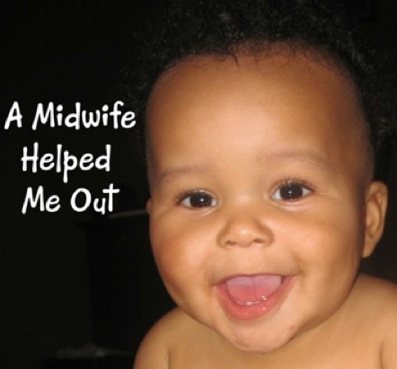
Baby smiling with words "a midwife helped me out"I have been writing about the dire situation for home birth midwives in New York City, prompted by the closing of St. Vincent’s Hospital, one of the only midwife and birth friendly hospitals in NYC.

Because of a piece of NY State law that required all home birth midwives to have the signature of an OB at a hospital in order to practice, when St. Vincent’s closed due to debt problems, the midwives were out of luck. This move pretty much eliminated home birth as an option in New York City, and the law had made it hard for midwives around the state to practice.

Well, we finally won one! It’s incredible and in many ways unexpected, but a bill was introduced by some amazing and fierce activists in New York State called the Midwifery Modernization Act. This act would remove the requirement for a Written Practice Agreement between midwives in New York State and obstetricians, the contract that was keeping many midwives from practicing because doctors and hospitals did not want to sign them.

Thanks to some amazing lobbying on behalf of birth activists and advocates (and an incredible number of phone calls from folks like YOU) the MMA has passed both the NY State Assembly and Senate.

Hopefully within a short time (as long as Governor Patterson signs the bill) this will mean that midwives across New York State can practice without being beholden to the signature of one OB or hospital.

This doesn’t mean that the midwives won’t be using hospitals to transfer when necessary, but this one signature won’t be the determining factor for their practice.

Congrats to everyone who worked on this important legislation!

More information at Free Our Midwives.

New radical birth magazine: SQUAT

SQUAT cover with woman and babyA new radical birth publication, SQUAT, just came out with it’s first issue this week. The tagline of SQUAT is “An anarchist birth journal.”

I’m proud to say I contributed a piece to the first edition of the magazine, about being a radical doula. SQUAT is a real live print publication, which you can order from magcloud here. You can also preview it there, and it looks pretty freaking awesome. I miss the paper in hand publication days sometimes, and this one looks like it’s got a great layout.

The folks at SQUAT are also organizing a camp, which they say will be “a radical celebration of midwifery and birth!” It’s in August in Washington State. Details here.

If you want to buy the first edition of SQUAT, go here. I also have a sneak preview of my article after the jump!

Continue reading

Book review: Birth Models That Work

Cover of book with image of baby on itI was excited to get a review copy of the new book, Birth Models That Work, edited by Robbie Davis-Floyd, Lesley Barclay, Betty-Anne Daviss and Jan Tritten.

Robbie Davis-Floyd’s book Birth as an American Rite of Passage, was one of my biggest inspirations while in college and studying the anthropology of birth. She’s a definite pioneer in academic settings.

The best thing about Birth Models that Work is that it focuses on WHAT WORKS! So much of the academic literature out there (and activist literature, for that matter) focuses on what’s wrong with our current system. There is so much wrong that it can challenging not to focus on that entirely. BMTW is smart in its approach. We need to elucidate what is working, to give people models to emulate and to prove that we are right about what is best for parents and babies.

From the introduction:

None of the models described in this book is perfect, but all of them work well for mothers and babies. Chapter authors show us to what extent each model meets these criteria, pointing out what “getting there” takes and what obstacles and limitations each model faces in attempting to do so. Perfection is not the issue; functional (as opposed to dysfunctional) maternity care is. These functional models deserve international attention; this book is designed to help them achieve it and to encourage the creation of many other such models around the world.

Well said!

My only criticism of this book is that it’s overly academic in nature. Not surprising coming from academics and medical practitioners and probably wise since the audience they most need to research are other doctors, public health professionals, researchers. Unfortunately it’s also priced academically, at $27.95 for the paperback.

This book is a great addition to any library on the study of childbirth practices, with serious practical applications.

The authors are planning a second edition of the book, Part II, but its publication depends on the successful sale of this first part.

Go here to learn more about the book  and purchase it!

Victory in Kentucky: Fetuses cannot be legally disconnected from the pregnant woman carrying them

Via the National Advocates for Pregnant Women, some good news on the legal front:

I am thrilled to let you know that the Kentucky Supreme Court once again refused to advance the war on drugs to women’s wombs and made clear that pregnant women, no less than other persons, are protected by the rule of law. By refusing to accept the prosecution’s argument that the “unborn” should be legally disconnected from the pregnant women who carry them and treated as if they were separate legal persons, this decision protects the civil and reproductive rights and health of all women in Kentucky.

In this case, a pregnant woman was prosecuted in flagrant disregard for Kentucky law, embodied in its Maternal Health Act of 1992, and binding Kentucky Supreme Court precedent. NAPW worked extensively with the defendant’s talented public defenders (including Jamesa Drake, who presented a brilliant oral argument) and many treatment, recovery, and health allies in the commonwealth. NAPW, with attorneys Allison Harris of Shearman & Sterling and Kentucky Attorney Michael Goodwin, filed an amicus brief to highlight the negative public health consequences that would arise if drug-using women were to be punished for becoming mothers. Twenty-five public health organizations, advocates, and experts were represented on our brief (see list below) and more than sixty were represented as amici in the case. Today’s opinion reinforces the importance of Kentucky’s public health approach to the issues of drug use and pregnancy, and the fact that prosecutors should not be allowed to legally separate the fetus from the pregnant woman who carries and nurtures it.

Some of the scariest changes in laws regarding women, autonomy and pregnancy happen at the legal level, across the US. This is a big victory. Read the rest of NAPW’s post here.

Radical Doula Profiles: Valerie Wetlaufer

This is a series highlighting folks who identify as Radical Doulas. Are you interested in being part of the series? Email me.

Valerie Smiling with glasses and blond hairValerie Wetlaufer is a birth doula, poet and doctoral fellow in Literature and Creative Writing at the University of Utah. You can find out more about her at her business website Blooming Within and her personal website.

RD: What inspired you to become a doula?

VW: I’ve always been fascinated with pregnancy and birth as well as the full spectrum of women’s reproductive health, but I didn’t seriously consider becoming a doula myself until I met my ex-wife, also a doula. She got me over my remaining fears of pregnacy and my fascination grew into activism. Since I am not in a position to parent right now, I love that being a doula allows me to contribute to motherhood in a meaningful way.

RD: Why do you identify with the term radical doula?

VW: When we were starting the process of trying to conceive, I was frustrated as the potential non-bio mom, at the heteronormativity of pregnancy and birth-related information. It didn’t feel like there was a place for me. I was also surprised that, while our friends and family were supportive of our potential parenthood, they were extremely against our plans for a natural homebirth. That seemed so strange to me, that the most natural part of a process that would begin with artificial insemination was the part that everyone reacted against as “so radical.” I started to see birth as a great way to connect parents who give birth across the spectrum of genders and sexualities. Initially, I hoped to work especially with the queer community, but I live in Salt Lake City right now, so, interestingly enough, my clients are mostly LDS. A lesbian doula in SLC is most definitely radical, since family is predominantly the purview of the Church.

Continue reading

Providing birth support to trans and gender non-conforming folks

So I had a great weekend at the Philly Trans Health Conference. It was my first time attending the conference and I went to speak on a panel about trans parenting organized by an amazing genderqueer activist and new parent.

My favorite part of the whole weekend was when during my panel, I asked at the beginning of my comments for folks to raise their hands if they’d heard of doulas before. In a room of about forty people, almost EVERYONE raised their hands!! And this was not a doula/birth centered conference at all. I think that says a lot about how far doulas have come in recent years.

I met one other doula at the conference, Beagle, who practices in Asheville. And I met an awesome midwife, Abigail, who works in Gainesville. Abigail and I are plotting a workshop for next year’s conference focusing specifically on pregnancy and birth, and I would love to get a meet up of trans and gender non-conforming birth workers together.

I’ve gotten a few emails over the years from trans and gender non-conforming doulas or aspiring doulas. As providers, there are many questions to be answered about how we do our work as doulas and as trans/gender non-conforming folks. It can be tricky, when being a doula is in many ways not about us, to figure out how to make space for yourself and your identity with in a highly gendered and gender normative birth environment.

I’ve worried for a while that my gender presentation as a genderqueer person might make some birthing folks uncomfortable. I’m still not sure how I would deal with that, it’s yet to come up in my work.

But another big set of issues is providing support to trans and gender non-conforming parents. I think as doulas we can do so much to make sure that folks have the best experience possible. You don’t have to be queer, trans or gender non-conforming to provide care as a doula that is sensitive to these communities. Here are some ideas/things to think about when working with trans and gender non-conforming (TGNC) doula clients:

  • Asking about preferred gender pronouns is always a good start. Heck, even with folks that you don’t know identify as TGNC! It’s the assumptions that get us into trouble. Just because someone is pregnant doesn’t mean they identify as she/woman/mother etc.
  • As a doula, you could help the pregnant person strategize about how best to communicate preferences like language and pronouns to their doctor or midwife. If they were comfortable with it, you could even do some of the advocating/explaining/reminding. It can get tiring as a TGNC person to constantly be reminding and educating folks.
  • Pronouns aren’t the only important thing–the language we use to refer to our bodies is important too. TGNC folks often use language as a way to talk about their bodies in a fashion that reflects their identity. This might be hard for medical providers to understand or get used to, but as their doula if you respect this language it could make a big difference.
  • Unfortunately there isn’t much research out there about TGNC folks and pregnancy/birth. We don’t know much about the effects of hormone treatments like testosterone on pregnancy and fertility, or the impacts of chest binding on breastfeeding. Research as much as you can and see what communities exist for TGNC folks to share experiences and knowledge.

That’s all for now! One resource that was mentioned as somewhat helpful was The New Essential Guide to Lesbian Conception, Pregnancy and Birth. I haven’t checked it out but I recommend looking it up.

If you have experiences/tips to share about working with TGNC folks, please add in comments! I hope to write more about this issue in the future.

Any doulas or birth workers at the Philly Trans Health Conference?

I’m here and would love to connect with any other doulas or birth workers! Leave a comment or email me if you’re here.

I’ll make sure to blog about anything I learn here–there are no birth specific workshops, but I’m speaking one about trans parenting tomorrow that should be interesting!