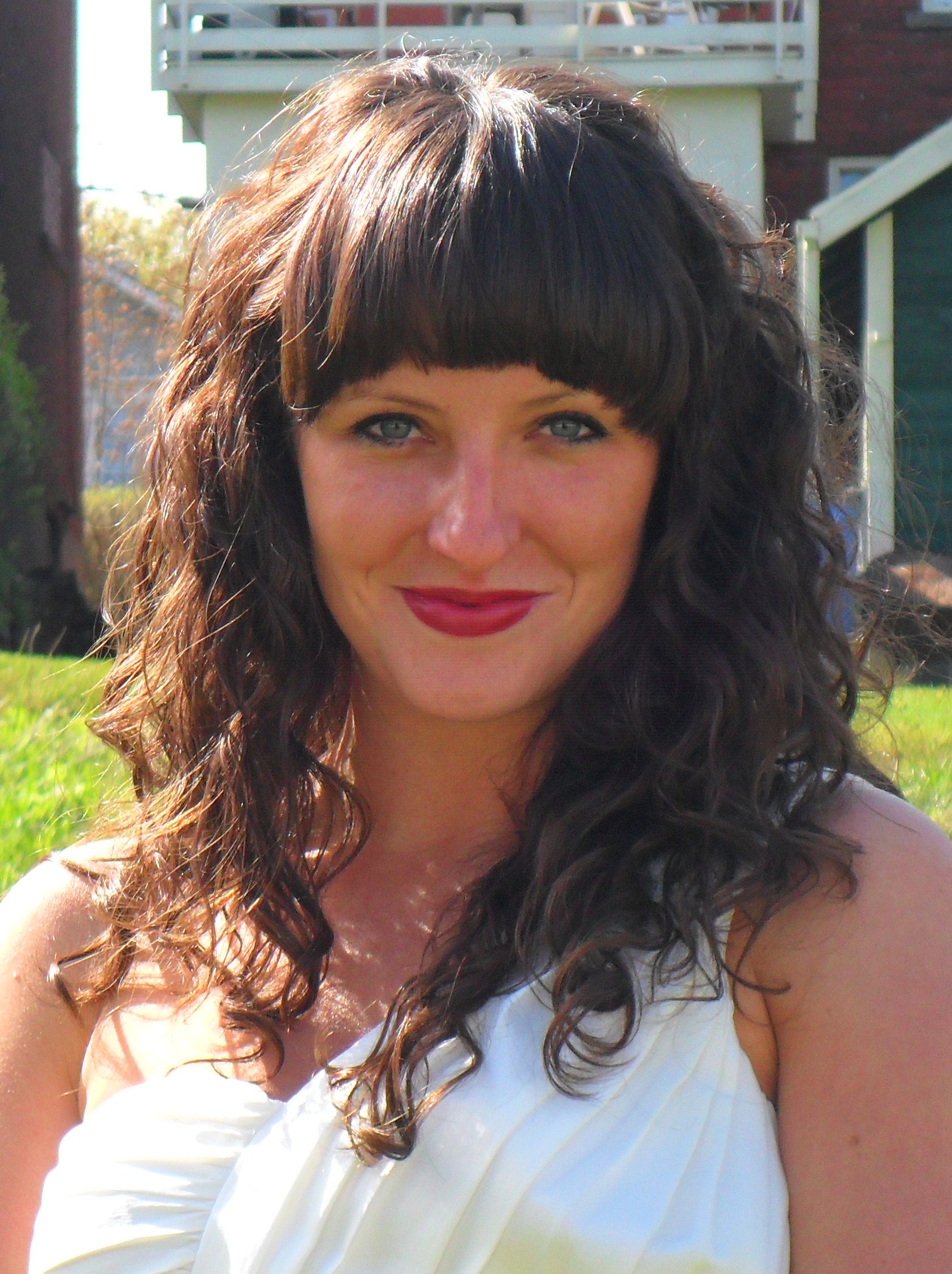
Guest post: Why doulas are important in Native American communities

This is a guest post from Raeanne Madison, who was profiled a few weeks ago in the Radical Doula profile series. This post was originally published on her blog. Her perspective, and the perspectives of other Native American and Indigenous folks, is crucial in this fight for reproductive justice. I’m inspired by her words and her spirit, and honored to be able to feature them here.

Ondaadiziike. The Ojibwe phrase for giving birth. When I was writing this article, I was hoping to combine ondaadiziike with the Ojibwe words for safety and comfort. I was surprised that the dictionaries I consulted didn’t include these words. So I was left with just ondaadiziike. No safety, no comfort to accompany it. This is reflective of modern birth culture in Native American communities, I think. Women (and girls) are giving birth without the accompaniment of safety and comfort. Modern day pre, ante, and post natal care for brown women in the United States is at times unsafe, and usually uncomfortable. Racism, sexism, poverty, and isolation have left women and their babies in desperate need for support, love, and compassion.

It wasn’t always this way. Native women were long respected as life givers. Our ancestors had mysterious, spirited reproductive powers. Women were forbidden to enter the dance arena during their moon time (a practice still respected in modern Powwow culture); not because they were viewed as dirty or hysterical, but because these women were so powerful during this time in the life cycle that they could take away power from anyone in the circle. So they stayed out in respect to their community members. Women took care of each other, Aunties, Grannies, Mothers, and Sisters. But women were also independent, knowledgeable, and assertive in their bodily rights. Reproductive culture varied from tribe to tribe but one thing was constant: women’s powers were sacred.

Enter Western patriarchy. Native women were subjected to horrors manifested in all aspects of bodily harm. Our ancestors were kidnapped, gang raped, and fed to war dogs. Eaten for entertainment in circus like manner. Forced to marry white men and birth babies alone, without the help of their beloved Sisters. Traditional knowledge of menstruation, pregnancy, birth, and breastfeeding were lost, and Native women today still pay the price. Of all the ethnicities in the US, Native women suffer the most when it comes to birth. We have some of the highest teenage pregnancy rates, pre-term birth rates, maternal and neonatal morbidity rates, and some of the lowest breastfeeding rates. Reproduction in our community has become dangerous and unpredictable at worst, and casual at best as women forget just how powerful their bodies can be. Studies have proved that these racial disparities exist because of poverty and racism.

Continue reading

Radical Doula Profiles: Leila Zainab Counihan

This is a series highlighting folks who identify as Radical Doulas. Are you interested in being part of the series? Email me.

Leila, with long hair, smilingLeila Zainab Counihan is a pro-choice feminist, birth doula of color. She recently traveled to La Ceiba, Honduras to work as a birth doula in a public hospital. She is the Director of the Freedom Doula Project, a full spectrum pregnancy doula organization serving Boston, MA. Currently, she is an undergraduate at Clark University in Worcester, MA. Leila spends most of her free time collaging, meditating and honoring her Yoni. You can contact her or Freedom Doula Project at leila@freedomdoulas.org. Check out Freedom Doula Project on Facebook or at http://www.FreedomDoulas.org!

What inspired you to become a doula?

I was 18 when I was inspired to be a doula after reading “Half the Sky” by Nicholas D. Kristof and Sheryl WuDunn. I read stories of women all over the world experiencing terrible sexual and reproductive injustices just because they became pregnant. This jump-started my obsession with reproductive justice and international public health. I knew I wanted to have a career as an advocate for women’s reproductive health, but I wanted hands-on experience as well. Becoming a birth doula was the perfect fit.

Why do you identify with the term radical doula?

When I became a birth doula, I quickly found that I was the only pro-choice, feminist doula of color in my circle, and in many other circles as well. I found that there were disconnects between these identities on many levels. First, the lack of diversity within the birthing community was staggering. I was surrounded by upper-middle class, white women. As a lower middle class, South Asian, immigrant woman, I felt utterly alone. Secondly, I naively assumed that because we were all for the freedom and movement of women, we would all be pro-choice. I soon learned that the topic of pro-choice was almost as taboo as it is anywhere else. In many ways, I am a radical because I chose not to leave my identities behind. Instead, I represent them with pride.

Continue reading

Birth(ing) Justice

At the most recent Sistersong Women of Color Reproductive Health Collective conference in Miami, I heard a number of midwives and doulas talking about birth(ing) justice. A few people called it birth justice, others called it birthing justice.

The articulations of what this term means vary from person to person, but I understand it as a way to frame our work for a better culture of birth and reproduction within an intersectional politics.

I’m really excited about the people behind these movements. Similar to the history of reproductive justice, it seems birth(ing) justice is being pushed and developed by women of color in the birth activist community. Three groups that I connected with in Miami connected to this birth(ing) justice work: Mobile Midwife in Miami, Florida, Black Women Birthing Justice in Oakland, California and Black Women Birthing Resistance in Atlanta, Georgia.

All three have different focuses, different projects, different collaborators–but seem to share a vision for centering birth work in the context of social justice, while centering the experiences of marginalized populations.

I am beyond overjoyed to see such energy around birth activism, in particular by and for women of color. Also to see birth activism articulated within a much broader political framework is exactly why I started Radical Doula over four years ago–because I felt alone in my politics and passion for changing the culture of birth.

I am so glad to be able to say that I am no longer alone.

More information after the jump about each group.

Continue reading

Radical Doula Profiles: Raeanne Madison

This is a series highlighting folks who identify as Radical Doulas. Are you interested in being part of the series? Email me.

About Raeanne:

Raeanne smiling in a green shirt

Raeanne Madison is a young Ojibwe woman living, studying, working, and mothering in the deepwoods of rural northern Michigan. Her obsessions include reproductive justice, rhetoric, Powwow dancing, sewing, playing in jazz band, and greenvegetables. Raeanne is currently working towards certification as a childbirth doula.

What inspired you to be a doula?

I realized that I have been a doula since giving birth to my daughter three years ago. For some reason, many friends come to me for post-partum support, advice, and advocacy. I suppose it’s because I’m a very vocal and passionate advocate. I never realized there was a name for what I have been doing. I chose to pursue certification as a childbirth doula, and eventually I’d like to do the post-partum training, as well. I naturally gravitate towards helping pregnant and child rearing people. Doula work is a way for me to make a difference on an individual, personal level which in turn creates a better community.

Why do you identify with the term “radical doula?”

This is an interesting question. To some, I am radical because I am a pro-choice birth worker. To others, I’m radical because I support the rights to affordable and culturally competent care for all mothers, even those who have been marginalized by mainstream birth work. To others, I’m radical because I’m a young doula and a teenage mother of color. I say I’m radical because I believe in bottom up revolution and anarchy, and this includes birth work. I strongly believe that we will take back our reproductive experiences, no matter what that takes. I would like to see an eradication of all violence and oppression associated with human reproduction. I don’t put a lot of faith in the so called system. This work starts with us.

Continue reading

How do I become an abortion doula?

So, unlike being a birth doula, there isn’t a standard way to become an abortion doula.

I, and most of the abortion doulas I know, have started groups in our cities that then work on finding clinics to partner with as a team, offering to provide doula support to the clients the clinics serve.

The individual doula/client model that works for birth doesn’t really work in this context, especially since most folks wouldn’t think to reach out to a doula for an abortion or miscarriage. So instead we partner with clients directly, and set up volunteer shifts so that there is a doula for (ideally) every person they serve. To the people getting services at the clinic, we seem like clinic volunteers, even though really we’re an independent group partnering with the clinic or hospital practice.

Step one is to find a few other doulas in your community who are interested in this. Then, once you’ve established your group, you can work on reaching out to clinics like Planned Parenthood and others, to see if you can provide your doula services there. You’ll have to consider things like training on abortion doula support for your doulas, volunteer screening and other policies to comply with the clinic needs.

Don’t get discouraged if this takes a while! It can be a long process to build trust among the doulas, and trust with clinics. Some may at first not be interested in your services, but don’t get discouraged there either. Just keep trying until you find a provider who is interested. Others may come on board once they hear about the wonderful things your group is doing with other clinics.

Probably the best resource out there to help you with this is the Doula Project in NYC. They provide support, training and assistance to groups around the country trying to start similar projects in their cities.

More information is available here.

This was a question I received via email that I thought others might be curious about. Got other burning questions? Email me at radicaldoulaATgmailDOTcom.

Radical Doula Profiles: Jessica Shaw

This is a series highlighting folks who identify as Radical Doulas. Are you interested in being part of the series? Email me.

Jessica Shaw smiling in a white dressAbout Jessica: Described by Chatelaine magazine as, “emblematic of the new breed of pro-choice activist,” Jessica is both an abortion rights activist and a radical birth doula. As the research coordinator at Canadians for Choice (CFC), she produced the internationally recognized report, Reality Check: a Close Look at Accessing Abortion Services in Canadian Hospitals, and subsequently helped develop a 24/7 national, toll-free hotline, through which people can gain information about abortion services in Canada. Jessica completed a graduate project entitled A feminist discourse on how the concepts of choice, informed consent and empowerment are constructed in medical birthing literature, and more recently completed a study called Labour of love: Women’s experiences giving birth with a doula in Winnipeg. As a doula, Jessica has always offered her services voluntarily with the belief that any woman who wants to have a doula should be able to have one. Currently, Jessica is a doctoral student with the Faculty of Social Work at the University of Calgary. Her research and passion remains focused on women’s reproductive justice.

Jessica lives in Toronto, Ontario Canada and can be reached at jcashaw104@gmail.com

What inspired you to become a doula?

My sister-in-law invited me to be at her birth during a time when I was already becoming more involved in sexual and reproductive health and rights. I was blown away by the power of the female body, and inspired by her strength. Being there to watch my niece be born changed me forever, and lead me to look into becoming a doula.

Why do you identify with the term radical doula?

To me, being a radical doula is about supporting women, in all of their reproductive needs. I identify as a sex-positive, feminist reproductive justice activist, who works on both abortion rights and birth activism issues. Reproductive justice is about making sure that every woman is able to control her body and her reproduction, and feel empowered by her choices. I reject the gender binary that society has placed on people (female/male) and think it is important to consider how the imposed social structures that we live under can affect our experiences. I also think that it is so important to consider how people’s different intersecting identities can impact their reproductive health experiences (ethnicity, ability, marital status, age, sexual orientation, place of residence, socioeconomic status and more). This means recognizing that the majority of the women who use doulas will likely be white, educated, wealthy women. As radical doulas, it is our responsibility to challenge this norm by offering some, or all, of our services voluntarily; by collaborating with communities who tend to have few social supports; and by working to create change in the way women and other minorities are discriminated against in society.

Continue reading

Abortion Doula Diaries: On miscarriages

Two of the three women at the clinic last week who were having “abortions,” were actually having D&C’s (the medical name for the procedure used during most first trimester abortions) to deal with incomplete miscarriages.

Both were wanted pregnancies, and both had been experiencing vaginal bleeding for a number of weeks. Both basically had their pregnancies terminated via natural causes, aka a miscarriage. Miscarriages are very common, and physicians estimate that between 10-15% of pregnancies end in miscarriage during the first 8 weeks. Some women may never know they are pregnant, but simply have a late period that could actually be a miscarriage.

Some miscarriages complete on their own, requiring no medical intervention. But some miscarriages might not complete fully (aka the contents of the uterus may remain) and necessitate medical intervention. The medical procedure for a miscarriage is basically the same as for a first trimester abortion.

A good percentage of the women I’ve supported in my abortion doula work aren’t actually choosing to terminate pregnancies–they are having medical procedures to treat their already-in-process miscarriages. These women are often ignored by the abortion debates which assume anyone getting what we call an “abortion” procedure is actually choosing to terminate.

Often the women who are having miscarriages in some ways need more support than those choosing to terminate. Like one woman I worked with last week, the pregnancy was very much wanted, and she was very sad to have lost it. While a woman choosing to terminate might feel relief once the procedure is over, a woman with a miscarriage might instead feel the immense sadness that comes from the reality that she is no longer pregnant.

A question remains about what would happen to these women if abortion were outlawed, or made inaccessible. Even if there were miscarriage exceptions in the law, it’s very possible that due to the burden to “prove” a miscarriage, plus the risk involved in providing the procedure, these women would be unable to get the procedure they need.

We saw the beginnings of this impact in Nebraska, where a woman was forced to carry a pregnancy to term despite the fact that they knew the child would die upon being born. For women who don’t want to go through the waiting and delivery with an unviable pregnancy, this is tantamount to torture.

In the case of early miscarriages that don’t complete on their own, we’re talking putting the mother’s life at risk–particularly if the limitations on abortion mean that doctors aren’t even learning to do these procedures.

I’ve talked before about the impacts of anti-abortion legislation on women who want to parent, and every time I work with someone at the clinic who is having an “abortion” to resolve an incomplete miscarriage, I’m reminded of this fact.

Home births up 20% since 2004

Yay!

The New York Times reported that although home births still represent a small majority of overall deliveries, by the 2008 numbers they are up 20% since 2004. I’m sure we will see an even bigger increase once we get 2011 numbers.

This demonstrates that people are really getting the message that there are safe and viable alternatives to hospital birth.

You can share your home birth story in their comments section.

Doula officially entered into the Oxford English Dictionary

Every month, the Oxford English Dictionary adds new words. In June, doula (noun) was one of the new words added.

In case you are curious how they decide what to add:

The OED requires several independent examples of the word being used, and also evidence that the word has been in use for a reasonable amount of time. The exact time-span and number of examples may vary: for instance, one word may be included on the evidence of only a few examples, spread out over a long period of time, while another may gather momentum very quickly, resulting in a wide range of evidence in a shorter space of time. We also look for the word to reach a level of general currency where it is unselfconsciously used with the expectation of being understood: that is, we look for examples of uses of a word that are not immediately followed by an explanation of its meaning for the benefit of the reader. We have a large range of words under constant review, and as items are assessed for inclusion in the dictionary, words which have not yet accumulated enough evidence are kept on file, so that we can refer back to them if further evidence comes to light.

Just goes to show that the role of doulas is gaining popularity and prevalence!

h/t Vincent

Failure to progress?

I often use the example of bowel movements when talking about why it makes little sense that women are forced to labor on their backs. Imagine taking a s–t lying down?! I say for emphasis. (Gravity, of course, is the missing element).

Well this new short film from the folks at the Future of Birth demonstrates how that analogy goes even further.

“Failure to progress” is one of the more common reasons cited for c-sections. It’s a vague diagnosis, and one based on a time table for birth that is overly standardized and limited. Pressure to progress, coupled with hospital environments that don’t encourage relaxation (think lots of staff in and out, harsh lights and machinery) can have serious impacts on the labor itself.

I’ve seen this first hand with women whose labor is progressing fine at home, but once they get to the hospital, survive the intake process and are settled into a room, stop having contractions altogether. What follows is usually lots of interventions and often a c-section.

We need to challenge these practices and highlight how they themselves interrupt the flow and progression of birth.