In early August I had the honor of speaking at the SQUATfest conference. It was a first of its kind gathering that brought together doulas, midwives and other birth activists interested in radical politics. It didn’t have a central theme, but I knew that it was going to be a unique space.
I gave the talk below to the attendees on the morning of the second day. I have a lot more to say about the gathering, and the topics I addressed below, which I’ll do in follow up posts. Makeda Kamara gave an absolutely earth-shattering and life-altering keynote address the following day. I don’t believe that it was recorded, but if you ever have a chance to read Makeda’s writing or see her speak, you have to do it. She has incredible wisdom about midwifery, as well as racial justice movements in the US and abroad.
The gathering was inspiring, but it was also another reminder that there is much work left to do, even within the “radical” parts of our movement, particularly around questions of racial justice and dealing with white privilege.
—————–
The reason I started my blog, Radical Doula, in 2007, was because I couldn’t imagine a room like this one existing. I had been a doula for a few years, and as my own identity and politics developed, I looked around me and felt alone.
I felt alone as a queer and genderqueer person. I felt alone as a Cuban-American, a Latina, a child of immigrants. I felt alone as a reproductive justice activist and someone who supported access to abortion as well as access to homebirth and midwives. I felt alone as someone who approached my work as a doula as social justice activism.
I remember one of the first, possibly the very first, conversation I had with another doula who felt similarly. Christy Hall, who is here today, and I met at a reproductive justice conference, and the memory of crouching in the corner with her, infant in arms, talking about being doulas with radical politics is seared in my brain.
So very much has changed since that first conversation all those years ago. The fact that this gathering is happening at all is a major testament to that change.
Needless to say, I no longer feel alone. Instead I’m in awe of the incredible growth in the doula movement, and particularly in the movement of doulas who see their work as part of a broader social justice vision. For so many of us, this work isn’t just about improving a few select people’s experiences with pregnancy and birth–it’s about changing the systems altogether.
This is no easy task. And while the growth and expansion of the doula movement is really good news in many ways, it also presents its own unique challenges.
What I wanted to talk about today is how I see our work as birth activists as part of the broader reproductive justice movement.
For those of you who aren’t familiar, reproductive justice is a movement that was established by women of color in the reproductive rights movement who wanted a framework through which to see their organizing that better mirrored the lives of the people in their communities. It’s an intersectional framework that acknowledges the complexity of people’s lives and the many issues that affects them.
One way I describe it is building a world where everyone has what they need to create the family that they want to create.
While abortion still tends to most of the attention in this work, I think birth workers, are also perfectly suited to be part of this movement and to utilize the framework to support our own efforts.
So what does it really mean to understand our work as doulas, or midwives, or birth activists, as part of the movement for reproductive justice?
First it means we put at the center of our work those who face the most challenges.
This is a series highlighting folks who identify as Radical Doulas. Are you interested in being part of the series? Go here to provide your responses to the profile questions and I’ll include you!
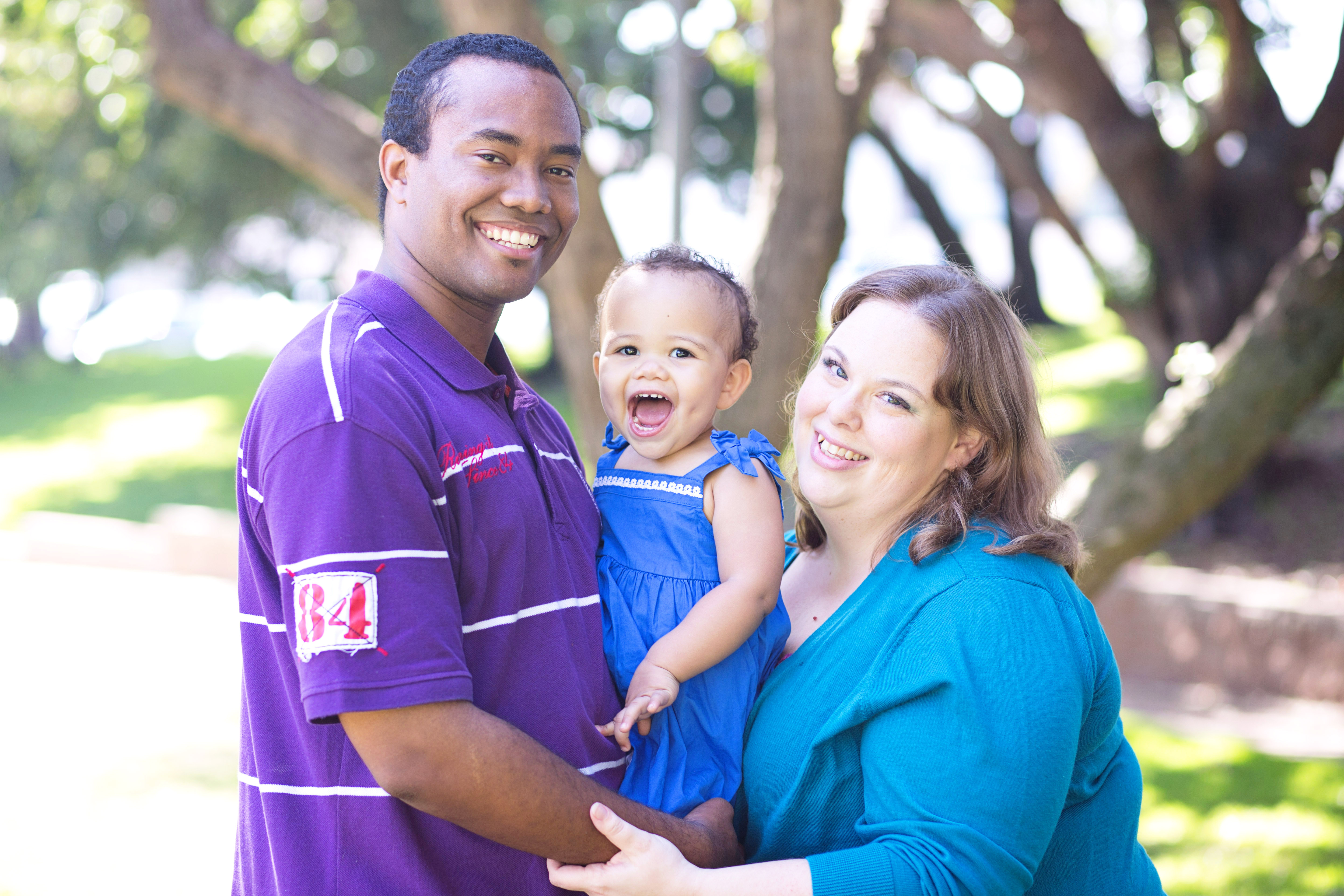
About Erin Carter: I am a birth doula and placenta encapsulator located in Lawndale, CA; just south of Los Angeles. I have a Bachelors in Biology and embrace the skills my scientific training offers while maintaining the view that birth is a completely natural process. I believe that women are, biologically and spiritually, perfectly equipped to bring new life into the world through birth. I am trained through DONA International and as a perpetually curious mind I am constantly seeking out continuing education. I am proud to be ‘momma’ to a beautiful little girl whose birth started me on this journey and wife to a strong supportive husband. Website: http://www.biomamabirth.com Facebook: https://www.facebook.com/BioMamaBirth
What inspired you to become a doula?
My birth experience was sad and traumatic; all of the things that I knew and all of the things that I desired for my birth were stripped away and I was reduced to a pile of statistics that the hospital staff ‘didn’t like.’ I take great issue with the use of fear tactics to coerce and control laboring women.
I wish for each client to help build them up and empower them to make their own choices and stand firm in the face of opposition when it is rooted in bias or practices that are not evidence-based. I wish for birth culture that we can consistently work to bring humanity back to the birthing process for ALL women.
Why do you identify with the term radical doula?
As a feminist, a plus-size woman, a child of a low-income single mom, and part of an interracial marriage/family: radical is where I live. I’m a short, white woman with a cute round face, so to the casual observer I seem pretty mainstream and folks are often surprised at how passionate I am about the divides of race, class, gender, sexuality, size, etc.
What is your doula philosophy and how does it fit into your broader political beliefs?
My aim is to help bring back the belief in the abilities of the birthing woman and the value of her experience. No matter how a baby comes into this world that child deserves to be placed into the arms of a family that has been empowered and built-up by their birth team. I hate the mommy-wars and the way our society thrives on making others feel ‘lesser.’ I strive for the DONA mission of “a doula for every woman who wants one.” I don’t care who you are; if you think I’m the right doula for you I’ll do everything I can to be there, or I’ll help you find someone who can.
What is your favorite thing about being a doula?
Making a difference in the lives of my clients and being one voice in a growing sea of supporters of birthing women.
If you could change one thing about the experience of pregnancy and birth, what would it be?
Respect for the experience from all professionals involved in the birth process. ‘Healthy mother, healthy baby’ is terribly oversimplified and dismisses the psychological, emotional, and physical effects that trickle down through the months and years after birth. Let’s talk about healthy families and how we can give them the best start through a respectful and humanizing birth experience.
This is a series highlighting folks who identify as Radical Doulas. Are you interested in being part of the series? Go here to provide your responses to the profile questions and I’ll include you!
Carrie Murphy is a poet and birth doula currently working in Northern VA and Washington DC. In addition to her birth work, she works as a freelance writer and teacher. Contact: web and email: carriemurphydoula@gmail.com
What inspired you to become a doula?
I’ve worked in childcare off and on for the majority of my life, and I’ve wanted to be a mother for as long as I can remember. I’ve also always been interested in all aspects ofpregnancy, birth, and motherhood. Becoming a doula felt like a natural fit for me, a way to combine my feminist ideals with my own interests…in a job where I’m my own boss and I don’t have to work in an office! I wanted to become a doula not just for myself, but because, as a pro-choice woman, I feel passionately that women should be supported in all of their health care decisions. Women are entitled to bodily autonomy, to bodily integrity, from birth control to the birthing room and beyond.
I became a doula because I wanted to support women on one on the most monumental days of their lives. I also became a doula to support women and their families in making their own choices about their birthing experiences—whether that means a totally unmedicated birth or a prescheduled Caesearan section. I believe that a woman can and should have the birth she wants (if that includes the use of pain medication or other medical interventions or not).
Why do you identify with the term radical doula?
I identify with the term radical doula first and foremost because I identify as a pro-choice feminist. I think I also like the term because of the possibilities it opens up in the realm of doula work…that being a doula can, does, and will mean much more than just supporting women during pregnancy, childbirth and the postpartum period.
What is your doula philosophy and how does it fit into your broader political beliefs?
I believe that everyone, every woman, has inherent bodily autonomy and the right to make decisions about their own body. In my practice, I strive to make every woman (and partner, and family member) feel supported and empowered in the choices she makes about her care and her baby’s care. My doula work is informed by and is imbued with my fierce belief that women must have choice in all aspects of the reproductive process. I was a pro-choice feminist before I was ever a doula and I will be a pro-choice feminist if I ever stop my work as a doula.
What I’ve learned from doula work so far is that I cannot and will not let my personal feelings about what a birth “should” or “should not” be color the birth experiences of my clients or the caliber of my commitment to doula work. My role is to support the hopes, desires, and choices of the laboring woman and her family. Your body, your baby, your choice. Period.
What is your favorite thing about being a doula?
I live for the moment when the mother sees the baby, that first glimpse. It gives me chills every single time!
If you could change one thing about the experience of pregnancy and birth, what would it be?
Could I just somehow make it magically happen that every woman feels like a willing, informed, active participant in her own care? I’d of course like to lessen the insane level of medicalization of childbirth in current American society, but I’d start with careful, respectful, considerate care across the spectrum, for all women.
This is a series highlighting folks who identify as Radical Doulas. Are you interested in being part of the series? Go here to provide your responses to the profile questions and I’ll include you!
About Cherry: I am a wife and mother of two grown children. I live in Southeastern Michigan. I am passionate about all things birth-related. I AM a birth-junkie. www.facebook.com/cherry.herrick
What inspired you to become a doula?
When I was on bed-rest after a surgery, I watched lots of t.v., and got hooked on the Birth Stories series. I knew then I desperately wanted to be involved in the birth process in some capacity. I had my sights set on midwifery, and am still working towards that as well. I was a young mother and gave birth to both of my children in local hospitals. My first birth experience was traumatic, and left me wondering what I did wrong for the nurses and doctors to treat me that way. My second birth experience was much better, but I still felt like there was something missing. Now I know what it was. I needed a doula!!!
Why do you identify with the term radical doula?
One definition of radical, is “going against social norms”. I find it unfortunate that our (American) social norms regarding childbirth is giving birth in a hospital, and submitting to all kinds of unnecessary intervention. I hospital births should be the exception, not the rule. Radical, I know. Additionally, many women give birth with one or more family members or friends present, while nurses check on them periodically. Friends and family members, however well-intentioned they may be, can NOT take the place of a doula!
What is your doula philosophy and how does it fit into your broader political beliefs?
I believe that a doula should be all that the laboring mother needs. A doula should provide support, physical, emotional, spiritual as necessary. She should know when to step in, and when to step back. As far as my political beliefs, I feel that there is too much governmental/institutional intervention in the labor and birth process.
What is your favorite thing about being a doula?
When I was attending a laboring friend, I looked her in the eyes and said, “You’re doing great! I’m so proud of you!” She teared up and said, “You are??”. Wow. “Of course! You’re awesome!” was my reply. It was great to see the sigh of relief as she realized that she was doing a-ok, pain and all! Seeing the miracle of a woman’s body going through all the natural motions and progressions of labor to ultimately give birth is unlike any other experience. It is a beautiful miracle.
If you could change one thing about the experience of pregnancy and birth, what would it be?
Educate every pregnant woman on her options! Too many women go through pregnancy having no idea that they have a choice as to where they can labor and give birth! They assume laboring should be done in a hospital, and birthing should be done laying flat on her back. We (doulas, midwives, moms, and self-proclaimed “birth junkies”!) need to empower women to make decisions that are right for her and her baby! Those decisions should be based on useful, correct, documented and verifiable information, not fear or intimidation.
I’ve written before about the increase in information, resources and stories about trans pregnancy. While we know a lot more now than just a few years ago because trans folks having babies are getting together to share info, there is still a lot to learn about the experience.
A provider who is queer, doula and midwife friendly asked me to share this call for participates in a survey about transmasculine pregnancy experiences. If you’re interested in participating, see below.
Pregnancy After Transitioning Study (PATS)
PATS Anonymous Survey – Online Information Sheet
We are doing a pilot study about transgender men’s’ experiences with pregnancy. This study aims to better understand how to best assist female-to-male transgender individuals who may want to become pregnant as well as how to counsel about pregnancy and possible birth outcomes. The data collected in this initial unfunded pilot study will offer some guidance to transgender men, and their healthcare providers, who are pregnant or interested in becoming pregnant. The results from this study will support and guide the development of future outcome-oriented clinical research in this area of intense growing interest and importance
This study is an anonymous online survey of people who identify as transgender men (assigned female at birth with a transmasculine/ transmale/ female-to-male gender identity) and have been pregnant and delivered a baby. If you self-identify with this population, then we would like to invite you to participate in this study.
If you choose to be in the study, you will complete a survey. This survey will help us learn more about transgender men (assigned female at birth with a transmasculine/transmale/female-to-male gender identity) who have been pregnant and completed the pregnancy. The survey will take about 20 minutes to complete. The questions will relate to your experience with fertility, conception, pregnancy, and birth. To be eligible for the study you must be over 18 years old and have completed a pregnancy within the past 10 years. You can skip questions that you do not want to answer or stop the survey at any time. The survey is anonymous, and no one will be able to link your answers back to you. Please do not include your name or other information that could be used to identify you in the survey responses.
All study results will be made available to the community through the Center of Excellence for Transgender Health at the University of California, San Francisco. The mission of the Center of Excellence for Transgender Health is to increase access to comprehensive, effective, and affirming health care services for trans and gender-variant communities. More information can be found at http://transhealth.ucsf.edu.
Questions? Please contact the study coordinator Lexi Light (415-206-6453, LightA@obgyn.ucsf.edu). If you have questions or concerns about your rights as a research participant, you can call the UCSF Committee on Human Research at 415-476-1814.
Being in this study is optional. If you want to participate, click this link to start the survey: http://bit.ly/PATStudy
Additionally, the researchers at the Center of Excellence for Transgender Health (CoE) at UCSF are doing research that is designed to lead to better programs for transgender people. They want to know if you wish to learn more about their research studies or if you may wish to participate in any of the studies that may be appropriate for you. By clicking this second link & filling in your contact information, you will allow qualified professional people on the staff of the CoE to contact you in the future to ask if you want to participate in any studies. You will be entering your contact information into a different survey, completely separated from the above anonymous survey. You have no obligation to actually participate in any study.
By providing your information, if a study on transgender people needs subjects, you may be contacted to ask if you want to participate. You do not have to participate. You may withdraw permission to be contacted at any time by contacting the CoE. If you do not provide your information, there will be no penalty or loss of benefits to which you are otherwise entitled.
Participation in research may involve some loss of privacy. However, your contact information will be handled as confidentially as possible. Access will be limited to the data manager and the researcher organizing the study and will require a password. No information will be used for research without additional permission. Your contact information will not be shared with anyone outside the CoE.
There will be no cost or payment to you if you sign this form. If you have questions now or later, you can talk with the study researcher about any questions, concerns or complaints you have about this study. Contact the study researcher(s) Dr. Jae Sevelius at 415-597-9183.
If you wish to ask questions about the study or your rights as a research participant to someone other than the researchers or if you wish to voice any problems or concerns you may have about the study, please call the Office of the Committee on Human Research at 415-476-1814.
It’s been tough to say much of anything online, or otherwise, since the verdict came down on Saturday evening in which George Zimmerman was acquitted of all charges for the murder of Trayvon Martin.
The murder has stirred up intense conversations about race, necessary, painful conversations about race. Because George Zimmerman is a mixed-race Latino, (his mother is Peruvian, his father white) his race has been called into question in many ways throughout this process. Some people of color, and Latinos, have tried to minimize his Latino-ness. The right wing has tried to play it up, claiming that his mixed heritage means that race could not possible be a factor in the murder. Some have labeled him a “white Latino or hispanic.”
I felt personally very pulled by these conversations because I too could be put in a category with George Zimmerman. I am a light-skinned Latina. My parents are both immigrants from Cuba, but my mother’s parents immigrated to the island from Eastern Europe as Jews fleeing anti-semitism and persecution. My father’s side had been in Cuba for multiple generations.
Race is a complicated socially-constructed and politically-shaped reality. For Latinos in the US, this reality is very different than the reality we might experience in our family’s country of origin. People who would be seen as White in Latin America may be seen as people of color in the US. These categories are fluid, ever changing and also extremely important in shaping our lived realities.
I am not Trayvon Martin, and as someone who could be George Zimmerman, I have a unique responsibility to work against racism within communities of color, including Latino communities. It’s a responsibility that weighs heavily on me. It’s also one that I see as distinct from the responsibility of white people to fight racism.
My understanding of my own identity has been heavily shaped by my knowledge of the political history of race and racial justice organizing in the US. The term woman of color originated as a term meant to build solidarity between Latinos, Blacks, Asians and Native Americans in the US. Loretta Ross has a great clip I originally found at Racialicious that I often refer to:
You can read the transcript at Racialicious, but this is the part that is most important to me:
And they didn’t see it as a biological designation—you’re born Asian, you’re born Black, you’re born African American, whatever—but it is a solidarity definition, a commitment to work in collaboration with other oppressed women of color who have been “minoritized.”
Now, what’s happened in the 30 years since then is that people see it as biology now.
Race is not a biological reality, it’s a social and political one. And that social and political reality differs widely depending on how you are read, how the world interacts with you. Because I am light-skinned, because I speak English without an accent, I walk through the world with relative privilege when it comes to race. But I also have a clearly marked Latino name. I may not even know how that has shaped interactions that happen virtually, or where my name is the first thing someone sees. There are many ways in which one can be racialized in this country, and that is why the term woman of color, or person of color, was employed—to build solidarity across groups, not ignore differences or presume we all have the same experience.
There is a great post at Black Girl Dangerous, by Asam Ahmad, further extrapolating on this in reference to Trayvon:
We are NOT all Trayvon Martin. People of color keep getting hella mad for being called out on white passing privilege, for being asked to hold themselves accountable to the ways they are not like Trayvon and more like Zimmerman. So many folks seem to be having a hard time acknowledging that this murderer was a Latino who had light-skinned privilege and played into the rules of White supremacy to get away with murder. The fact that so many white folks are identifying with him should tell you something: it is a marker of how some people of color gain access to the toxic privilege of passing for White, of choosing not to identify themselves as poc but coopting into the system of White supremacy instead. Sometimes we do this for our own safety but sometimes, obviously, we do it for other reasons altogether. These are all realities of this case, and they are realities of a hierarchy that accords privilege and oppression on the basis of the amount of melanin in our bodies.
Why do these facts make you mad? Why is it so hard to acknowledge that you have access to forms of privilege that Black folks simply never have? As poc we are so often taught to think of ourselves as oppressed and as nothing else. But oppression is not a static entity and it does not remain constant for all POC. How can this not be obvious to anyone paying the slightest amount of attention right now?
Those of us who are not Black need to be very explicitly clear about this: Trayvon was not murdered because he was a person of color. This verdict was not delivered because he was a person of color. Trayvon was murdered because he was Black. This verdict was delivered because he was Black. Given the amount of intense anti-Black racism that continues to circulate in non-Black poc communities, given the number of ways we continue to benefit from anti-Black racism, it is paramount that we do not forget this. To appropriate the specificity of this injustice, to attempt to universalize this travesty as one faced by all people of color is to perpetuate another form of violence. To not acknowledge the role and specificity of anti-Black racism in this whole charade is another form of violence. This murder and this verdict are very specifically about anti-black racism – about the power of White supremacy and about what it means to have a black body in a White supremacist society.
And our inability to acknowledge these facts are hurting Black folks and African descended folks right now. This is not solidarity. This is not what solidarity can ever look like. It shouldn’t be that fucking hard to sit back and listen to the grieving voices of black people in this moment. It shouldn’t be this hard to not get defensive and keep your mouth shut and just listen.
I’ve been heartened by this and other efforts, like the tumblr We Are Not All Trayvon Martin, have taken on to try and explain the difference between solidarity and appropriation, between allyship and silencing.
Personally, I’ve grown and changed in countless ways over the years in my identity and understanding of my role within the broader community of color. From refusing to write an accent on my last name as a kid and the inclination to be silent about my identity and how I see myself, to instead insisting on spelling out clearly where my privilege lies and what I see as my role, it’s ever evolving. I have big thanks to give to many mixed-race and light-skinned people of color for walking the journey with me.
I’ve realized in the many years that I’ve written this blog, I’ve often assumed my audience was predominantly white. That’s because the doula community is predominantly white, and the full-spectrum doula community I’ve met and interacted with is also predominantly white. I know I’ve been able to feel comfortable, or be welcomed into some of these spaces because of my passing privilege, and it’s something that I think about constantly.
I also know that for doula work to be truly radical, truly transformational, we have to center race as a key factor that shapes the experiences of pregnancy and parenting in this country. We have to talk about it politically, personally, in every aspect of our work. So I’ll start with my vulnerable place, my story, my experience.
This article in The Modesto Bee, authored by Corey G. Johnson of the Center for Investigative Reporting, shows what many of us have assumed: coercive sterilization is not a historical practice—it’s a present reality. While fights rage on across the nation to maintain our access to safe and legal abortion procedures, for some folks, the fight to maintain the ability to become pregnant, and parent those kids, continues.
These fights, primarily because they impact low-income folks of color, don’t get the kind of attention and resources that other battles do. There is racism and classism in this divide, and we have to do all we can to raise hell and attention for the ways population control efforts continue today in this country.
Doctors under contract with the California Department of Corrections and Rehabilitation sterilized nearly 150 female inmates from 2006 to 2010 without required state approvals, the Center for Investigative Reporting has found.
Former inmates and prisoner advocates maintain that prison medical staff coerced the women, targeting those deemed likely to return to prison in the future.
The article explains that the reason these procedures required state approval is precisely because of the history of coercive sterilization for incarcerated women. Court cases in the 1970s based on the discovery that Latina women in California public hospitals were being sterilized without proper consent led to a set of rules regarding how and when you can properly consent to a sterilization procedure (like a tubal ligation).
In order to obtain consent, you have to provide consent information and documents in the patient’s native language (Latina women were found to have signed papers in English consenting to the procedure, despite not speaking English) and you also can’t obtain consent during labor or delivery.
In addition, this article explains that federal funds could not be used to provide sterilization procedures to incarcerated folks because of fear of coercion.
From this reporting, which relied on the work of Justice Now, an organization working with folks on the inside to eradicate prisons, coercion is exactly what took place in many of these sterilizations.
One interesting thread throughout the article, which is distinct from the historical incidences of coercive sterilization, is the use of repeat c-sections as a medical rationale by the doctors quoted for these procedures. With repeat c-sections, they say, there is a risk of uterine rupture upon subsequent pregnancies.
The question there, of course, is why so many c-sections to begin with? I don’t buy it, and assume it’s just a medical attempt to cover up what is really a procedure pushed because of judgement about who should parent, and how many children someone should have, particularly someone who is incarcerated.
I increasingly get more and more infuriated about how little attention in the reproductive rights arena goes to the struggles of low-income, people of color trying to maintain their right to pregnancy, parenting and bodily autonomy. If you are truly doing reproductive justice work, than this issue should get as much attention as any abortion rights fight.
In the past few years I have heard over and over – usually from straight women – that the reproductive health movement should look to the marriage equality movement as a model for success. With the recent Supreme Court decisions around marriage equality, I expect to hear this now more than ever. And yet every time I hear this, I shudder. Not just because the marriage equality movement – one that has largely been led by wealthy, white gays – has been so problematic, but because it is being said in the face of an extremely successful movement led by undocumented youth, the overwhelming majority of whom are people of color, many of whom are also women, and many of whom are also queer.
She goes on:
It’s time that we paid attention to the forces behind movements’ political successes, and what that says about whom they are ultimately serving. It says a lot about the ways that racism plays out in progressive communities when a movement that has been led largely by wealthy white folks gets consistently named as the one to model – even when the demand is conservative, even when queer and trans folks of color consistently call out its racism, even when a successful movement led by those who are some of the most distinct targets of injustice in our society is under way. In mainstream reproductive health and rights circles, undocumented youth might get a few kudos, maybe some “they’re so brave.” But from there it moves on quickly, without further analysis, as though there were nothing there from which we could possibly learn. This has incredibly deep implications that go beyond just perceptions of success, but cut into reputability, access to funding and resources, and ultimately movements’ progress, sustainability, and survival.
I’ve had a lot of similar thoughts about witnessing the undocumented movement in the US these past years−the DREAMers, the NYSYLC, undocuqueer, the NIYA and many, many more. I’ve become friends with some of the folks involved, but mostly I’ve been in awe of their savvy and political influence. The fact that a group of young people, most of whom are not even constituents of the elected officials they influence (because they cannot vote because of their status) have been able to influence policy and political dialogue to the degree they have has been incredible. And this without most of the resources flowing to the more mainstream groups working on immigration. While there are a few non-profits set up to support the undocumented movement, the resources are minuscule in comparison to most. And let’s remember, of course, that many of the folks involved in this work can’t get paid to work legally in the US, which means that they likely aren’t getting full-time non-profit salaries while they are putting themselves into detention to help other immigrants inside. (To learn more about this aspect of their movement, last week’s episode of This American Life chronicled it.)
A few things that I think about this, in addition to the amazing analysis by Veronica.
One is that I question whether our current non-profit centered model of organizing and activism can ever truly fuel the kind of major change we know we need on many fronts. These organizations, while well-meaning and mission-driven, are in many ways simply tax-shelters for the wealthy. They allow people with resources to give their money away tax-free. The vast majority of the resources coming to non-profit organizations comes from private foundations whose wealth was accrued through private business (Ford, Hewlett, Gates). I question whether these funders actually want to do much to change the status quo—at least not in the more extreme ways some activist groups would want to. So the model of professionalized activism—still relatively new in many ways—may be fundamentally opposed to the kind of changes our movement wants to see. I realize this is not new thinking. So it’s no surprise that the movement with little to no institutional support is the one that actually has evidence of being successful.
The second thing I think a lot about is how the success of the undocumented movement has been based on the willingness of the individuals involved to put themselves on the line. Many of their actions center around civil disobedience, knowingly putting themselves at risk of arrest, and even in recent years purposefully entering detention centers as detainees to help the immigrants inside.
Remember, the vast majority of the folks doing these things are undocumented. Which means that a simple arrest for protesting, or taking over an elected official’s office, could mean deportation and the inability to come back to the US, ever. Talk about putting it all on the line. Now obviously these folks are smart, they work with good lawyers, and they know what they are doing. They take calculated risks, and many of the activists who’ve been arrested have also stayed in the US. But the possibility is always there. It’s why their work gets the much-deserved attention.
Are you willing to risk deportation, possibly to a country you haven’t lived in since you were a baby, for your movement? I don’t know that I would be willing.
The moments that we see the most effective activism, the most inspiring acts of courage and resistance, are often in the face of extreme challenge. What happened in Texas last week. What’s going on in North Carolina today as I write this.
It’s at times a crippling reality, this sense that change will never come from the institutions I hope can be responsible for fighting for justice. It makes me question my choices, where my time lies, how I make a living and what I think about my own activist contributions. But when I’m feeling hopeful, when I take a note from folks like Veronica, I think maybe we just need to be learning the lessons of our history. Maybe we can transform our world, inside of institutions and outside of them. Maybe we can learn how to be brave enough to take real risks, to put it all on the line, because even if we feel our little slice of life is protected, we know that it wouldn’t take much for us to lose it all.
I’ll leave you with another incredible video from the folks at SONG, who inspire me everyday with lessons about what transformational activism can look like (even within a non-profit org).
We offer this video as a love letter to our Immigrant communities, LGBTQ communities, and communities of color about our inter-connected destinies. On the Fourth of July, SONG knows real independence is inter-dependence. Real independence requires community beyond citizenship. For all those who live between and beyond borders of all kinds, this one is for you.
Closed Captioning Available [Producer] Southerners On New Ground [Director, Cinematographer, Editor, GFX] Sowjanya Kudva #marrythemovement
This is a video Southerners On New Ground (SONG) made as a love letter to the LGBTQ movement and our allies. We want to encourage the promise and commitment of love for each other as LGBTQ people, beyond any one issue or win.
This video made by SONG did a lot to bring me back to the essence of all this media, rulings, celebrations, explanations. What movement am I married to? Whose movement is it? Who is funding that movement?
The marriage wins at the Supreme Court this week feel big. But I’m not sure that they feel like mine. Marriage is not an institution that I personally am particularly interested in joining, nor do I think inclusive marriage will be the site of our collective liberation. Gay marriage means there are now benefits available to me if I’m willing to join this particular vision of a legal contract for my romantic partnership. And don’t get it twisted−these benefits are huge and vastly important in our world. They are difficult to survive without.
Radical Doula, over these almost 7 years I’ve been posting here, has morphed many times. In the last few years I’ve written almost exclusively about things that are birth activism related, mostly because other writing I did went elsewhere−often places that paid me for my writing. But that has meant that this space no longer truly encapsulates the breadth of my political perspective–the picture of my true movement–because I’ve limited myself to one box.
No longer. After four years as a self-employed writer, consultant and speaker I’ve accepted a full-time job beginning in September. You can read more about that journey and decision here. That means a lot of things for my life, but what it means for this space, and for Radical Doula, is that it can once again be a home for all of my political writing, not just what fits into the “birth activism” box, or more honestly, fits into the “no one is going to pay me for this so I’ll publish it at RD.”
While getting paid to write has done much for my ability to pay my rent, and has also given me access to audiences broader than this one, it’s also limited me in different ways that I’m excited to let go of.
So, dear Radical Doula readers, I hope you’ll indulge me in my political musings beyond birth activism exclusively. It’s all, however loosely, tied to this bigger vision, this bigger movement that I’m searching for and craving and waiting for−one that won’t ask me to choose or prioritize or wait for my turn.
I’m headed to the Allied Media Conference tomorrow. It’s my first time at this gathering, and I’m really excited to finally be able to participate. From what I hear it’s a pretty incredible gathering of folks with radical politics who care about media making–and media is defined really broadly.
I’ll be part of a panel on Sunday called “Making a Living & a Life in Radical Tech” where I’ll be talking about my work as a digital communications consultant. I’ll also be tabling throughout the weekend, selling Radical Doula Guides and giving hugs to fellow doulas. I’ll be offering a special AMC sliding scale price for guides ($10-$12) so if you’ve been waiting to buy one and you’ll be at the conference, this is a good time! Come find me. 🙂


 Radical Doula