Proof that anti-abortion laws hurt ALL pregnant women

We’re only just starting to see the impacts of new extreme anti-abortion legislation that has been passed around the country.

As I argue in this post, these laws also restrict the choices of women who want to parent. I’m going to try to keep an eye on the stories that highlight these connections because I think it busts open the myth that anti-choice activists are only focused on restricting abortion. They’re actually focused on restricting women’s autonomy in a myriad of ways related to pregnancy.

From Nebraska State Paper:

Nebraska’s new abortion law forced Danielle Deaver to live through ten excruciating days, waiting to give birth to a baby that she and her doctors knew would die minutes later, fighting for breath that would not come.

And that’s what happened. The one-pound, ten-ounce girl, Elizabeth, was born December 8th. Deaver and husband Robb watched, held and comforted the baby as it gasped for air, hoping she was not suffering. She died 15 minutes later.

The sponsor of the controversial Nebraska statute, Sen. Mike Flood of Norfolk, told the Des Moines Register that the law worked as it was intended in the Deavers’ case.

“Even in these situations where the baby has a terminal condition or there’s not much chance of surviving outside of the womb, my point has been and remains that is still a life,” Flood said in an interview with the Iowa newspaper.

The law, the only one of its kind in America, prohibits abortions after the 20th week. It is based on the disputed argument that a fetus may feel pain at that stage. It took effect last October.

These situations, while rare, do happen. Not all women, when faced with a fetus that is known not to be viable, would choose to terminate early. Some would want to carry the fetus to term, and spend that time in whatever way they choose.

The point is: she should have a choice. No one should be forced to carry an unviable fetus to term. No one should have lawmakers interfering with a medical decision that should be kept between the family and the medical providers.

“Our hands were tied,” Danielle Deaver of Grand Island told The Register in a story published Sunday.  “The outcome of my pregnancy, that choice was made by God. I feel like how to handle the end of my pregnancy, that choice should have been mine, and it wasn’t because of a law.”

Also, what kind of BS argument is that about fetal pain? For one thing, the research behind the idea of fetal pain is super sketchy. And for another, what about the suffering of this newborn as it died?

I’ll keep saying it over and over: anti-abortion laws don’t just hurt women who want to terminate their pregnancies. They also hurt women who want to parent.

h/t Mary M.
Why birth activists should care about anti-abortion laws

The reproductive rights community has been in an uproar about recent attempts at restricting abortion nationally. It seems to be priority number one for the GOP nationally–despite the fact that these types of laws are symbolic nods to the Christian Right at best, and horrific violations of pregnant women’s bodily autonomy at worst.

All of the typical players are up in arms at the new legislative attempts, which are covered pretty extensively here.

But I realize that folks who read this blog may think that the reason I care about this legislation is because I work with women having abortions. What we often don’t talk about is how legislation that attempts to restrict abortion by emphasizing the “rights” of the fetus (or, as Lynn Paltrow want us to call it, fetal separatism) have big impacts on the rights of pregnant women who actually carry their pregnancies to term.

That’s right: anti-choice laws don’t just impact women seeking abortions, they impact birthing women as well.

How so?

Here is a post I wrote for Feministing about the proposed South Dakota law that would possibly allow for the murder of abortion providers (which has now been shelved):

From Mother Jones:

A law under consideration in South Dakota would expand the definition of “justifiable homicide” to include killings that are intended to prevent harm to a fetus—a move that could make it legal to kill doctors who perform abortions. The Republican-backed legislation, House Bill 1171, has passed out of committee on a nine-to-three party-line vote, and is expected to face a floor vote in the state’s GOP-dominated House of Representatives soon.

It’s clear this bill likely has the goal of inciting violence–murder–of abortion providers. But I think this logic can actually be taken a step further, to include the murder of a pregnant woman herself.

Often one connection between anti-choice legislation that isn’t talked about is how it affects the rights of pregnant women who do want to parent. I’m talking about the rights of pregnant women to decide what kind of medical treatment they will seek–and not necessarily abortion.

There is an incredible battle going on around the country about the rights of pregnant women to refuse certain types of medical care (as the rest of us are legally entitled to do). In numerous cases, women have been forced against their will to have c-sections or other medical procedures in the name of the protecting the fetus.

This proposed legislation takes that logic to it’s extreme–not only is it okay to super-cede the autonomy and rights of pregnant women in the name of the fetus–you could actually justifiably murder her in pursuit of this as well. In addition, of course, to doctors performing perfectly legal and constitutionally protected abortions.

Can we agree to stop calling them pro-life now?

The laws that interfere with a woman’s ability to make decisions about terminating her pregnancy also interfere with a woman’s ability to make decisions about what medical care to seek for her birth.

These laws allow providers and lawmakers to force women into c-sections they don’t want, force them into mandatory bed rest, all sorts of other interventions, in the name of protecting the fetus.

This isn’t hypothetical folks. It’s happening around the country.

As birth activists, we know that often the medical claims behind these kinds of decisions to force women into c-sections are bogus. They’re based on shaky science and a medicine that disregards the desires of a pregnant women.

It’s not just pro-choice advocates who need lawmakers out of our wombs. It’s parenting moms too, who want to be trusted to make the medical decisions that are best for them–without fear of state or court intervention.

These battles cannot be seen as distinct. If women aren’t trusted and allowed to make decisions about their medical care for abortions, they won’t be trusted to make decisions about their medical care for pregnancy and birth either.

This is why we need movements where we work together, across issues and across communities. We’re fighting the same fights, with common enemies and common goals.

Let’s work together.

The film that turned me into a birth activist

I often get asked how I got into doula work. This is the answer:

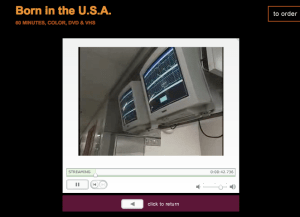
Screen shot of film, Born in the USA

It’s kind of cliche. I was always interested in women’s health. Had aspirations of being an ob/gyn. Then I went to college and took organic chemistry. It was a bad scene, and I promptly said goodbye to the idea of medical school.

Then I took a class called The Anthropology of Reproduction at a nearby women’s college. We watched this video, and I walked out of class knowing my life had just changed forever.

I was so fired up by the film, Born in the USA, and the screwed-up culture of birth it documented. It became my big issue. I was only a sophomore in college, but I talked to everyone I could about how wrong we were about birth, and how badly we were treating mothers and babies in hospitals. Within a year I had become a doula. I wrote my thesis on my time spent in as a volunteer doula in a public maternity ward in North Carolina.

I was obsessed. Seriously.

Ask my college roommate.

The rest is history, as they say.

I think Ricki Lake’s film The Business of Being Born serves a similar role to the film I saw and it’s much more widely available.

Birth work and disability justice

Disability and disability justice, as it intersects with broader social justice movements and particularly birth work, is something I have been thinking about for a while now, inspired by some amazing disability justice activists that I have come across. (h/t Mia Mingus, for example).

For those of us in the birthwork world (or reproductive justice more broadly) it’s extremely important to keep issues of disability in mind and as part of our practice as doulas. There are many types of disabilities which might impact what kind of birth a person has access to. For example I received an email not too long ago from a person with a mental health issue that required a type of medication.

Because of that mental health issue (and resultant medication) she was finding that she couldn’t go to the local birth center, because simply taking that medication to deal with her mental health issues ruled her out.

One could think of similar issues around access to certain types of birth settings (and even types of birth) for those who have physical disabilities that restrict their movement, or simply just make midwives or birth centers too afraid to provide care for them (because of liability, or ableism, or whatever the reason might be).

We all know that a fundamental problem with birth care today is that only the person with the “healthiest” most “ideal” pregnancy can have access to alternative birth settings and providers.

Continue reading

Midwifery Modernization Act signed by NY Governor

Final piece of good news for midwives in New York State. Governor Patterson on Saturday signed the Midwifery Modernization Act, which will mean a vast improvement in access to midwifery services in NY State. The legislation was pushed through by the amazing organizing and activism that rallied after the closing of St. Vincent’s almost put home birth midwives out of business.

Guest post: Tantric Birth

So I connected with Nekole after seeing a tweet about her workshop at this year’s Sex 2.0 conference where she presented about TantricBirth. Sounded pretty interesting to me! I invited Nekole to write this post about how she defines TantricBirth. Learn more at her website.

Nekole Shapiro synthesizes a lifetime of experience as a body worker and Tantric practitioner, her birthing experiences as a mother and doula and her profound love of science into TantricBirth, a holistic approach to the birthing experience. The TantricBirth system uses interviews, presentations, classes and direct family planning and birth support to enable families to have an empowered birth experience. Nekole is an LMP and holds a BA in Asian Studies and a Premedical certificate from Columbia University.

An Introduction to TantricBirth

Our human experience is deliciously deep.  It is impossible to affect one aspect of ourselves without affecting another.  Our parts are woven together like a tapestry.  When I hold my baby and feel love, my body undergoes a change, my spirit is affected and my mind is altered.  When I am embodied, I am aware of all of this as it happens and can feel it in every cell of my being.  When I am embodied, I feel my power.

Other than during her own birth or death, a birthing woman enters the most altered physiological state of her life.   Because we are an interconnected weave of human experience and expression, this altered physiological state is also an altered emotional, mental and spiritual state.  All of who we are is changing at a rapid pace as we labor and birth our babies, and again as our bodies get used to no longer housing a baby.  In this way, if I can embody the birthing experience, I can access a power greater than any I have felt before.

Continue reading

Experimental drug being used to “fix” intersex genitals

This is a post that I wrote for Feministing a few weeks ago. I wanted to cross-post it here because this issue, of kids born with intersex conditions, definitely comes up for birth workers. While you may not have had this experience yet, it’s possible that one day you will be with a family when their child is born with an intersex condition. This could lead to all sorts of responses from the midwives or doctors you are working with–including the decision to perform surgeries on the infant.

It’s a huge issue, and one that is difficult to tackle in a blog post. But it’s one that I would like to keep writing about. Just as I talk about gender and the ways folks identify outside of the binary of male and female, there is also the biological fact of gender diversity, exemplified by folks who are born with intersex conditions.

At the moment of birth, when the doctor/midwife/practitioner wants to issue the hallmark phrase–“It’s a boy/girl!” if there is any confusion around this, it becomes a huge issue.

Maybe it shouldn’t be–and maybe one day we’ll move away from such a strong propensity toward gender categorization. In the meantime, we’re dealing with doctors who would rather employ experimental hormonal treatments in utero and perform radical medically unnecessary surgeries on infants than deal with gender ambiguity.

Obviously I have a strong opinion on the matter. The post below has more info, if you’re confused about what I’m saying.

Continue reading

Big victory for midwifery in New York State

Baby smiling with words "a midwife helped me out"I have been writing about the dire situation for home birth midwives in New York City, prompted by the closing of St. Vincent’s Hospital, one of the only midwife and birth friendly hospitals in NYC.

Because of a piece of NY State law that required all home birth midwives to have the signature of an OB at a hospital in order to practice, when St. Vincent’s closed due to debt problems, the midwives were out of luck. This move pretty much eliminated home birth as an option in New York City, and the law had made it hard for midwives around the state to practice.

Well, we finally won one! It’s incredible and in many ways unexpected, but a bill was introduced by some amazing and fierce activists in New York State called the Midwifery Modernization Act. This act would remove the requirement for a Written Practice Agreement between midwives in New York State and obstetricians, the contract that was keeping many midwives from practicing because doctors and hospitals did not want to sign them.

Thanks to some amazing lobbying on behalf of birth activists and advocates (and an incredible number of phone calls from folks like YOU) the MMA has passed both the NY State Assembly and Senate.

Hopefully within a short time (as long as Governor Patterson signs the bill) this will mean that midwives across New York State can practice without being beholden to the signature of one OB or hospital.

This doesn’t mean that the midwives won’t be using hospitals to transfer when necessary, but this one signature won’t be the determining factor for their practice.

Congrats to everyone who worked on this important legislation!

More information at Free Our Midwives.

New radical birth magazine: SQUAT

SQUAT cover with woman and babyA new radical birth publication, SQUAT, just came out with it’s first issue this week. The tagline of SQUAT is “An anarchist birth journal.”

I’m proud to say I contributed a piece to the first edition of the magazine, about being a radical doula. SQUAT is a real live print publication, which you can order from magcloud here. You can also preview it there, and it looks pretty freaking awesome. I miss the paper in hand publication days sometimes, and this one looks like it’s got a great layout.

The folks at SQUAT are also organizing a camp, which they say will be “a radical celebration of midwifery and birth!” It’s in August in Washington State. Details here.

If you want to buy the first edition of SQUAT, go here. I also have a sneak preview of my article after the jump!

Continue reading

Providing birth support to trans and gender non-conforming folks

So I had a great weekend at the Philly Trans Health Conference. It was my first time attending the conference and I went to speak on a panel about trans parenting organized by an amazing genderqueer activist and new parent.

My favorite part of the whole weekend was when during my panel, I asked at the beginning of my comments for folks to raise their hands if they’d heard of doulas before. In a room of about forty people, almost EVERYONE raised their hands!! And this was not a doula/birth centered conference at all. I think that says a lot about how far doulas have come in recent years.

I met one other doula at the conference, Beagle, who practices in Asheville. And I met an awesome midwife, Abigail, who works in Gainesville. Abigail and I are plotting a workshop for next year’s conference focusing specifically on pregnancy and birth, and I would love to get a meet up of trans and gender non-conforming birth workers together.

I’ve gotten a few emails over the years from trans and gender non-conforming doulas or aspiring doulas. As providers, there are many questions to be answered about how we do our work as doulas and as trans/gender non-conforming folks. It can be tricky, when being a doula is in many ways not about us, to figure out how to make space for yourself and your identity with in a highly gendered and gender normative birth environment.

I’ve worried for a while that my gender presentation as a genderqueer person might make some birthing folks uncomfortable. I’m still not sure how I would deal with that, it’s yet to come up in my work.

But another big set of issues is providing support to trans and gender non-conforming parents. I think as doulas we can do so much to make sure that folks have the best experience possible. You don’t have to be queer, trans or gender non-conforming to provide care as a doula that is sensitive to these communities. Here are some ideas/things to think about when working with trans and gender non-conforming (TGNC) doula clients:

  • Asking about preferred gender pronouns is always a good start. Heck, even with folks that you don’t know identify as TGNC! It’s the assumptions that get us into trouble. Just because someone is pregnant doesn’t mean they identify as she/woman/mother etc.
  • As a doula, you could help the pregnant person strategize about how best to communicate preferences like language and pronouns to their doctor or midwife. If they were comfortable with it, you could even do some of the advocating/explaining/reminding. It can get tiring as a TGNC person to constantly be reminding and educating folks.
  • Pronouns aren’t the only important thing–the language we use to refer to our bodies is important too. TGNC folks often use language as a way to talk about their bodies in a fashion that reflects their identity. This might be hard for medical providers to understand or get used to, but as their doula if you respect this language it could make a big difference.
  • Unfortunately there isn’t much research out there about TGNC folks and pregnancy/birth. We don’t know much about the effects of hormone treatments like testosterone on pregnancy and fertility, or the impacts of chest binding on breastfeeding. Research as much as you can and see what communities exist for TGNC folks to share experiences and knowledge.

That’s all for now! One resource that was mentioned as somewhat helpful was The New Essential Guide to Lesbian Conception, Pregnancy and Birth. I haven’t checked it out but I recommend looking it up.

If you have experiences/tips to share about working with TGNC folks, please add in comments! I hope to write more about this issue in the future.