Radical Doula Profiles: adrienne maree brown

This is a series highlighting folks who identify as Radical Doulas. Are you interested in being part of the series? Go here to provide your responses to the profile questions and I’ll include you!

About adrienne: adrienne maree is a doula, writer, facilitator and artist living in detroit, mi. adriennemaree@gmail.com.

What inspired you to become a doula?

my sister started having babies in natural ways and the beauty and power of it blew my mind. at the same time folks were asking me to doula for them. i thought as a non-parent i couldn’t do it. then i was the first responder to a woman attacked behind my home and in sitting with her til the ambulance came it clicked for me: being with people through these moments of transition simply requires being deeply present to what is, and expanding their capacity to be present. so i apprenticed with an experienced doula and have been doing doula work ever since.

Why do you identify with the term radical doula?

i believe in what humans can do, in the power of our bodies and our communities to create and sustain life. too many of the institutional processes around reproduction and parenting are disempowering, unsacred, not aligned with the miraculous gift we have. so i see part of my work as a way to intervene in social systems that are losing humanity, and reclaim humanity one person at a time.

What is your doula philosophy and how does it fit into your broader political beliefs?

i believe everyone (all economic backgrounds, gender identities, abilities, races, everyone) going through any of the processes related to reproduction and parenting – trying to get pregnant, adopting, abortion, giving birth, unintended pregnancy loss, post-partum time, etc – should have support and access to determining how to go through the process with health, dignity and – where appropriate – joy.

What is your favorite thing about being a doula?

so far, it’s the opportunity to witness transformation. i get to be close to folks at one of the most important moments of their lives, and reflect all the strength i see in them – it’s healing for me.

If you could change one thing about birth, what would it be?

that the default would be natural births at home. that hospitals, c-sections, and medical interventions would be seen as rare aspects of births only turned to for emergencies.
Philly: Radical Doulas & Reproductive Justice event on Wednesday March 27

I’m heading out this week to do two speaking events, so if you’re in the Philly area, you should join!

I love any and all opportunity to talk about the activism I’m involved in, and I’m beyond pleased that doula work is gaining enough prominence that I get more and more requests to come speak about it.

On Wednesday I’ll be speaking at the University of Pennsylvania, hosted by groups primarily in the Nursing School. Major thanks to Ryan Pryor who organized the event! I’ll be talking about doulas, reproductive justice and community-based interventions to health care. I’m jazzed to be speaking to future health care professionals–a group that has the power to really change our health care system.

Details:

Radical Doulas & Reproductive Justice: Community-based health

Miriam Zoila Perez will talk about her work as a full-spectrum doula, writer and activist. There is a growing movement of doulas working to improve pregnant people’s health care experiences through one-on-one emotional, physical and informational suport. How are doulas changing health care experiences? How can providers collaborate with doulas? Miriam will discuss this important and growing movement, and it’s many connections to health care activist work. 

Event co-hosted by Nurses PUSH, Nursing Students for Choice, Med Students for Choice, LGBTPM+, GAPSA, Nursing Student Services and Penn LGBT Center.

Wednesday March 27th, 12pm-1pm, Claire M. Fagin Hall, University of Pennsylvannia

Facebook event here.

In the evening there will also be a get together, for those who can’t make the event and folks who want to talk more. Details: New Deck Tavern on 34th and Sansom (3408 Sansom St  Philadelphia, PA 19104), 7:30-9:30pm

On Thursday I’ll be speaking at the Queer and Trans Conference at Swarthmore College, my alma mater! I’ll be hosting a workshop about Queering Reproductive Justice.

I’ll have Radical Doula Guides with me for sale at both events. Hope to see you there Philly!

DC Doulas for Choice recruiting new volunteers

An opportunity to get involved with a full-spectrum doula group in the Washington, DC metro area. About DCDC:

The DC Doulas for Choice Collective is a DC-based, volunteer-led-and-run, pro-choice organization that seeks to provide doula care to people across the full spectrum of reproductive health, pregnancy, and choice.

The Collective began in 2011 with a group of pro-choice birth doulas and reproductive justice advocates who believe that people seeking abortions may desire and benefit from the same type of patient-centered, non-judgmental physical and emotional support that doulas traditionally provide to people during labor and birth.

The training will be June 1. More info about the training and how to apply is here.

Radical Doula Profiles: Jessie Bryer

This is a series highlighting folks who identify as Radical Doulas. Are you interested in being part of the series? Go here to provide your responses to the profile questions and I’ll include you!

Photo of radical doula Jessie BryerJessie Bryer is a mom of 2, family studies major and doula willing to provide full-spectrum support to women in the Yuma, Arizona area. Find her at: https://www.facebook.com/jessie.bryerdoula, or email her at yumadoula@gmail.com.

What inspired you to become a doula?

My own birth experiences and the privilege of witnessing a friend’s birth motivated me to share my experience and help other women.

Why do you identify with the term radical doula?

Because I am willing to provide my support where it is needed, regardless of the circumstances. I am liberal and pro-choice.

What is your doula philosophy and how does it fit into your broader political beliefs?

I think that we are natural beings and that pregnancy, birth, and lactation are natural processes. I believe strongly in a woman’s autonomy and her right to make choices regarding her body and her reproductive function. All women should have access to good quality, safe medical procedures whether they are seeking abortion, birthing at home, refusing procedures or in need of contraception and I support anyone who needs me.

What is your favorite thing about being a doula?

My favorite part of being a doula is helping people and knowing that they felt braver, stronger, and empowered by my presence.

If you could change one thing about birth, what would it be?

I would take the fear that women feel during labor away.

So what is a Radical Doula anyway?

Earlier today I looked over the language that had been on my Radical Doula??? page since 2009. I’m embarrassed that it took me so long to update it, but it was a good opportunity to revisit my definition of the term and how it’s changed over all these years blogging and working as a doula.

What’s there now is a long missive about this term, how I see it defined, and the context that has shaped my shifts in that regard. You can read the whole thing here, but a snippet to whet your appetite:

One thing that is really important to me is that I do not own the term Radical Doula. I might rent the domain radicaldoula.com, but I by no means see myself as the arbiter of what a Radical Doula is. It’s a term that very much popped out of my mouth in a surprising way–really it was a way to describe the alienation I felt within the doula community. Over the years as I’ve continued theRadical Doula Profile Series (a way to relinquish ownership of the term and highlight anyone who identifies with it) I’ve noticed that for some doulas, simply being a doula, trying to change the culture of birth, in and of itself is a radical act.

I understand that logic, but it is not what I meant when I started this blog. That does not make it wrong, it just makes it different than my original purpose.

This page used to include a laundry list of the identities and politics I hold that made me feel alienated. It included things like being “pro-choice” or supporting the right to abortion, the fact that I’m Latin@, that my parents are immigrants from Cuba, that I identify as queer and genderqueer, that I approach doula work as activism.

As the doula world has expanded, and as I’ve connected with more and more like-minded doulas through this blog, my definition of a radical doula has moved away from being centered on that laundry list of identities. Those still matter, don’t get me wrong, but I think what matters more is a political understanding of the role of the doula.

Being a Radical Doula, for me, is about understanding the politics of pregnancy and birth in the US, and working to use our role as doulas to interrupt this. I very much understand that our power to really change the balance of power is minuscule–but simply having a power analysis at all allows us to frame our work as doulas in a different way.

This different way means working hard to make our services as doulas accessible to people who wouldn’t otherwise have doula support. The mechanics of this will look different for everyone, from volunteering with a program in a public hospital, to offering a sliding scale or barter system for your fees. It could be getting trained on how to support pregnant people with disabilities, or people who speak another language, or are queer or trans or gender non-conforming. The how will vary for all of us, but the bottom line is this: we care about working with marginalized communities, about providing doula support to those who would not otherwise have it.

For me birth activism is about working to improve the pregnancy and birth experiences of those who are already suffering the most–not just improving the experiences of those who already have the best outcomes. It is not that those who already have the best outcomes (which, in most cases, could still be significantly improved) don’t deserve better–it’s that if we work to improve the experiences of the most marginalized, everyone’s experiences will improve. It doesn’t necessarily work the other way around.

To me, being a Radical Doula is committing to the hard work of facing issues of racism, classism, ableism, homophobia, transphobia head-on in our work with pregnant and parenting people. It means understanding birth as just one instance in a wide spectrum of pregnancy-related experiences that include abortion, miscarriage and adoption, and understanding why doula support across that spectrum makes sense. It’s about providing non-judgmental and unconditional support to pregnant and parenting people, ultimately in service of social justice.

As always, I invite you to explain why you identify as a Radical Doula by participating in the Radical Doula Profile series.

Can I be a doula if I’m physically disabled?

Over the last year or so I’ve received a number of questions via email from doulas with disabilities writing to ask if they can pursue doula work. I am no expert on disability, disability justice, or disability and doula work. But I know that these questions come to me because there are very few people even addressing this intersection, and I’ve done it in modest ways on this blog and in the Radical Doula Guide.

So here are snippets of my answers to two inquiries about disability and doula work. Have additional resources? Leave them in comments below, or email me at radicaldoula@gmail.com.

One question from Ashley:

I stumbled upon your blog recently, as I’ve begun research on becoming a doula myself. I’m trying to touch base with real life doulas to get opinions on my particular situation. I’m incredibly interested in becoming a doula, particularly a Postpartum doula, but there’s a bit of a catch. I have Cerebral Palsy, so I have to use a walker or crutches to walk. However, I have full use of my hands, and live on my own and am able to function daily with minimal to no issues. I just wanted to know where you think I should start my journey to becoming a doula. I also hope that once I become certified I can work with physically disabled mothers, as I can understand and relate to some of their personal struggles. Do you have any suggestions as far as how to start the process? I’ve looked at various online certification programs and the one downside is that they’re pricey. Because of my disability, job options are limited and therefore I don’t have much extra cash coming in.

If you have any advice for me, I’d be incredibly thankful!

My response:

Thank you for your email and for reaching out. I’m glad you’ve begun considering the beautiful work of doulas!

I would say that yes, you could definitely serve as a postpartum doula if you feel like you’d be able to support a new parent in their home with newborn chores like baby changing, cleaning and of course support with breastfeeding and other newborn things. Some of this expertise you’d learn in a postpartum doula training.

As long as you were clear about what you could offer to new parents in that role, I think you’d be fine. I also love the idea of trying to work with other physically disabled mothers–I believe there is a lot of power in serving those within our own community.

In terms of cost I would say this: certification is not always necessary. Is just the training financially accessible to you? That is where I would start, and only explore certification if you feel like it’s necessary for your work. I am not certified as a doula, and have not felt compelled to take that route (you can see more on this here and here). While the training orgs are presenting it more and more as a requirement, there are many doulas out there who are not certified, and I think it’s up to each individual to decide what works for them.

Ashley is looking to connect with folks, so feel free to email her beautifulashes328@gmail.com.

I received another question via email from a doula with cerebral palsy asking about the potential of being a birth doula. I’ll paraphrase her question as I did not get explicit permission to reprint it here. She shared that she has cerebral palsy and is confined to a motorized wheelchair.* She asked about how her disability might impact the amount of physical support she could provide during labor, and how much physical support plays a role in birth doulas work. She also asked about how often birth doulas attend clients at home, as that might be a challenge due to accessibility concerns for wheelchair access in private homes.

My answer:

I think you can definitely be a doula and be wheelchair bound. The amount of physical support required to do doula work depends largely on your style and the client’s desires, but what I would suggest is thinking of teaming up with a co-doula who could provide some of the physical support techniques that might be challenging for you. (Things like the double hip squeeze, or massage). You could even choose to partner with the co-doula only when working with someone who is definitely interested in physical support (some folks may not be interested in touch).

Also, alternatively, if the people you work with have partners, you might be able to guide their partners to do some of the physical support techniques that you cannot. This is something I have done anyway, just as a way to involve the partner more in providing support.

In terms of setting, I actually think most doulas provide support in hospital settings because that is where the vast majority of births take place (98%). I personally have only worked in hospitals. That’s good news for your questions about accessibility. Doulas do often do prenatal visits with clients, but that doesn’t have to be in their home–it could be in a public space, or in your home. Sometimes doulas will go to a person’s home when they are laboring but not ready to go to the hospital yet–but if the client’s home is not accessible to you, you could discuss this in advance, and if necessary, use a co-doula for that support.

Lastly I would say you might consider a really important and unique niche in your work as a doula: supporting other disabled folks who might be pregnant or parenting. I’ve found little out there in terms of resources for pregnant disabled people, and some people might appreciate getting doula support from another person who is disabled. (Not that this is all you could do, but it could be a great fit as part of your work).

Do you have additional advice or resources for disabled doulas, or potential doulas? My research has not turned up much in this arena, although I expect that will change as doulas become more prevalent. Please add them in comments.

I’d hazard to say there is almost no one to whom I would say “no, you shouldn’t be a doula.” We all have limitations, things we can and cannot provide or offer, and there is no perfect template for doula work. It’s about knowing your limitations, being clear in what you can offer folks, and finding additional resources to fill the gaps that you cannot.

*On twitter someone asked about my use of the word “confined” here. I paraphrased from the original email, but used her language in this instance. I know that issues of language and (dis)ability are complicated, and while I will undoubtedly make mistakes, I try to mirror language folks in the community use to describe themselves as much as possible.

Radical Doula Profiles: Caitlin Caulfield

This is a series highlighting folks who identify as Radical Doulas. Are you interested in being part of the series? Go here to provide your responses to the profile questions and I’ll include you!

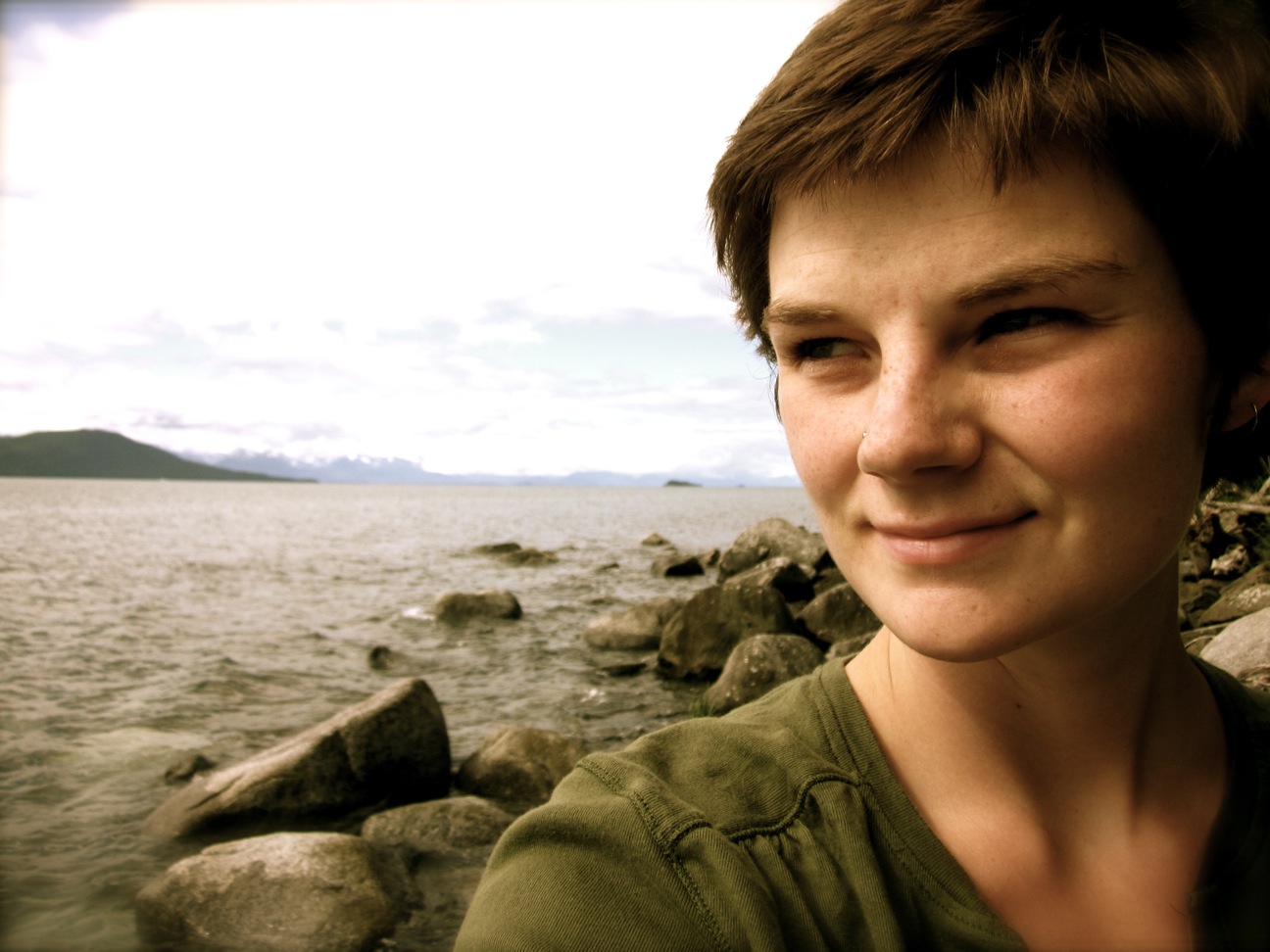
A photo of radical doula Caitlin Caulfield.

Caitlin was born and raised in Alaska where she grew up among the birch and spruce taiga forest of the Interior. She graduated from Smith College with a degree in Anthropology and Elementary Education in 2008, and since then has worked as a bookseller, a farmer, and a teacher.

Caitlin trained as a doula with Warm Welcome Birth Services in Western Massachusetts in January of 2011 and is now working as a doula while pursuing further studies in midwifery. As a queer femme, Caitlin has a particular interest in working with queer and trans families of all shapes and sizes. She believes that birth is always radical! You can learn more about her doula practice, Malia Kai Birth Services, at http://www.maliakaibirth.com or email her at maliakaibirth@gmail.com.

What inspired you to become a doula?

I have had a passion for birth and women’s health since my brother was born at our home in England when I was three. The midwife who attended his birth would bring child-size replicas of some of her equipment such as slings and thermometers, and I would faithfully follow along on my dolls as she did postpartum checks on my brother. Growing up, my interest in babies expanded as I learned about the importance of women’s health issues around the world and deepened as friends began having children.

I think that everyone giving birth deserves to have physical and emotional support from someone they trust and feel a personal connection with, who can help them articulate their needs and desires and advocate for themselves. Being a doula is phenomenally powerful because it means deeply listening to someone else.

Why do you identify with the term radical doula?

For me, radicalism has a lot to do with intersectionality. By which I mean: recognizing the many, many factors (race, culture, class, ability, age, gender, sexuality, religion, and more) that influence all of our lives, and attempting to keep them all in mind as we work to improve the world (slowly, surely…). It means connecting my birth work to my feminism. It means not talking about birth in the USA without talking about the wide disparity in birth outcomes between white women and women of color. It means approaching birth work from a reproductive justice perspective which equally validates the right to have an abortion, and the right to carry and raise your children (no matter how poor/young/brown/queer you are). And it means working in broader justice movements to create and sustain support networks that make all of this possible.

As a radical doula, I am always trying to make connections between ideas, communities, and people.

What is your favorite thing about being a doula?

The babies! I can’t lie. The babies are my favorite. Watching the transition within minutes from goopy, purple, vernix-covered little beings into small rosy people is incredible.

I also feel so honored to be present for such an intimate moment in a family’s life, and to see the immense love on the faces of friends or family members who are present.

If you could change one thing about birth, what would it be?

Just one thing? I would like all hospitals to start practicing evidence-based care around pregnancy and birth, with a lot fewer unnecessary interventions. And I would like all pregnant people to have easy (early) access to compassionate, quality, culturally appropriate prenatal care.

NYC Teen Pregnancy Campaign Brings Shaming to Bus Shelters and Cell Phones

In my column at RH Reality Check this morning I wrote about a new NYC Human Resources Administration teen pregnancy prevention campaign that takes shaming to a whole new level. From the article:

The New York Human Resources Administration (HRA) launched a new ad campaign this week that takes the use of shame tactics to prevent teen pregnancy to a whole new level. The ads feature images of young children alongside messages to their would-be teen parents. It’s hard to describe the ads as anything but horrifying and yet another link in the chain of shame-based teen pregnancy prevention efforts.

It might be hard to believe, but there’s a component to the campaign that’s even worse than the ads. At the bottom of each ad is a message: “Text ‘NOTNOW’ to 877877 for the real cost of teen pregnancy.” I followed these instructions, and what resulted was a really screwy game of “choose your own adventure” via text message.

The ads and the text message “game” are really terrible, provide no actual information about how to prevent pregnancy, instead reinforcing the stigma and social isolation faced by teen parents. 

Want to tell the agency what you think about the campaign? You can email the Commissioner of HRA here and also tweet at HRA here.

Read the full article here.

Are there grants available for doula work?

I get a lot of great questions via email from readers, often related to doula work. I’m going to try and post excerpts of those questions and answers here, in the hopes that it might be helpful to other readers. The one thing I’ll say in advance of this question is that the issue of compensation for doula work, especially doula work that tries to reach marginalized communities is a big one right now. There is no easy answer.

From reader:

I would like to see my practice expand again to serve homeless and low income women in our area.  I know there is a need for it.  We tell people that we work on a sliding scale and barter and trade for services, but we need to be able to do more.  I would like to be able to go into the shelter system and take on clients at no charge to them, teach our breast feeding and comfort measures classes, host support groups, ect.  At this point in our business, I cannot do it for free (My doula employee and I both have small children and are supporting our families).

I was wondering if you knew of any grants that were available to fund this sort of thing.  I know that they are out there (there seem to be grants for everything now days) and I know that the need is out there, and we have the desire.  Just got to get all the pieces in place.  Thank you for listening to my ramble, and I look forward to your reply.
My answer:
You’re right, there is a lot of money, in the grand scheme of things, going toward services for homeless folks. BUT most of that money is wrapped up in community non-profits and government agencies that run shelters and other services for this community. So one avenue would be to see if you could build a relationship with a organization that already has funding for serving this community, and in an ideal scenario, they could fundraise to pay for doula support. Obviously while there are resources, they are also really tight and allocated already to existing programs.
Another venue that you’ve probably considered is insurance reimbursement. I’ve heard anecdotally about doulas (particularly those also trained as midwives) working with clients who pay up front for the doulas services, but get reimbursed later by their insurance companies. Some folks are also beginning to make headway into Medicaid, and getting reimbursed by them. So the short answer is no, I don’t know offhand about funding that is available for doulas to work with populations in need, although I certainly think there should be. Even if there were this funding, it would likely require the doulas to be part of a 501-C3 non profit organization, so that would be another step in the process.
If people have experiences with other sourcing of funding for this work, please share them in comments!