Bay Area Radical Doula Guide Release Party

With this being event number 5, I think I can officially call it a tour!

On Thursday January 10th in San Francisco we’ll be hosting a Radical Doula Guide release party benefiting the Bay Area Doula Project, a fabulous full-spectrum doula group. There will be guides for sale, a photobooth, and opportunities to donate and support the fabulous work of BADP.

Details:

Thursday, January 10th
7pm-10pm
Langton Labs
9 Langton St
San Francisco, CA

Hope to see you there!

Facebook event here.

PS Happy New Year!

Los Angeles Radical Doula Guide Release Party

The Radical Doula Tour continues! In January I’ll be co-hosting parties in Los Angeles and the Bay Area, and plans are in the works for a Washington DC party in February.

I’m excited to co-host the Los Angeles party with the Shodhini Institute and California Latinas for Reproductive Justice, as well as the Doulas Association of Southern California–three fabulous groups dedicated to improving the health and wellness of our communities.

Details:

Sunday January 6
4pm-7pm
Feminist Majority Foundation
433 S. Beverly Drive
Beverly Hills, CA 90210

There will be guides for sale, a raffle benefiting the Shodhini Institute, a live DJ and much more. Should be a great time, hope to see you there!

Facebook event here.

The Bay Area party will be January 10th–details coming soon.

On ageism and parenting: Why you are never the right age to be a mother

I weighed in on recent conversations regarding age and parenting over at RH Reality Check. While young people face way more stigma for parenting than those in the “older parents” category do–the way to help both those groups succeed is surprisingly similar.

The commonality between the conversation about teen parents and the conversation about older parents is that the solutions which could address the challenges that result are not so different. If we as a society created systems that supported families to a greater extent, taking the pressure off of individuals to provide for their own across the lifespan, we might find ourselves with improved outcomes for kids regardless of their parents age. Rather than trying to convince people, especially women, to give birth in the socially-acceptable and medically-sanctioned 15-year window between college and age 35, why not change the way our society support families, so that whenever the moment for parenting arises, people have the support they need to do it successfully?

Read the whole thing here.

Radical Doula Profiles: Ynanna Djehuty

This is a series highlighting folks who identify as Radical Doulas. Are you interested in being part of the series? Go here to provide your responses to the profile questions and I’ll include you!

Ynanna DjehutyYnanna Djehuty is an Afro-Dominican woman born and raised in the Bronx. She is a writer and certified birth doula. She is a member of the International Center for Traditional Childbearing (ICTC), and a sister of Mu Sigma Upsilon Sorority, Inc. The focus of her work is the empowerment of women and people of the African Diaspora, specifically discussing the Afro-Latina Identity. She utilizes her experience as a birth doula to raise awareness on maternal and infant health for women, highlighting the disparities in the healthcare system in the United States for women of color. She is studying to become a midwife to continue to advocate for women and their overall well-being. Contact her at ynanna@thesewatersrundeep.com.

What inspired you to become a doula?

I was inspired to be a doula after I began to learn more about my reproductive health. My interest grew into maternal and infant health, and I decided to explore a profession helping women. I wanted to provide my therapeutic healing skills to women at a time they need it most.
Why do you identify with the term radical doula?
When I look at the world “radical”, I think of the Latin word it is derived from, radix meaning “root”. In my work as a doula and writer, I am interested in helping those around me set down strong and healthy roots while examining what historical precedence has led to our modern day society. I identify as a radical doula because of my passion to return back to the foundation of traditional and earth medicine to heal my self and women.

What is your doula philosophy and how does it fit into your broader political beliefs?

Birth is a natural part of life. It is a very important moment for a woman and her family. In a matter of moments, a new being is brought into the world and a mother is born. I believe in natural birth. I have my own personal views that I only share with the women I serve, but to put it briefly, I am against unnecessary interventions. I believe in compassionate use of epidurals but encourage women to trust and work with the pain. I believe that if the mother and child are truly in danger, a medical team should absolutely do everything they can to ensure a safe delivery. I am against unnecessary Cesarean sections and believe they should occur in emergency situations, as there are more risks involved that the mother only finds out after the fact.

With all that said, my opinions do not matter when it comes to caring for the woman. I honor and respect all the mother’s views and decisions – it’s not about me, it’s all about her. I believe in working as a team with the mother and partner/family so that they are her familiar face and I am the objective, nurturing and continuous non-medical support in the room. My focus prenatally is asking the mother questions about her mental and emotional state of being. True preparation for birth is moreso understanding a woman’s fears, concerns, hopes and dreams than whether or not she knows all the medical parts of what is going on. I believe the mother should be as informed as possible about the medical and physiological part of birth, but also have witnessed all that information and all that she learned in classes fly right out the window when the most important thing becomes focusing on delivering a child and getting in tune with herself, managing her contractions and breathing.

This level of respect carries over into all my work, where I recognize the disenfranchisement of marginalized groups such as women, Afro-descendants and impoverish people. Basic human rights, access to information and self-determination is often obstructed by de jure (by law) and de facto (by fact) discrimination. Oppression such as this for generations has an impact on the holistic health of our communities, and thus respecting the humanity of people, their right to choose and determine their life outcomes is the platform of all my political beliefs. Furthermore, as it relates to women and within that, marginalized women, having sovereignty over their lives is a radical and revolutionary act in a world that seeks to silence us.

What is your favorite thing about being a doula?

I love being able to share such an important moment in the life of a family. It is a life affirming charge that fills me with hope every time I assist a women in empowering herself.

If you could change one thing about birth, what would it be?

My biggest gripe with the state of birthing is the overmedicalization of it. I would love to reduce the amount of medical interventions that occur to just necessary and emergency situations.

Documentary: Catching Babies

This weekend I had the pleasure of seeing the new documentary Catching Babies. Claudia Booker of Birthing Hands DC organized the viewing.

The film is about a midwifery school in El Paso Texas called Maternidad La Luz. It’s a unique place–an intensive midwifery program that trains non-nurse midwives in a 13 month program that is extremely hands on. Two of the student midwives in the film describe catching their first babies just months after arriving at the school.  Students who complete the program can work as out-of-hospital midwives across the country, depending on the laws in their state governing non-nurse midwives.

I actually visited the school in 2007, did an overnight where I shadowed students and midwives as they did their visits and attended births. I went because at the time I was still planning on becoming a midwife, and I was excited by the possibility of attending a school that almost entirely catered to the Latina community.

Because the school is based in El Paso, steps from the border with Juarez, Mexico (the two cities are actually contiguous, the only thing separating them a bridge that represents the border) the vast majority of the women who birth at Maternidad La Luz (it is a free-standing birth center, as well as a school) are Mexican and Spanish-speaking. Many are not US citizens, but living on the border are allowed to travel back and forth with a certain area on what are called “radial visas.”

The film is really well done. The filmmakers are both women of color, which comes across clearly in their perspective and in who they choose to focus on as subjects of the film. We see one African-American student midwife, another who identifies as indigenous Mexica and grew up in El Paso, along with two other student midwives as they take their journey to midwifery. Throughout their stories is the birth stories of the women they support during pregnancy and birth, all of whom are Spanish-speaking women of color.

This focus of the film stood in stark contrast to my own experience when I visited the clinic in 2007.

Continue reading

Pro-choice pregnancy and the politics of language

I was inspired to write my latest column for RH Reality Check because of a number of emails I’ve gotten over the years with various questions about the issue of the language we use to talk about pregnancy and it’s impact on pro-choice politics.

From the column:

As a blogger and a doula, I think about this question of language a lot. What language to use when talking with people I’m supporting during their abortions? What about when supporting someone with a miscarriage? Should I use different language in one scenario over the other? How about when I write about these issues? If we call it a baby at only eight weeks, does that compromise our right to access abortion?

For me the answer is no. The reason that abortion is a decision best left to individuals who are pregnant is because it’s a complicated ethical and personal choice that one can only make for themselves. While there may be a lot of science regarding fetal development, when hearts beat and nervous systems are developed, there is no right answer when it comes to when life begins. It’s a question and a choice that every individual person has to grapple with for themselves. The same is true for the language of pregnancy and birth.

I do my best to mirror the language of the people I’m working with. If they call it a baby, I’ll call it a baby. If they call it a pregnancy, or a fetus, or a itty-bitty bundle of joy, I’ll do the same. Nothing about these language choices denotes anything about what choices should be available to pregnant people—it simply denotes how that individual person sees themselves and their pregnancy.

Read the full piece here.

Radical Doula Profiles: Poonam Dreyfus-Pai

This is a series highlighting folks who identify as Radical Doulas. Are you interested in being part of the series? Go here to provide your responses to the profile questions and I’ll include you!

I’m really excited about this week’s Radical Doula, because I had the pleasure of working with Poonam when she was part of the leadership circle of the NYC-based Doula Project. Poonam is an incredibly warm person, an fabulous doula, and a dedicated social justice leader.

Photo of Poonam smiling

Poonam Dreyfus-Pai is a researcher, advocate, and full-spectrum doula. She is the co-director of the Bay Area Doula Project, and came to the organization after volunteering for 2 years as an abortion doula with its sister NYC-based organization, The Doula Project. She is currently a graduate student in the concurrent MPH/MSW program at UC Berkeley, with concentrations in Maternal and Child Health, and Management and Planning of Social Welfare Services. Since February 2012, she has been an intern in the Sea Change program at ANSIRH (of UCSF’s Bixby Center), where she researches women’s disclosures of pregnancy experiences and abortion stigma. Poonam is grateful to be a part of the Bay Area’s vast network of organizations dedicated to reproductive justice. She works to cultivate a social environment that is supportive of all people’s sexual health choices and experiences, and is honored to continue her work as a full-spectrum doula with the BADP. Check out the BADP here.

What inspired you to become a doula?

I didn’t known anything about doulas until I came across The Doula Project (then The Abortion Doula Project) in late 2008. When I learned about the support that doulas offer in birth, it seemed obvious and natural to extend that compassionate, continuous presence to people having abortions. I was excited about the possibility of being that supportive presence, and of bearing witness to people’s strength and wisdom during their abortion experiences. Joining The Doula Project in 2009 opened me up to the amazing world of full-spectrum doulas, and remains one of the best decisions I have ever made.

Why do you identify with the term radical doula?

“Radical” work, to me, means work that is built around justice and inclusivity. I think of radical doulas as working to expand the system, to help all people have empowered and supported pregnancy experiences, regardless of pregnancy outcome, individual income, immigrant status, incarceration status, language capacity, gender, etc — the list is endless. My work as a full-spectrum doula feels radical and transformative because in each individual act as a doula, I am helping people understand that they deserve to be met with compassion, and to receive the highest quality of care, regardless of where they land on the spectrum of pregnancy. We are not only bearing witness to people’s pregnancy experiences; we are learning from their stories. We are creating changes in how people think of these experiences and how they see themselves as empowered agents within them.

What is your doula philosophy and how does it fit into your broader political beliefs?

What I find so incredible about full-spectrum work is its potential to break down stigma. Stigma and silence exist across all pregnancy experiences, and there are so many niche services that exist out there to provide support: for people choosing adoption, people who have miscarried or experienced fetal loss, people who’ve experience adverse birth experiences, and people who have had abortions. The work that these organizations do on a regular basis is amazing and vital, but I would love to see this care taken one step further. If we can recognize that a person may experience many different pregnancy outcomes throughout one lifetime, then why should these services be separated or different from one another? Why can’t people expect the same quality of care from the same support providers each time they experience a pregnancy? When we treat these experiences as though they are not related or relevant to one another, we (consciously or not) create hierarchies, signifying that some experiences are more important and/or more deserving of support than others. Full-spectrum doulas work to eliminate the silos that exist around these experiences, and bring them together under one umbrella. I see this work as vital to changing our reproductive health culture, and want it to be replicated, not just through the ever-expanding network of full-spectrum organizations (whoo hoo!), but among all health care providers.

Continue reading

Five holiday gift ideas for the doula in your life

I’ve never done a gift guide before, but this year it just seems like there are so many great doula-related books and causes to support. So in case you’re building your own holiday gift list, or looking for a fun gift for the doula in your life, here are a few suggestions! I purposely picked gifts that can be purchased directly from individual artists and business owners, rather than all the many doula-related gifts one could find at corporate retailers. Have other suggestions? Leave them in comments!

1. The Radical Doula Guide: A Political Primer for Full Spectrum Pregnancy and Childbirth Support ($12)
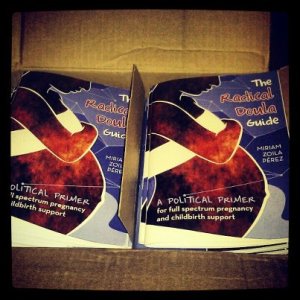
Photo of Radical Doula Guides in boxesYou probably saw this one coming! But seriously, the incredible support I’ve received since publishing this guide in August has been humbling. I’m so honored that so many of you have purchased a copy. This is the first time my work at Radical Doula has generated any income, and it makes a huge difference in my ability to keep it running and invest more time in it.

There are currently 0 copies left of the initial 500 I printed this summer. New shipment in! Plenty of copies available. So order yours (or one for a doula friend/family member) today!

If you don’t know, the guide is a great resource for anyone interested in doula work, doing doula work, or just curious about the politics surrounding the experience of pregnancy and birth in the US. It is US centric, but I think the ideas may apply to folks living in other countries (I’ve sent quite a few copies abroad).


2. Hot Pants: Do It Yourself Gynecology, Herbal Remedies ($5)
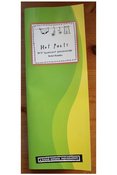
Picture of Hot PantsPati Garcia (aka Chula Doula) gets the credit for gifting me a copy of this awesome zine. It was created by two herbalist/activists in Montreal in 1999, and Pati has taken on the task of printing and distributing it. It’s a great beginners guide into using herbs to treat gynecological issues–a great resource for anyone, but especially doulas interested in learning about herbs.

The first sentences of Hot Pants says it all I think: “Patriarchy sucks. It’s robbed us of our autonomy and much of our history. We believe it’s integral for women to be aware and in control of our own bodies.”

Go here to purchase a copy from the Shodhini Institute (bonus: supporting another activist/small business operation).

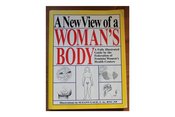
3. A New View of a Woman’s Body: A Fully Illustrated Guide by the Federation of Feminist Women’s Health Centers ($30)

Cover of A New View of a Woman's BodyAnother book that I learned about because of Pati, it covers a incredible amount of medical knowledge, centered around feminist practices of self-exam and self-help. This book gives you the tools you need to take control of your own health care, and provides many illustrations and photos of real women’s bodies. A great resource for your own health needs, as well as when working with doula clients. You can also purchase a copy of this book from the Shodhini Institute.

While you are at it, check out all the other items for sale at the Shodhini Institute online store.

4. Donation to The Doula Project
Screen shot 2012-12-06 at 4.44.53 PM

If you’d prefer a less consumer-based gift, then may I suggest a donation to the Doula Project? There are of course many fabulous non-profit organizations you could donate to in someone’s honor (including many other full-spectrum doula groups!) but let me provide one reason why supporting the Doula Project could make an impact.

In addition to serving thousands of people in NYC over the last few years, providing free doula support during abortions, miscarriages, birth and adoptions, the Doula Project also supports new full spectrum doula programs that are cropping up around the country. They share their curriculum, travel to facilitate trainings and give lots of advice and support. So by donating to The Doula Project, you not only support their vital NYC-based work, but you help ensure that this movement grows nationally. So consider a donation in someone’s name.

5. Doula Sterling Silver Necklace ($52)

And because I could not resist going to Etsy and searching for “doula,” here is a beautiful necklace for the jewelry loving doula in your life. If you are interested in stones & crystal healing, here is what the artist says about the stones included on the necklace: “Turquoise: Spiritual attunement, cleansing, healing, protection, valor, soothing, peace of mind, guidance through the unknown. Amethyst: Contentment, spirituality, dreams, healing, peace, happiness, love, intuition. Amber: Soothing, calming, cleansing.”